
Settlement Gifts for Clients: Australian Buying Guide
·
SITA'S Fusion Flavours
The best settlement gift isn’t always the biggest hamper. The right choice of settlement gifts for clients feels personal without being too familiar, and celebrates a new home without adding another predictable box of treats to the pile.
It’s understandable to want a gift that feels warm and professional, especially when you don’t know a client’s tastes well. A thoughtful gesture doesn’t need to be complicated or extravagant. It should show care, suit what you know about the recipient and mark the start of an exciting new chapter.
This guide will help you choose a memorable settlement gift, from practical touches for a new home to small-batch Australian-made food with a story behind it. For clients who enjoy cooking and bold flavours, handcrafted condiments can offer a distinctive alternative to a standard hamper. SITA'S Fusion Flavours makes chilli oils and tea in small batches, using Australian-sourced ingredients and family recipes passed down through generations. We’ll explore how to match a gift to your client, keep the gesture polished and make the welcome feel genuinely considered.
Key Takeaways
- Make settlement gifts for clients feel like a genuine welcome by choosing a useful gesture that suits the professional relationship.
- Use a simple four-step approach to narrow your choice, letting known interests guide you rather than making assumptions.
- Compare traditional hampers, handcrafted pantry gifts and non-food options to find a style that feels right for the recipient.
- Before ordering, run through a shortlist covering the gift’s purpose, recipient fit, format, message and delivery destination.
- Small-batch condiments and tea made with Australian-sourced ingredients and family recipes can bring a distinctive story to a client welcome.
Settlement gifts for clients: make the handover feel like a welcome
A property settlement marks more than the end of paperwork. For the client, it can mean collecting the keys, stepping into an unfamiliar space and beginning a new chapter. A gift at this point can make a formal handover feel warmer and more personal, without turning the moment into a sales pitch.
A settlement gift is a considered gesture that recognises a client’s completed property milestone and welcomes them into what comes next.
Start by deciding why you’re giving a gift, then choose the format. You might want to welcome someone to a new home, thank them for working with you or celebrate a milestone they’ve reached. The gift could be practical, a small treat or a handwritten card. Separating the purpose from the format helps you avoid choosing something familiar first, then trying to make it meaningful afterwards.
A useful or enjoyable item can bring a human touch to a professional relationship. A pantry gift might suit a client who has mentioned a love of cooking, while a simple note may be more appropriate when you know little about their tastes. The aim isn’t to make the gift elaborate. It’s to recognise the person behind the transaction.
What makes a client settlement gift feel thoughtful?
Connect the gesture to the client’s new beginning, rather than treating settlement as just another date in your business calendar. If you know they’re looking forward to cooking in their new kitchen, a food-related gift may feel relevant. If you don’t know their preferences, choose something broadly welcoming and let a personal message carry more of the meaning.
Care matters more than size or a high-value impression. A brief note such as “Wishing you many happy moments in your new home” explains why you’ve chosen to mark the occasion. That context can make a simple gift feel considered, without putting pressure on the recipient to respond or reciprocate.
Who usually sends settlement gifts?
Real estate professionals often mark a client’s move into a new home, while brokers and other client-facing businesses may recognise a property milestone they’ve helped make possible. The same idea applies beyond property: a thoughtful gesture can acknowledge any client achievement that deserves a moment of recognition.
Keep the focus on appreciation. A settlement gift shouldn’t feel like a request for a referral or a promise of future business. Give it because the client has reached an important milestone and you want to acknowledge their trust. That distinction helps the gesture feel sincere and keeps the relationship professional.
Before deciding what to give, ask yourself what you want the client to feel: welcomed, thanked or celebrated. Once that’s clear, choose a format that fits the person and the moment, rather than defaulting to a standard hamper. A little thought goes a long way.
How to choose settlement gifts for clients they’ll genuinely enjoy
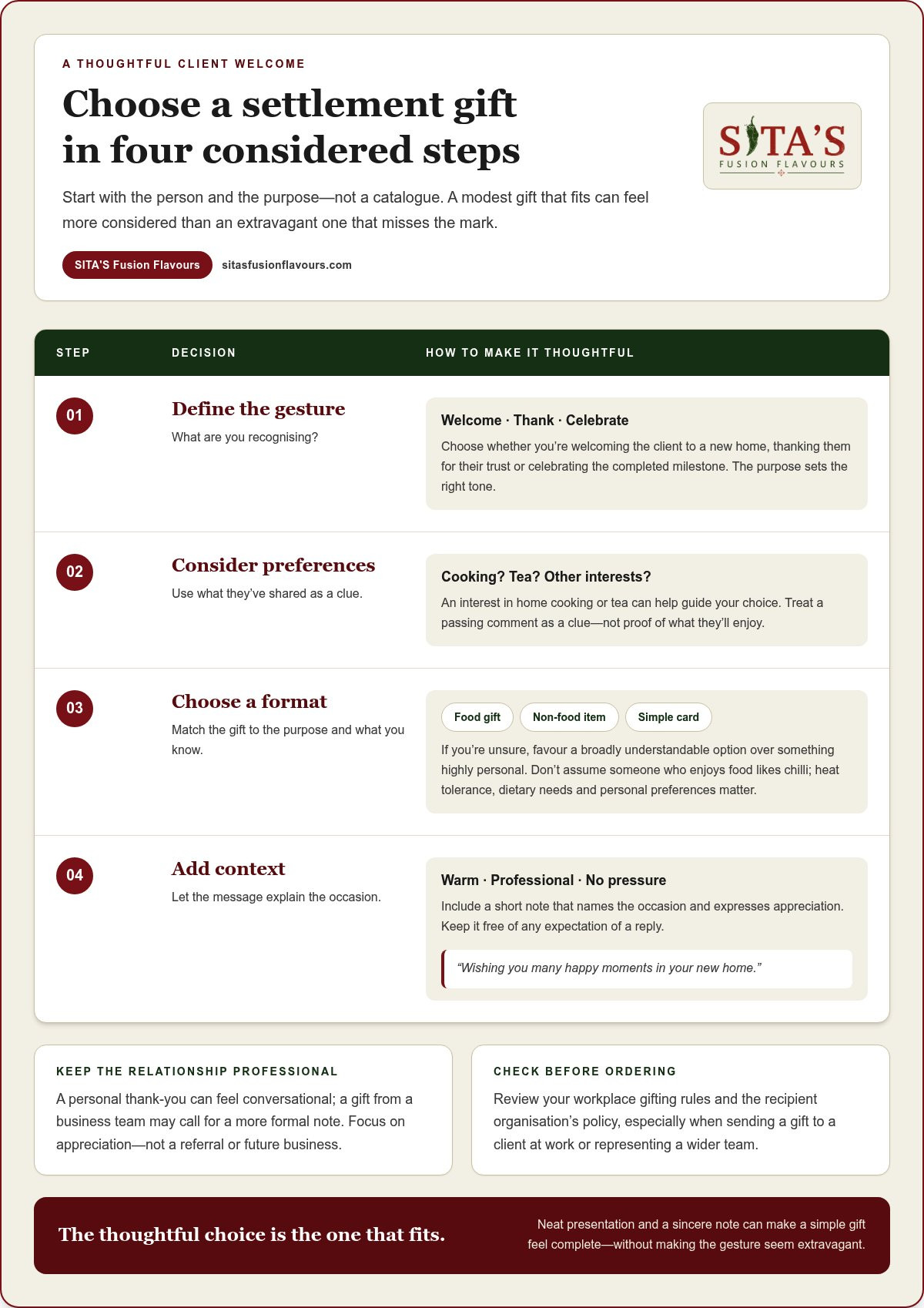
A thoughtful choice starts with the person and the purpose, not a catalogue. These four steps help you narrow the options without overthinking the gesture. Fit matters more than size: a modest gift that suits the recipient can feel more considered than an extravagant one that misses the mark.
- Define the gesture. Decide whether you’re welcoming the client to a new home, thanking them for their trust or celebrating the completed milestone. That purpose helps set the right tone.
- Consider their preferences. Use details they’ve shared, such as an interest in cooking or tea, as clues. Treat them as clues, not proof of what they’ll like.
- Choose a format. Match the purpose and what you know to a food gift, a non-food item or a simple card. If you’re unsure, favour a broadly understandable option over a highly personal one.
- Add context. Include a short message that names the occasion and expresses appreciation. Keep it warm, professional and free of any expectation of a reply.
Start with the relationship and the occasion
A personal thank-you from an individual professional can feel conversational, while a gift from a business team may call for a more formal note. Neither needs to be grand. Consider who is giving the gift, how you’ve worked with the client and what the settlement means to them. Keep the message focused on recognition, not on securing a referral or influencing a future decision.
Before ordering, review your workplace gifting rules and the recipient organisation’s policy. This is especially helpful when the gift is being sent to a client at work or represents a wider team.
Match the gift to what you know about the recipient
A client who talks about home cooking may appreciate a pantry gift; a tea drinker might enjoy a tea-based option. But an interest in food doesn’t automatically mean someone likes chilli. Heat tolerance, dietary needs and personal preferences all shape whether an edible gift feels right, so don’t treat a passing comment as a guarantee.
If you don’t know much about the client, choose a modest, broadly understandable gesture and let the message make it personal. That’s often more comfortable than guessing at a specific taste or choosing something that could feel overly intimate.
Keep presentation and message in proportion
Polished doesn’t have to mean oversized. Neat presentation and a sincere note can make a simple gift feel complete, without making the gesture seem extravagant. Try: “Congratulations on settlement, and thank you for placing your trust in us. Wishing you all the best as you settle into your new home.” Adjust the wording to suit your relationship, then let the gift speak for itself.
For a client whose interests point towards cooking and bold flavours, handcrafted chilli oils and tea offer a distinctive pantry-gift direction. Choose with care, keep the message genuine and give without expecting a response.
Food gifts versus traditional settlement hampers: which suits your client?
Settlement gifts for clients don’t have to follow one familiar formula. A hamper can suit a broad housewarming, while a carefully chosen pantry gift may feel more distinctive for someone who enjoys cooking. A non-food gesture can be the better fit when preferences are unclear. Compare the options by recipient fit, familiarity, personal feel and ease of choosing, rather than assuming one format works for everyone.
| Gift format | Recipient fit | Familiarity | Personal feel | Ease of choosing |
|---|---|---|---|---|
| Traditional hamper | Can suit a household or broad celebration, depending on its contents. | A recognisable housewarming gesture. | Can feel more considered when its contents reflect the recipient. | Varies with preferences, dietary needs and included items. |
| Handcrafted pantry gift | Best suited to someone known to enjoy cooking or exploring flavours. | Less conventional than a general hamper. | A maker’s craft and story can add a personal touch. | Easier to choose when you know the recipient’s tastes. |
| Non-food gift | Useful when food preferences or dietary needs are unknown. | Depends on the type of gift. | Can feel personal when it connects to a known interest. | A practical option when food feels too uncertain. |
When a traditional hamper is the natural fit
A traditional hamper is a familiar choice for a broad celebration, particularly if you’re recognising a whole household rather than one person. The contents matter: wine, cheese or other foods may not suit someone who avoids alcohol, has dietary needs or simply doesn’t enjoy those items. Look beyond the format and consider whether each inclusion makes sense for the people receiving it.
When a handcrafted food gift feels more distinctive
For a client who enjoys time in the kitchen or likes trying new flavours, handcrafted condiments can make a memorable pantry gift. Small-batch making, Australian-sourced ingredients and recipes passed down through generations give the gift a story as well as a place at the table. Explore the craft behind small-batch chilli oil or learn about the wider world of Malaysian-inspired condiments when considering this option.
Food is most suitable when you have a useful sense of the recipient’s preferences. Interest in cooking doesn’t necessarily mean they enjoy chilli, so avoid assuming that every pantry gift will suit every client.
When a non-food gift may be more appropriate
Food preferences, allergies and workplace gifting rules can all make an edible gift unsuitable. If you don’t have enough information to choose confidently, a non-food gesture may feel more thoughtful than a guess. Keep it connected to the occasion and choose something simple that acknowledges the move without making assumptions about what the recipient eats or enjoys.
A simple shortlist for choosing and sending a settlement gift
A short checklist can keep a settlement gift thoughtful without turning the choice into a project. Before ordering, make sure you can answer five things: what the gesture is for, what you know about the recipient, which format fits, what you’ll write and where the gift should go. That final check helps prevent a warm gesture from becoming a logistical mix-up.
Build a shortlist around three practical questions
Start with the meaning, then consider whether the gift fits the person and the professional relationship. If it’s a food gift, use what you know as a guide rather than assuming a preference. For instance, an interest in cooking may make a pantry gift worth considering, but it won’t tell you whether the client enjoys chilli. A Kaffir Lemongrass Chilli Oil flavour guide can help you understand a distinctive option before choosing it.
- Purpose: Is the gift meant to welcome, show appreciation or say congratulations?
- Recipient fit: What has the client actually shared about their interests, food preferences or needs?
- Format: Does a food gift, non-food gesture or simple card suit the occasion and relationship?
- Message: Can you express the sentiment in a few sincere words?
- Destination: Is the address correct, and is it appropriate to send the gift there?
Then consider any relevant workplace gifting rules and the recipient organisation’s policy. A gift that feels suitable at home may not be appropriate to send to someone’s workplace, so consider both the intended recipient and the setting.
Make the message warm, brief and specific
A clear note needs only three parts: acknowledge settlement, congratulate the client and close with a sincere wish. For example: “Congratulations on settlement. Thank you for working with us, and wishing you all the best in your new home.” Use your own natural voice. Skip sales language, requests for future business and any suggestion that the recipient needs to reply. The message should explain the gesture, not ask anything in return.
Plan the handover without overcomplicating it
Decide who the gift is for before arranging delivery. Is it intended for the client alone, the household moving into the property or a team that supported the transaction? The answer can influence the format and wording. If it’s for a household, a shared gift may make sense; for an individual client, a more personal note can address them directly.
Allow time to organise delivery around the planned settlement celebration, and verify the recipient’s address before placing an order. If the gift is going to a workplace, make sure it can be directed to the right person. Keep plans flexible rather than relying on an unverified delivery estimate.
If a handcrafted pantry gift suits the recipient, explore SITA'S Fusion Flavours’ chilli oils and tea as options for a distinctive client welcome.
Choose SITA'S Fusion Flavours for a flavourful client welcome
A pantry gift can be a distinctive way to mark settlement, especially for a client who enjoys cooking, tea or discovering new flavours. SITA'S Fusion Flavours is a family-owned maker of handcrafted condiments and tea products, made in small batches with Australian-sourced ingredients and family recipes passed down through generations. That maker-to-consumer story gives a gift a sense of provenance while keeping the focus on welcoming the client into a new chapter.
For settlement gifts for clients, the story should complement the gesture, not replace choosing something suitable. A considered flavour is more meaningful than the boldest one when it reflects what you know about the person receiving it.
A gift with craft and family heritage
Small-batch making and recipes carried through generations connect each product to the people and traditions behind it. Australian-sourced ingredients add another part of that story. Together, these details can make a pantry gift feel more personal than a standard, familiar choice, particularly for someone who appreciates food with a clear sense of craft and heritage.
That provenance pairs naturally with a property milestone: both can signal the start of something new while holding a connection to home and shared meals. Give the gift to recognise the client’s achievement, with no expectation of a referral or future business in return.
Choose a product style that fits the recipient
Let the client’s known interests guide the choice. If they enjoy cooking or trying condiments, Crispy Chilli Oil or Kaffir Lemongrass Chilli Oil may suit their pantry. For someone who enjoys tea, Masala Chai offers a tea option rather than assuming chilli is the right fit. If they’re known to enjoy pronounced heat, Ghostly Chilli Oil or Carolina Reaper Chilli Oil may be worth considering.
Curated bundles such as Dad’s Crispy Trio and Dad’s Pick Three offer another format to explore. Choose an individual product or a bundle based on the recipient and occasion, rather than assuming every client enjoys the same flavours. If their food preferences, dietary needs or chilli tolerance are unclear, a different kind of gift may be the more considerate choice.
Take the next step with a considered choice
Before you settle on a food gift, ask what you genuinely know about the client. A love of cooking is a useful clue, not a guarantee that they’ll enjoy every condiment. Think about whether tea, a particular flavour style or a curated bundle better reflects their interests. A short note acknowledging settlement can then connect your choice to the milestone.
For a client whose tastes point towards a handcrafted pantry gift, take a relaxed look through the handcrafted flavour range. Browse the individual products and curated bundles, then choose the option that feels like a genuine welcome. Thoughtful gifting starts with fit, not with choosing the boldest flavour.
Make the new beginning feel personal
The best settlement gifts for clients don’t need to say everything. A well-chosen flavour and a few sincere words can acknowledge the milestone while leaving room for the client to make the new place their own. If food suits their interests, a handcrafted pantry gift can bring a little story to the table, made in small batches with Australian-sourced ingredients and family recipes passed down through generations. SITA’S Fusion Flavours ships across Australia, making its range an option for client welcomes nationwide.
Let what you know about the recipient guide the choice. A familiar favourite, a love of tea or an appetite for bold flavours can point you towards a fitting gift. If you’re unsure, there’s no need to force a food option. Thoughtfulness begins with consideration, not with choosing the most daring jar.
Ready to find a flavour that feels right for your client? Explore SITA’S handcrafted flavours for a thoughtful client gift, and make their next chapter feel warmly welcomed.
Frequently Asked Questions
Can settlement gifts for clients include food?
Yes, food can be a suitable settlement gift if it fits the recipient and the situation. Consider whether the client has mentioned dietary requirements, allergies or food preferences, and whether their workplace allows gifts of food. If you’re unsure, a sealed pantry item or tea may be easier to give than a selection of perishable treats. Where you lack useful information, choose a non-food option instead of guessing.
Are chilli oils too spicy to give as a client gift?
Not necessarily, but chilli oil is a more suitable choice when you know the recipient enjoys chilli or bold flavours. Don’t infer heat tolerance from a general interest in cooking. If they’ve mentioned liking milder flavours, consider a different pantry option such as Masala Chai; if you don’t know their preference, avoid choosing a product based on heat alone. A food gift should feel enjoyable, not like a challenge.
What should I write in a settlement gift message?
Keep it personal, brief and centred on the client’s milestone. For example: “Congratulations on your new home. It’s been a pleasure working with you, and I hope this next chapter brings many happy moments.” Add the client’s name if appropriate, then sign off in the voice that fits your relationship. Avoid sales language, referral requests or wording that makes the gift feel conditional on a response.
When should I give a settlement gift to a client?
Settlement day is a natural moment, but a gift can also arrive shortly after, once the client has had a chance to focus on the move. If you’re arranging delivery, work backwards from the occasion and allow time for the order to be processed and sent. Don’t promise a particular arrival date unless you have reliable current delivery information. A late but sincere welcome is better than a rushed, poorly addressed parcel.
Can I send a settlement gift to a client anywhere in Australia?
SITA'S Fusion Flavours ships across Australia, so its online range can be sent to clients around the country. Before ordering, check the recipient’s full delivery address, including the correct unit or street number, postcode and any business name needed for delivery. If the client is moving, make sure the destination is suitable for receiving the parcel. Keep the note clear so the recipient knows who the gift is from.
Are settlement gifts for clients tax deductible in Australia?
Client gifts may generally be deductible when they’re given with the intention of generating future income and aren’t classified as entertainment. Tangible gifts are treated differently from restaurant meals, event tickets or experiences, which are generally not deductible as entertainment. Keep the tax invoice and record who received the gift and its business purpose. Tax treatment depends on the circumstances, so seek advice from a registered tax professional about your business.
Should a settlement gift be branded with my business name?
It can be, but keep branding discreet so the gift feels like appreciation rather than an advertisement. A small business name on a note or subtle packaging can identify the sender without taking attention away from the gesture. Avoid turning the gift itself into a prominent promotional item unless that suits your relationship with the client. Also review your organisation’s gifting guidelines before adding branded materials.