
Loose Leaf Masala Chai or Tea Bags for Less Bitterness?
·
SITA'S Fusion Flavours
For less bitterness, loose leaf sticky masala chai gives you more control over steeping time. When comparing loose leaf sticky masala chai with packaged commercial tea bags, remember that bags aren’t automatically more bitter. Smaller tea particles can brew quickly, though, and may taste bitter if left to steep too long.
Tea bags are convenient, and a roomy, well-made bag gives its ingredients space to infuse. Loose leaf lets you see the tea and spices and adjust the strength to your taste. The difference depends on the ingredients, the space they have to infuse and how you brew them.
This guide compares loose leaf and tea bags for flavour, aroma, stovetop brewing and bitterness, with practical tips for a smoother cup. You’ll be able to choose the style that suits your chai routine: the convenience of a bag or the hands-on process of brewing loose leaf.
Key Takeaways
- Compare the tea and spice pieces in the blend, not just whether it comes loose or in a bag.
- For stovetop chai, choose a brewing setup that makes the leaves easy to strain and the strength easy to adjust.
- Use steeping time and tea particle size as clues when you’re trying to keep bitterness in check.
- Roomier tea bags can give their ingredients more space to infuse, while loose leaf offers flexibility over how much you use.
- Black tea masala chai generally contains caffeine, so the blend’s tea base matters when choosing your cup.
Flavour and aroma
Loose leaf and tea bags can both make satisfying masala chai, but their ingredients infuse differently. Loose leaves and whole spices have room to move in hot water, while tea bags hold a contained blend and may infuse quickly if they contain smaller tea particles. For loose leaf sticky masala chai versus packaged commercial tea bags, leaf size, spice mix and steeping time matter as much as the format.
Masala chai commonly combines black tea with spices such as cardamom, cinnamon, ginger, cloves or black pepper. Each contributes a different note: cardamom can smell floral, ginger adds warmth and cinnamon lends sweetness. Recipes vary, so compare ingredient lists rather than assuming every blend tastes alike. Added sugar affects sweetness, while the quantity of tea and spices shapes the cup’s intensity.
Tea leaves contain tannins and essential oils that contribute to aroma, body and flavour. Whole or larger leaves can unfurl during infusion; broken and cut leaves dry out more quickly and lose flavour compounds sooner. Fannings brew faster, but that speed can come with a less layered taste. A loose blend also makes visible ingredients easier to notice, such as a cardamom pod beside the leaves.
To compare aroma fairly, use the same water, milk, sweetener and steeping time for each option. Smell the dry blend, then the freshly brewed chai. Notice whether tea, spice or sweetness comes through first. Keep the steeping time consistent before adjusting it, so you can tell whether the difference is in the blend or the brewing.
| Option | Flavour and aroma | Best suited to |
|---|---|---|
| Loose leaf masala chai | Visible leaves and spices; room to infuse | Adjusting strength and exploring aroma |
| Traditional tea bag | Contained blend; smaller particles may infuse quickly | A simple, convenient cup |
| Roomier tea bag | More space for leaves to expand | Bag convenience with a fuller infusion |
Compare ingredient size, spice balance and how much control you want over steeping. Don’t assume loose leaf will always taste stronger.
Are there food labelling or caffeine-related rules for chai products sold in Australia? Australian food-labelling requirements apply to packaged chai, and caffeine content varies with the tea base and serving. Use the ingredient and nutrition information on the pack to compare blends, including any declared sugars.
How should sticky masala chai and tea bags be stored, and how long do they stay fresh? Keep loose tea sealed in a cool, dry place away from sunlight, moisture and strong odours. For sticky chai and packaged tea bags, follow the pack’s storage and best-before directions. Freshness depends on the ingredients, packaging and storage conditions.
What health considerations or risks apply to masala chai, including caffeine, spices, and added sugar? Black tea masala chai generally contains caffeine, while spice intensity and added sugar vary between blends. Review the ingredients and nutrition panel to understand what’s in your cup and choose a sweetness and spice level that suits you.
Loose-leaf masala chai and stovetop brewing
Stovetop brewing lets you build chai in stages. Start with water to infuse the tea and spices, then add milk for a fuller, rounder cup. Tea bags are simpler: steep one in hot water, or briefly simmer it with milk if the instructions allow. Loose blends need a strainer or infuser; a bag keeps its contents contained.
For a starting measure, use about 2.5-3 grams of loose tea for 12 ounces of water. A digital scale helps keep successive brews consistent; adjust the amount to suit your preferred strength. For a single mug, an infuser, tea ball or reusable filter keeps loose leaves together. For stovetop chai, use a small saucepan and strain the finished drink into your cup.
CTC Assam, made from crushed, torn and curled tea, has a bold character that can stand up to milk and warming spices. It’s one option for robust milk chai, while larger loose leaves can produce a gentler infusion. For loose masala chai, simmer the tea and spices in water first, then add milk and sweetener to taste. Watch the pan as the milk heats, and strain before serving.
How do brewing methods and steeping times differ for loose-leaf masala chai and tea bags? Loose leaf needs measuring and an infuser or strainer; stovetop chai often also requires a saucepan. Tea bags may infuse faster when they contain smaller particles, so remove the bag once the flavour suits you. Steeping for too long can make the cup bitter.
Water-only brewing gives tea and spices a clearer, less creamy profile. Bring water to a boil, add the blend, then strain into a cup. Add milk separately if desired. A saucepan works well for several serves, while a mug infuser suits one cup. Either way, you can adjust the balance without changing the blend.
How do serving cost and value compare between loose-leaf masala chai and tea bags? Loose leaf can be more economical when bought in larger quantities, and you control how much goes into each brew. Tea bags offer pre-portioned convenience. Compare pack size and servings to judge value.
What are the current prices of loose-leaf masala chai and commercial chai tea bags in Australia? Australian prices vary with pack size, ingredients and retailer. Compare the pack price with the number of cups it makes for a more useful serving-cost estimate.
Which Australian brands sell loose-leaf masala chai or chai tea bags, and what do they cost? Both formats are sold in Australia, with prices depending on the blend, pack size and retailer. Compare ingredient lists and servings per pack to find an option that suits your brewing routine and budget.
Making chai can be a small ritual: measure the leaves, watch the spices infuse in hot water, then add milk and strain. A repeatable method gives you a reliable starting point. Change one step, such as the tea quantity or amount of milk, to fine-tune your next cup.
Choosing between loose leaf and quality tea bags
Choose by checking the ingredients, how the leaves are cut and how you plan to brew. A blend labelled “masala chai” might contain black tea and spices, while another may emphasise cinnamon or cardamom. Compare ingredient lists first, then decide whether you prefer loose ingredients you can measure or a pre-portioned bag for a quicker cup.
Whole-leaf tea is made mostly from unbroken leaves. Loose masala blends may also show larger leaves, herbs and spices, making the mixture easy to inspect before brewing. Traditional tea bags often contain smaller pieces, which infuse quickly but don’t unfurl like larger leaves. If you enjoy adjusting the tea-to-spice balance, loose leaf gives you more control over each measure.
Bag shape matters, too. A traditional flat bag can restrict movement, while a larger pyramid bag gives the leaves more room to expand. Extra space doesn’t mean every bag contains whole-leaf tea, so check the ingredients and leaf appearance where visible. A roomy bag may suit you if you want convenience without choosing solely for the fastest infusion.
- Choose loose leaf if you want to see and measure the leaves, herbs and spices, or vary the quantity from cup to cup.
- Choose a quality tea bag if portioning and less equipment matter, especially when a spacious bag contains larger leaves.
- Compare both if you’re deciding between a visible cinnamon-forward loose blend and a bagged chai with a different spice mix.
Try a simple tasting comparison before choosing a format. Brew each option in the same cup, using the same water and milk, then assess the tea, spice and sweetness separately. If one tastes too light, adjust the amount or brewing time next time. Changing one element at a time helps show whether the difference comes from leaf size, the blend or preparation.
| Option | Ingredients and space | Best fit |
|---|---|---|
| Loose leaf | Larger leaves and spices can be visible; measure each brew | Control and ingredient inspection |
| Traditional tea bag | Often smaller tea pieces; compact format | Convenient portioning |
| Pyramid tea bag | More room for leaves to expand | Bag convenience with more infusion space |
Value depends on the blend, pack size and how much you use per cup. Bagged tea is often cheaper than good-quality loose leaf, while premium whole-leaf bags can cost more per cup. Loose leaf may be more economical in larger quantities and lets you control each serving. Compare the number of cups each pack makes, not just its shelf price.
Packaging may also affect your choice. Loose leaf can reduce individual packaging, but environmental impact depends on the materials and the amount of tea used per cup. Choose loose leaf for measuring flexibility or a roomy bag for convenience, and let the ingredient list guide your decision.
Bitterness from smaller tea particles
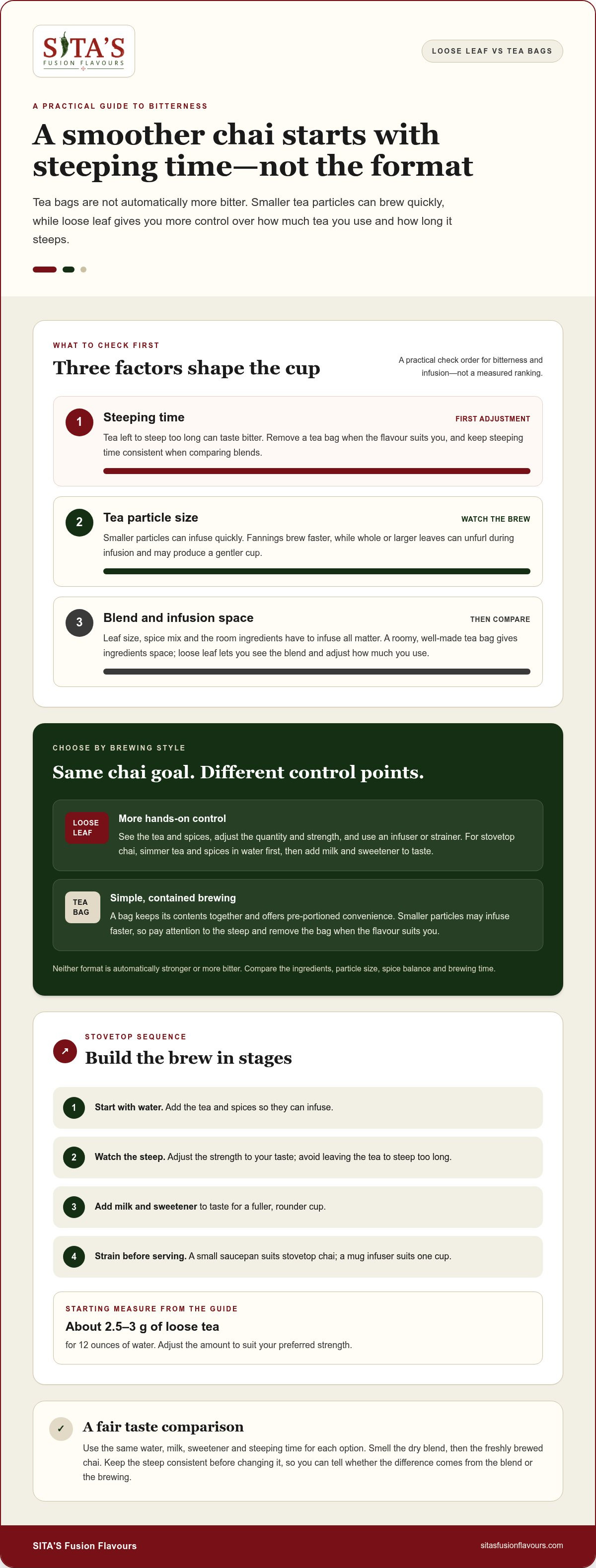
Tea bags often contain dust and fannings, small tea particles that infuse quickly. Their larger surface area releases flavour into hot water sooner, including bitter notes. That doesn’t make every bag bitter, but it can leave less room to adjust before the cup becomes strong. A loose-leaf blend with larger pieces generally infuses more gradually, giving you more control over strength.
Tea particles in a traditional bag can’t unfurl like whole or larger leaves. If you leave the bag in your mug, the smaller pieces keep brewing and bitterness may become more noticeable. Remove it once the tea tastes balanced rather than waiting for a particular colour. Colour can deepen before the flavour reaches your preference.
For a smoother cup, change one brewing step at a time. Try a shorter steep first, then taste before adding milk or sweetener. If the chai tastes weak, use a little more tea next time instead of automatically steeping it longer. More tea can strengthen the cup without leaving small particles in hot water for extra time.
- Too bitter: take out the tea bag sooner or reduce the loose tea amount.
- Too weak: add more tea or let the blend infuse slightly longer.
- Uneven spice: stir the cup before tasting, especially when spices settle.
Masala chai adds another layer: spices such as ginger, cloves and black pepper can bring pungency alongside tea’s bitterness. Cinnamon and cardamom contribute warmer, sweeter-smelling notes, but they don’t remove bitterness from over-steeped tea. Taste the tea and spices separately where possible to tell whether a harsh edge comes from the leaves or the blend’s spice balance.
For a useful comparison, use the same mug, water and additions for both formats. Brew a tea bag and a loose-leaf serving, then remove or strain each when it reaches your preferred strength. Keep the milk and sweetener consistent, too. Otherwise, a sweeter or creamier cup may seem less bitter without revealing the taste of the tea itself.
With loose leaf, strain promptly once the infusion tastes right; leaves left in a teapot continue brewing. An infuser or reusable filter makes removal straightforward. If the blend includes visible spices, gently stir the liquid before pouring so one cup doesn’t get more settled spice than another.
Herbal blends taste different from black tea masala chai. They may contain no black tea, but their herbs can still become overpowering if infused for too long. Follow the blend’s directions, taste as it brews, and remove the bag or strainer when the flavour suits you. The key is controlling extraction, not assuming every tea bag will taste bitter.
What are the typical caffeine levels in masala chai and chai tea bags?
Black tea blends, including masala chai, generally contain caffeine. Loose leaf and tea bags can both use black tea, so the format alone doesn’t tell you how much caffeine is in your cup. The amount depends on the tea, how much you use and how long it brews. Spices such as cardamom and cinnamon add aroma, but black tea is the caffeine-containing ingredient.
Start with the ingredients panel. Check whether the blend contains black tea and look for caffeine information on the packaging. A chai tea bag made with black tea differs from a herbal infusion without it. “Chai” describes a style of spiced tea, so the word alone doesn’t tell you the tea base or caffeine content.
Brewing affects the strength of your cup. More tea, a longer infusion or simmering the blend can make a more concentrated drink. For a clear comparison, prepare loose chai and a tea bag using the same serving size, water and brewing time. Keep milk and sweetener consistent, too. Those additions change taste and texture but don’t remove caffeine from the tea.
Use these steps to assess a pack and your usual brew:
- Read the ingredients to identify black tea or a herbal base.
- Follow the pack’s serving instructions and note how much tea you use.
- Keep steeping time consistent when comparing two chai formats.
- Check the label for caffeine details, if provided.
For example, strong stovetop chai made with black tea may taste more intense than a lightly steeped tea bag. That difference can reflect the amount of tea and the brewing method, not simply whether it’s loose or bagged. A bold spiced flavour also doesn’t indicate a particular caffeine level. Taste and caffeine content aren’t interchangeable measures.
If you’re choosing chai to manage caffeine intake, use the product label and brewing directions as your practical guide. Compare the tea base first, then consider serving size and how concentrated you make each cup. A decaffeinated label, where present, identifies a different product; spices alone don’t make black tea caffeine-free.
Keep a simple note of how you prepare your chai: the blend, the amount used and whether you steeped or simmered it. This makes it easier to recreate a cup that suits your routine. If a long-simmered saucepan brew feels too strong, for example, adjust the amount of tea or shorten the brewing time next time. Change one element at a time, then compare the flavour.
SITA'S Fusion Flavours: Kaffir Lemongrass Chilli Oil
SITA'S Fusion Flavours’ Kaffir Lemongrass Chilli Oil offers another way to explore bold flavour alongside your chai routine. It isn’t tea or a chai ingredient, but a chilli oil to enjoy as an extra flavour accent with savoury food.
If you enjoy exploring flavours beyond the cup, choose from Kaffir Lemongrass Chilli Oil, Crispy Chilli Oil, Ghostly Chilli Oil and Carolina Reaper Chilli Oil. Pick a condiment to suit the flavour you want at the table, while choosing chai based on its tea, spices and brewing style.
For another handmade flavour to enjoy with your meals, you’re welcome to visit sitasfusionflavours.com.
Make your next cup your own
Turn your next brew into a small tasting experiment. Choose the format that suits your routine, then note what you enjoy most: gentle spice aroma, a bold tea base or a smoother finish. That preference gives you a useful starting point the next time you choose chai. The choice between loose leaf sticky masala chai and packaged commercial tea bags isn’t about finding one universal winner; it’s about making a cup you enjoy.
For bold flavours at the table, SITA'S Fusion Flavours offers Kaffir Lemongrass Chilli Oil, Ghostly Chilli Oil and Crispy Chilli Oil. These bring a different kind of flavour to savoury meals, separate from your chai selection.
Contact SITA'S Fusion Flavours to explore its chilli oils, and enjoy finding the flavours that make your everyday rituals feel special.
Frequently Asked Questions
Loose Leaf Tea vs Tea Bags - What's the Difference?
Loose leaf is sold as tea leaves or a blend you measure yourself; tea bags hold a pre-portioned amount. The format affects preparation, too: loose leaf usually needs an infuser or strainer, while a bag lifts out in one piece. A bag may be simpler for a workday mug. For a weekend pot, loose leaf lets you tailor the amount to your taste.
Is Loose Leaf Tea Worth Trying?
Try loose leaf if you enjoy adjusting the amount of tea in each pot. Start with a blend you like, use your usual cup and additions, and change only the tea format. This makes it easier to decide whether measuring and straining loose tea suits you. If quick preparation and minimal washing matter more, a tea bag may fit your routine better.
What's actually inside a tea bag?
A tea bag may contain black tea, herbs, spices or a combination, depending on the blend. Chai varieties commonly pair tea with spices, while other bags may contain a single tea or herbal ingredients. The bag itself holds the contents during brewing; don’t assume every chai bag has the same recipe. Read the ingredient list to see whether a particular product includes black tea, cinnamon, ginger or other additions.
How does loose-leaf masala chai compare with commercial chai tea bags in ingredients and flavour?
The difference depends on each product’s recipe, not just its packaging. One loose masala chai might show separate tea and spice pieces, while a commercial chai bag may use a finer, more uniform blend. Compare both ingredient lists and prepare each with the same milk and sweetener. This helps you identify whether you prefer distinct spice notes or a more blended cup.
Do commercial chai tea bags contain added sugar, flavourings, or other additives?
Some chai tea bags contain only tea and spices; others may include added sugar or flavourings. Recipes vary, so the front of the pack won’t tell you everything. Check the ingredient list for sweeteners and flavourings, then read the nutrition panel if comparing sugar content. If you sweeten your cup yourself, choose a blend with ingredients that suit your preferences.
What are the current prices of loose-leaf masala chai and commercial chai tea bags in Australia?
Australian prices vary with pack size, ingredients and retailer. Compare the pack price with the number of cups it makes to assess the cost per serving.