
What to Serve with Chicken Satay: Fresh, Crunchy and Fragrant Sides
·
SITA'S Fusion Flavours
What if the best sides for chicken satay aren’t richer or heavier, but cool, crisp and bright? The savoury chicken and creamy peanut sauce bring plenty of depth, so what to serve with chicken satay comes down to balance. A fresh, tangy bite and a fragrant side can lift each mouthful without stealing the show.
If you love satay but find the peanut sauce can dominate the plate, choose sides that add contrast. This guide covers fragrant rice, quick-pickled cucumber, crisp salads and greens, plus simple combinations for a quick family dinner or a generous spread to share. You can also serve chilli oil separately for guests who want extra heat. Build your plate around a fragrant base, cool crunch and bright acidity, then adjust it to suit your table.
Key Takeaways
- For what to serve with chicken satay, choose sides that add contrast rather than competing with the peanut sauce.
- Build a satisfying plate in a simple order: pick a base, add something fresh, then include a vegetable.
- Match the menu to the occasion, from a quick weeknight dinner to a relaxed spread for sharing.
- Keep vegetable and noodle sides simply prepared so the satay stays at the centre of the meal.
- Offer chilli oil separately as an optional table condiment, letting diners choose whether to add extra heat.
What to serve with chicken satay: start with balance, not more richness
Chicken satay brings together the savoury char of grilled chicken and smooth, rich peanut sauce. Because the main dish is already satisfying, equally rich sides can make the plate feel heavy. When choosing what to serve with chicken satay, aim for contrast: a fragrant base to catch the sauce, something crisp and fresh, and a bright, tangy note.
Satay sides have three jobs: soak up the sauce, bring a welcome crunch and cut through richness with a little acidity. You don’t need a long menu to do this well. Rice and a quick cucumber salad make a complete-feeling plate; add another side only if your appetites or occasion call for it. Satay varies across Southeast Asia, and this overview of the history and traditional accompaniments of satay offers useful context for its different serving traditions.
Why fresh, crisp and tangy sides suit satay
Think about the texture between skewers. Tender chicken and velvety peanut sauce have a soft, coating quality, so crisp vegetables provide a lively change of pace. Sliced cucumber is an easy option: cool, juicy and refreshing against the warm, smoky edges of grilled meat. A crunchy salad works too, especially when the vegetables stay crisp instead of being weighed down with a creamy dressing.
Acidity adds another kind of contrast. Quick-pickled vegetables bring a sharp, clean tang, while a squeeze of citrus can brighten a rich mouthful just before serving. Keep the flavour measured: the aim is to refresh the palate, not overwhelm the satay. Serve citrus or pickles on the side so diners can add more to taste.
How many accompaniments make a complete meal?
Keep the plan simple: choose one filling base, one fresh side and an optional extra. Steamed rice makes a mild foundation; cucumber or pickled vegetables bring freshness; and a small plate of greens or salad adds another texture if you want more variety. Each dish then has a purpose, without requiring you to prepare every possible pairing.
- Filling base: steamed rice or another gently flavoured starch.
- Fresh side: cucumber, crisp salad leaves or tangy pickles.
- Optional extra: simply cooked greens or citrus wedges for the table.
A small spread can still feel generous when the flavours and textures differ. For a quick dinner, rice and one fresh side may be enough. For a shared table, add another vegetable or a bowl of crunchy salad so guests can choose their own combination. Let appetites and the occasion guide how much you prepare instead of following a rigid serving formula.
Classic chicken satay sides: rice, cucumber and pickled vegetables
Some pairings endure because they let the skewers shine. Steamed rice gives savoury chicken and peanut sauce a gentle, filling base, while cucumber cools the palate and pickled vegetables add a lively tang. Together, these familiar accompaniments are an easy starting point when planning what to serve with chicken satay.
Rice catches the sauce, cucumber cools each bite, and pickles bring a bright tang. Serve all three for a classic spread, or choose the two that best suit the meal. The balance matters more than the number of dishes.
Which rice works best with chicken satay?
Plain steamed rice is a reliable choice: mild, soft and ready to soak up peanut sauce without adding another strong flavour. Jasmine rice brings a gentle fragrance, while coconut rice offers a richer aroma and taste. Neither is the right choice for every meal. Choose plain or lightly seasoned rice to keep the sauce in focus, or coconut rice when you want a more fragrant base.
For a traditional alternative, try ketupat, rice packed and cooked in a woven pouch, then served in firm, sliceable pieces. Its compact texture makes it easy to share alongside skewers, especially when satay is part of a larger spread.
Fresh cucumber and tangy pickles for contrast
Keep cucumber simple. Serve it in cool slices, or toss it into a quick salad for a crisp, juicy bite between skewers. Pickled vegetables, including Malaysian-style acar, bring a sharper counterpoint. Recipes vary by region and household, so acar can differ in its vegetables, seasoning and tang. Serve it in a small bowl so diners can add as much as they like.
For more Malaysian-inspired meal ideas, explore this authentic chilli oil laksa recipe. If you enjoy extra heat, set chilli oil on the table as an optional condiment, separate from the classic accompaniments. Explore handcrafted chilli oils for an extra condiment; rice, cucumber and pickles make a satisfying plate without it.
- Steamed rice: a mild base that absorbs the sauce.
- Cucumber: a cool, crisp refresh between skewers.
- Acar or other pickles: a tangy accent to brighten rich bites.
- Ketupat: a firm, shareable rice alternative.
Vegetables, salads and noodles: more sides for chicken satay
Rice and cucumber make a familiar foundation, but warm greens, a crisp salad or a bowl of noodles can shift the meal to suit your mood. When deciding what to serve with chicken satay, consider what you want from the plate: a lighter feel, more colour and crunch, or a hearty side to make dinner more substantial.
Green vegetables and crisp salads beside satay
Lightly steam broccolini or Asian greens until tender but still bright, then finish with a little sesame oil or soy sauce. For a quicker, more savoury edge, briefly stir-fry sliced greens so they keep some bite. Keep the seasoning restrained, allowing the satay sauce to remain the boldest flavour on the plate. Either preparation brings warmth and freshness without another rich coating.
A raw salad offers a different kind of lift. Combine crisp lettuce, sliced capsicum or shredded carrot, then dress it lightly with citrus or vinegar. A restrained dressing keeps the vegetables fresh and crunchy instead of competing with the peanut sauce. Warm greens suit a cosy dinner, while a cool salad makes the spread feel lighter.
When noodles make a good satay side
Noodles work well when you want a more substantial plate or a generous shared bowl alongside the skewers. Toss cooked noodles with a little oil and simple seasoning, such as a touch of soy, rather than adding another complex sauce. Rice keeps the spread straightforward and lets the satay stand out; noodles make the meal heartier.
Choose greens for a warm, simple side, salad for cool crunch, noodles for a heartier meal, and rice for an easy base. Pick one to match the occasion, or combine a vegetable with noodles if you’re feeding people who want something more filling. Keep sauces and seasonings modest, then let diners add extra flavour at the table.
- Quick greens: steam or stir-fry briefly, then season lightly.
- Crisp salad: use fresh vegetables and a sharp, simple dressing.
- Noodles: keep the seasoning gentle so it complements the satay.
- Rice: choose it when you want an uncomplicated base.
If you’re serving optional chilli oil for guests who like extra heat, keep it separate so everyone can adjust their own plate. The Kaffir Lemongrass Chilli Oil flavour guide offers more detail. For an optional table extra, explore handcrafted chilli oils. The vegetables and noodles need no added condiment to work well.
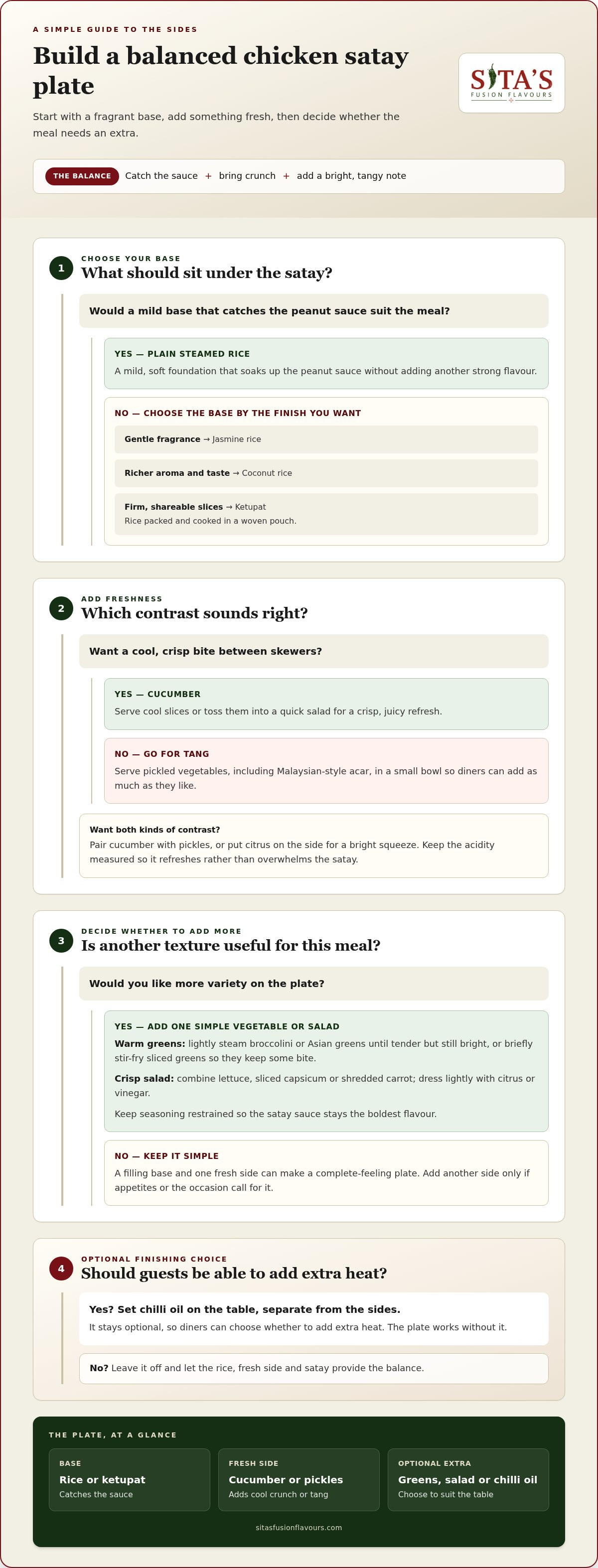
How to build a chicken satay menu for dinner or sharing
A good satay menu doesn’t need a crowded table. Start with the skewers, then add sides with different textures so guests can build their own plates. For a practical answer to what to serve with chicken satay, follow this order: choose a base, add something fresh, include a vegetable if you like, then set out optional extras.
- Choose a base: steamed rice offers a simple, filling foundation.
- Add freshness: cucumber, crisp salad or pickled vegetables bring a cool or tangy contrast.
- Include a vegetable: lightly cooked greens add colour and a warm side.
- Finish with extras: place sauces and chilli condiments separately so each person can choose.
These are flexible menu ideas, not a claim that one combination represents every regional satay tradition. Adjust the mix to suit your guests, the time you have and the dishes you enjoy making.
A simple chicken satay dinner for a busy night
For a weeknight plate, serve chicken satay with steamed rice and sliced cucumber or a quick cucumber salad. Add one easy vegetable, such as lightly steamed Asian greens, if you want another side. Keep the peanut sauce in a separate bowl rather than coating every skewer. Diners can choose how much they want, and the remaining components are easier to portion.
This menu keeps preparation focused: cook the rice, cut the cucumber and prepare the greens while the satay cooks. If time is tight, skip the extra vegetable. The rice, fresh side and skewers still make a satisfying, varied dinner.
A sharing spread for guests with different preferences
For a relaxed table, arrange the satay with bowls of rice, fresh vegetables and pickles served separately. Put peanut sauce, any other dips and optional chilli condiments in their own dishes, each with a dedicated spoon. This lets guests choose mild or punchier flavours and makes it easier to keep ingredients distinct. Add extra vegetables or another base if your group prefers more choice.
Peanuts are a serious allergen. If a guest has a peanut allergy, don’t assume serving the sauce separately is enough: prevent cross-contact during preparation and serving, use clean equipment and utensils, and clearly label dishes and ingredients. Keep peanut-containing sauce and its serving spoon apart from other food. If you’re unsure whether a dish is suitable for a guest’s needs, be transparent about its ingredients rather than making assurances.
- Quick dinner: satay, steamed rice, cucumber and one simple vegetable.
- Shared table: satay, rice, separate bowls of fresh vegetables and pickles, with sauces and chilli condiments on the side.
For an optional extra at the table, choose a handcrafted chilli oil for guests who enjoy adding heat. Keep it separate from the core spread so everyone can season their own plate.
Finish chicken satay with a thoughtful condiment and serve it simply
A well-built satay plate doesn’t need a complicated finish. Pair the skewers with a fragrant base and a fresh, crisp side, then let the grilled chicken and its sauce take centre stage. This simple structure is a useful guide to what to serve with chicken satay, whether you’re plating dinner for the family or setting out food to share.
Extra condiments are optional. Keep the main accompaniments balanced and familiar, then offer additional flavour at the table for guests who want to customise their meal. That way, one person’s preference for a punchier bite doesn’t set the tone for everyone.
Should you add chilli oil to chicken satay?
Chilli oil isn’t essential to satay or a required traditional accompaniment. It’s an optional finishing touch for diners who enjoy extra heat. Serve it in a separate dish with its own spoon, rather than mixing it into the peanut sauce or brushing it over every skewer.
This gives each person control over their plate. Those who prefer the satay’s existing flavours can leave it alone; those who want more heat can add some themselves. SITA'S Fusion Flavours handcrafted chilli oils and Malaysian-inspired condiments offer an optional table extra, while the meal works beautifully without them.
A final serving checklist for a balanced satay plate
Before serving, look over the spread as a whole. A satisfying base, fresh crunch and a bright element create contrast beside the savoury chicken and rich sauce. You don’t need every possible side; choose a few that suit the occasion and your guests.
- Base: Is there a filling, fragrant option to serve with the skewers?
- Freshness: Have you included something crisp, such as fresh vegetables?
- Brightness: Could pickles or citrus bring a sharper note to the plate?
- Choice: Are sauces and optional condiments served separately?
Serve the components in separate bowls or dishes so guests can build each mouthful their way. Keep the peanut sauce apart from other condiments, and place optional chilli oil where people can reach it without making it part of every plate. For a smaller dinner, the base and fresh side may be plenty. For a gathering, add another bowl or platter only if it makes sharing easier.
For an optional finishing touch, explore SITA'S Fusion Flavours handcrafted condiments. Keep the pairing simple, let the satay shine and leave room for everyone to season their own plate.
Make your next satay spread your own
Use your next meal as a chance to play with contrast. Start with the flavours your household already loves, then introduce one new side or finishing touch and see how it changes the plate. There’s no single fixed answer to what to serve with chicken satay; the best combination is one that feels inviting to the people around your table.
If someone at dinner enjoys more heat, set out a chilli oil separately so they can add it to their own serving. SITA’S small-batch Malaysian-inspired condiments are made with Australian-sourced ingredients and family recipes passed down through generations, offering an optional finishing touch rather than a must-have ingredient.
Explore SITA’S handcrafted condiments and choose an extra for your next shared meal. Keep it simple, follow your own tastes and enjoy bringing everyone together around the table.
Frequently Asked Questions
Can I prepare chicken satay side dishes ahead?
Yes, several sides can be prepared ahead to make serving easier. Wash and cut vegetables, make pickles and cook rice in advance where suitable, then store each item safely and separately. Keep salad ingredients undressed until serving so they stay crisp. Reheat hot sides thoroughly, and cook the chicken closer to mealtime for the best texture. If serving peanut sauce, keep it covered and apart from other dishes.
What can I serve with chicken satay for someone with a peanut allergy?
Don’t serve peanut sauce to someone with a peanut allergy, and don’t assume a different nut or seed sauce is safe. Ask the guest about their needs, check ingredient labels and prevent cross-contact from hands, utensils, chopping boards and serving dishes. Plain rice and simply prepared vegetables may work as sides, but keep them separate and clearly labelled. Follow the guest’s allergy guidance, and be open about ingredients.
Is chicken satay served as a main meal or an appetiser?
Chicken satay can be either a main meal or an appetiser, depending on how much you serve and what else is on the table. Offer a smaller portion as part of a shared spread, or make it the centre of dinner with sides chosen to suit everyone’s appetite. For a gathering, separate serving dishes let guests build a plate that feels right for them.
How do you keep chicken satay warm when serving a crowd?
Cook the skewers close to serving time where practical, then place them in a covered, warm serving dish rather than leaving them exposed. Follow safe food-handling guidance and don’t leave cooked chicken at room temperature for an extended period. Serve sauces separately, and bring out the skewers in smaller batches, keeping the rest covered and warm. This helps the platter stay appealing while guests serve themselves.
Can chicken satay sides be vegetarian or vegan?
Yes, sides such as rice, cucumber, salads, pickled vegetables and some vegetable dishes can suit vegetarian or vegan diners, depending on their ingredients and preparation. Check dressings, sauces and seasonings for animal-derived ingredients, and use separate serving utensils where needed. Since chicken satay itself contains meat, provide a clearly labelled plant-based main as well, such as grilled vegetables or tofu prepared separately, so guests can enjoy a complete meal.
What drinks go well with chicken satay?
Choose drinks that refresh the palate and suit the spice level of the meal. Chilled still or sparkling water is a simple option; lightly flavoured non-alcoholic drinks can add variety without dominating the food. For alcoholic drinks, offer a choice to suit different tastes rather than treating one pairing as essential. No drink reliably neutralises chilli heat. Some people find a dairy-based drink more soothing than water, though preferences differ.