
What to cook for a dinner party: three menus guests will love
·
SITA'S Fusion Flavours
A memorable dinner party doesn’t need a kitchen full of complicated recipes. Deciding what to cook for dinner party guests can feel harder than the cooking itself, especially when you’re balancing different tastes, dietary needs and dishes that all demand attention at once.
Start with a cohesive menu and leave yourself some breathing room. Choose food that feels generous, prepare as much as you can ahead, and save just a few simple finishing touches for the evening. A small dish of chilli oil on the table lets guests add a fragrant, crisp or fiery kick to their own plates.
These three dinner party menus offer a starting point, with practical ways to organise the prep and adapt dishes for your guests. Pick the one that suits the occasion, then borrow the ideas that fit your kitchen, schedule and table. The aim is a meal that feels special without keeping you tied to the stove.
Key Takeaways
- Choose a menu to suit the occasion, guest count and time you have, with a welcoming starter, satisfying main, complementary sides and easy dessert.
- Explore three adaptable menu ideas for different kinds of gatherings, then borrow the elements that best suit your guests.
- Before deciding what to cook for dinner party guests, ask about dietary needs and strong dislikes so you can plan thoughtful alternatives.
- Work backwards from guest arrival to organise shopping, make-ahead tasks, day-of cooking, table setting and final plating.
- Add a personal finishing touch with a small serving of chilli oil, letting guests customise the heat without changing the menu.
What to cook for a dinner party: build a menu that feels special
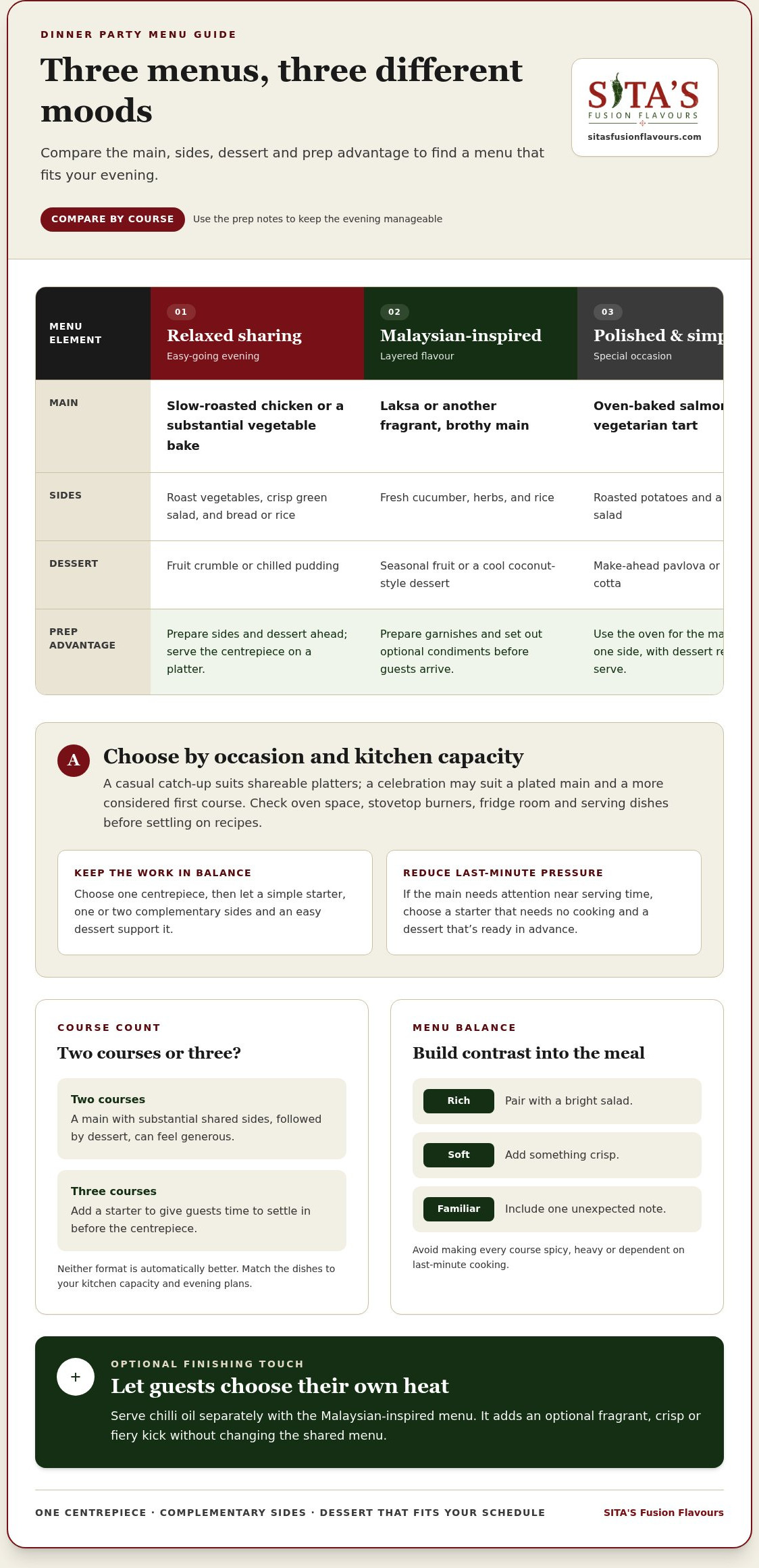
Start with the occasion, how many people you’re feeding and how much time you want to spend cooking. A casual catch-up suits food that can be shared from platters, while a celebration might call for a plated main and a more considered first course. Check your kitchen capacity before choosing recipes: oven space, stovetop burners, fridge room and serving dishes all affect what’s manageable.
Choose one centrepiece and let the other dishes support it. A roast, baked fish or generous vegetarian pie can anchor the meal; pair it with a simple starter, one or two complementary sides and an easy dessert. If the main needs attention close to serving, choose a starter that can be put out without cooking and a dessert that’s ready in advance. That way, you avoid having several pans and courses demanding you at once.
A balanced dinner party menu pairs one satisfying centrepiece with fresh, complementary sides and courses that fit your time, kitchen and guests. This framework leaves room to make the meal personal without piling on extra work. For context on the customs around gathering for a meal, Wikipedia offers an overview of the history and etiquette of dinner parties.
How many courses should a dinner party menu have?
A relaxed two-course meal, such as a main with dessert, can feel generous when the main comes with substantial shared sides. A three-course format adds a starter and gives guests time to settle in before the centrepiece. Neither approach is automatically better. Match the number of dishes to your kitchen capacity and evening plans. If you’d rather linger over conversation, fewer courses with thoughtful portions may be the better fit.
How to make a menu feel cohesive
Give the meal a connecting thread: build around a main ingredient, a cuisine direction or produce that’s in season. Then add contrast. Balance a rich main with a bright salad, pair soft or creamy textures with something crisp, and keep familiar flavours at the heart of the menu while introducing one unexpected note. Avoid making every course spicy, heavy or dependent on last-minute cooking. Variety makes the meal more inviting and gives you breathing room.
Before settling on recipes, picture the evening from the first welcome to the last bite. If the starter can be served without turning on the oven, the main can rest while you finish the sides, and dessert is ready to bring out, your menu is working for you. The best choices aren’t necessarily the most elaborate. They’re the dishes that come together smoothly and leave you free to enjoy the table you’ve set.
Three dinner party menu ideas, from relaxed sharing to a special occasion
A menu theme helps narrow your options: instead of weighing up every recipe, choose dishes that suit the mood and work well together. A clear theme turns a long list of possibilities into a handful of dishes that belong on the same table. Use these menus as inspiration, not fixed recipes. Swap ingredients to suit the season, your guests and the time you have. For more dinner party menu ideas and recipes, look for combinations that share a flavour direction and have manageable preparation.
| Menu mood | Main | Sides | Dessert | Prep advantage |
|---|---|---|---|---|
| Relaxed sharing | Slow-roasted chicken or a substantial vegetable bake | Roast vegetables, crisp green salad and bread or rice | Fruit crumble or chilled pudding | Prepare sides and dessert ahead; serve the centrepiece on a platter |
| Malaysian-inspired | Laksa or another fragrant, brothy main | Fresh cucumber, herbs and rice | Seasonal fruit or a cool coconut-style dessert | Prepare garnishes and set out optional condiments before guests arrive |
| Polished and simple | Oven-baked salmon or a vegetarian tart | Roasted potatoes and a leafy salad | Make-ahead pavlova or panna cotta | Use the oven for the main and one side, with dessert ready to serve |
A relaxed sharing menu for an easy-going evening
For an informal gathering, bring a generous centrepiece to the table with roast vegetables, a fresh salad and bread or rice. Assemble a fruit crumble ahead and bake it before dinner, or choose a chilled dessert that’s ready in the fridge. Family-style platters feel welcoming and let guests serve themselves, without the extra work of plating every course individually.
A Malaysian-inspired menu with layered flavour
Build around a fragrant laksa, then add fresh cucumber, herbs or other crisp sides to balance its warmth and richness. Finish with a fruit-forward dessert, and serve chilli oil separately so guests can choose their own heat. For one source of inspiration, explore the Authentic Chilli Oil Laksa Recipe and adapt the supporting dishes to your table.
A polished menu without restaurant-level effort
For a special occasion, let an oven-friendly main do the work while you prepare sides in stages. A simple starter, such as olives or a crisp salad, leaves room for the main to shine. Choose a make-ahead dessert, then use the final hour for reheating, dressing and plating instead of starting another recipe from scratch.
If you’re deciding what to cook for dinner party guests, choose the menu that best fits your evening, then adapt the dishes to make them your own. A small-batch chilli oil can be an optional finishing touch. Explore handcrafted chilli oils for a fragrant, crunchy or fiery accent at the table.
How to adapt dinner party food for guests and flavour preferences
Impressive food doesn’t need to be complicated or bespoke for every guest. A few thoughtful choices can make one shared menu feel generous and flexible. Before choosing recipes, ask guests about allergies, intolerances, dietary requirements and strong dislikes. Be specific in your invitation, then use their replies to check ingredients and decide whether a component should be left out or served separately.
Take a severe allergy seriously: check ingredient labels, prevent cross-contact during preparation and serving, and be clear about what’s in each dish. Don’t assume that removing a topping after cooking makes a dish suitable. If you’re unsure whether a recipe can be safely adapted, choose a different option that you can prepare with confidence.
How to plan for dietary needs without cooking separate feasts
Start with a dish that naturally works for several people, such as a salad of roast vegetables, grains and fresh herbs, with dressing served separately. Check recipes for ingredients that may need a deliberate substitution, and keep components such as cheese, nuts, sauces or bread on the side when that makes sense. Use separate serving utensils for dishes with different ingredients, and label them plainly so guests can make informed choices.
Check the menu as a whole, not just the main. If the centrepiece doesn’t suit one guest, make sure there’s a substantial alternative among the sides rather than expecting them to fill up on garnish. A satisfying plant-based dish, for example, can be served alongside the main and enjoyed by everyone. Keep preparation manageable by choosing adaptable dishes that share ingredients, rather than cooking an entirely separate feast.
How to balance spice, richness and freshness
Think about contrast across the plate. Rich or spicy food often sits well beside crisp vegetables, fresh herbs, citrus or a cooling element such as yoghurt, if dairy suits your guests. A bright salad can lift a slow-cooked main; sliced cucumber and herbs can bring freshness to a fragrant, warming dish. The aim is balance, not a contest between heat and richness.
Heat is personal, so keep chilli oil and other potent condiments separate from shared dishes. Put out a clean spoon and let guests add a little to their own plate, or skip it altogether. This preserves the flavour of the food while giving each person control over their meal. Don’t assume that everyone has the same spice tolerance, even if they enjoy bold flavours.
For dinner party guests with different tastes, build a welcoming shared menu, make key components easy to adapt, and let diners season their own plates. SITA'S Fusion Flavours makes small-batch chilli oils with Australian-sourced ingredients and family recipes passed down through generations. Served on the side, a little chilli oil can bring a fragrant aroma or crisp texture, while guests choose whether to add it.
Dinner party prep timeline: what to make ahead and when
A calm dinner party starts with a plan that works backwards from guest arrival. Check each recipe for oven temperature, cooking time and last-minute steps, then spot any clashes before the day. If the main and a side both need the oven at once, choose a side that can be served at room temperature or cooked earlier. Finish every task you can before guests arrive, leaving only essential cooking and fresh plating for the final stretch.
- Several days ahead, settle the menu and shop. Finalise your dishes, check pantry staples and make one consolidated shopping list. Note which ingredients are shared across recipes and which dishes need oven space or attention just before serving. Simplify now if needed by replacing a fiddly side with something you can prepare in advance.
- The day before, prepare what keeps well. Make a suitable dessert, dressing or sauce ahead if the recipe allows, and wash or prepare garnishes that won’t wilt or lose freshness. Store everything appropriately and group items by dish. Set out serving plates, bowls and utensils, then label each with the course or menu item it will hold.
- On the day, do the hands-on prep early. Finish chopping, measure ingredients and complete cold preparations before guests arrive. Arrange components together so you can move smoothly between recipes. If a dish needs a long bake, plan its oven slot around any sides that need the same temperature. Consider whether one can be cooked earlier and warmed through later.
- As arrival approaches, set the table and cook in stages. Put out glasses, napkins and serving utensils, then start the main according to its recipe. Keep a short written list of tasks that must happen close to serving, such as dressing a salad or adding a crisp topping. Leave a buffer in case a dish cooks faster or slower than expected.
- Just before serving, plate with a light touch. Warm the serving dishes if appropriate, finish the main and bring out the sides. Set optional condiments apart from shared food, with a clean spoon for each. Once the meal is ready, sit down and welcome your guests rather than starting another kitchen project.
Timings vary with the menu, so use the recipes as a guide and leave a buffer between tasks. A roast or baked main may need little attention while it cooks, while fried food, delicate sauces and crisp garnishes often need you nearby. Build your schedule around those high-attention moments, not just the total cooking time.
With the prep organised, deciding what to cook for dinner party guests feels less like a juggling act. For a final table-side accent, explore SITA'S handcrafted chilli oils, an optional way for guests to add their preferred touch of flavour.
Finish your dinner party menu with a personal touch
A finishing condiment should add a small accent to the plate, not send you back to the menu plan. It can bring texture or a new flavour note to a dish that already works, while giving guests the choice to tailor their own serving. That makes it a useful final touch for a shared dinner, especially when people have different preferences for heat.
SITA'S Fusion Flavours makes handcrafted chilli oils and Malaysian-inspired condiments in small batches, using Australian-sourced ingredients and family recipes passed down through generations. Serve a little alongside the meal and let guests choose whether to add it. The Small Batch Chilli Oil: The Artisan’s Guide offers more context on the craft behind this kind of finishing condiment.
How to serve chilli oil at the table
Transfer a small amount to a serving dish and include a separate spoon, so guests can add it to their own portions without dipping into a shared jar. Keep it away from the main serving utensils, and let everyone know it’s optional. A spoonful can accompany a compatible main, rice or vegetables. There’s no need to stir it through the whole dish or make it a required part of the recipe.
This simple setup keeps the menu flexible. Guests who enjoy a little extra flavour can add their own, while those who prefer the dish as prepared can leave it untouched. When planning what to cook for dinner party guests with different tastes, that small choice can feel more considered than making the whole menu hotter or more intensely seasoned.
Choose a finishing touch that suits the menu
Think about the dish’s existing flavours and textures before choosing a condiment. A finishing touch should complement the meal, not compete with it. Consider these options as starting points:
- Crispy Chilli Oil can suit a dish where a crunchy condiment would add a contrasting texture.
- Kaffir Lemongrass Chilli Oil is a fragrant option to consider alongside a menu whose flavours work well with lemongrass.
- Aji Limon Chilli Oil offers another way to give guests an optional chilli oil at the table.
Keep the serving modest, particularly if guests haven’t tried the condiment before. Heat is a matter of personal preference, so avoid assuming how much someone will enjoy. Let them decide whether to add a little, and how much, to their own plate.
That final detail can make a familiar meal feel personal without adding another course or a last-minute cooking task. If a handcrafted chilli oil sounds like a fitting accent for your menu, explore the SITA'S Fusion Flavours range and choose an option to serve on the side.
Set the table for a gathering to remember
Choose a menu that feels right for your guests, then make one small detail your own. It might be a handwritten place card, a shared platter in the centre of the table or an optional finishing flavour that invites guests to personalise a dish. Those thoughtful touches help turn what to cook for dinner party guests from a recipe decision into the start of a warm evening together.
If you’d like to add a little extra character, SITA'S Fusion Flavours creates small-batch handcrafted condiments with Australian-sourced ingredients and family recipes passed down through generations. Serve a chilli oil on the side, letting each guest decide whether it belongs on their plate.
Explore handcrafted chilli oils and Malaysian-inspired flavours, and choose a finishing touch that feels at home on your table. Keep the plan simple, make space for conversation and enjoy the gathering you’ve brought together.
Frequently Asked Questions
What is an easy dinner party menu to cook for guests?
For what to cook for dinner party guests, try a vegetable lasagne with a leafy salad and a simple fruit platter. Assemble the lasagne earlier, then bake it while you greet guests; the salad needs only a quick toss before serving. This menu is easy to portion, works well for a relaxed evening and can be adjusted with a plant-based filling if that better suits your group.
What can I cook for a dinner party that can be made ahead?
Braised dishes, savoury tarts and baked pasta are useful choices because much of the preparation can happen before guests arrive. A slow-cooked beef or vegetable casserole can be gently reheated, while a tart can be baked and served warm or at room temperature. For dessert, try a set custard or cheesecake prepared the previous day, so there’s no intricate finishing to manage after dinner.
How many dishes should I serve at a dinner party?
There’s no required number, but a main with two sides and dessert can make a satisfying meal without creating a procession of courses. Think about what guests will enjoy rather than how many plates you can serve. For a long evening, a small nibble with drinks may be welcome; for a shorter gathering, a well-portioned main and dessert may be plenty.
What should I cook for dinner party guests with different dietary needs?
Choose a meal with components that can be served separately, such as baked potatoes with a selection of toppings and a substantial salad. Ask guests directly about allergies and dietary needs, including which ingredients must be avoided, rather than relying on broad labels. For a serious allergy, check ingredient packaging and prevent cross-contact with clean equipment and separate utensils. Don’t assume a topping can simply be removed.
How do I plan a dinner party menu without spending all day cooking?
Limit the menu to recipes with a manageable number of active cooking steps, and avoid choosing several dishes that need constant attention. Use a shopping list grouped by supermarket section, then gather equipment and serving pieces before cooking. If guests offer to contribute, a ready-to-serve item such as fruit or a non-alcoholic drink can help, provided it fits the menu and doesn’t add coordination work.
What can I serve with a spicy main at a dinner party?
Serve a mild, filling accompaniment such as steamed rice, flatbread or buttery potatoes, depending on the style of the main. A simple vegetable dish adds colour and gives guests another option alongside stronger flavours. If you’re serving chilli oil, offer it separately with its own spoon so guests can decide whether to add it. Keep a mild alternative available for anyone who prefers less heat.