
Vegan Malaysian Food Recipes: A Flavourful Plant-Based Guide
·
SITA'S Fusion Flavours
What if a Malaysian-inspired vegan meal could be every bit as fragrant, fiery and satisfying as the dishes you love? The secret isn’t simply leaving things out. Well-chosen vegan Malaysian food recipes build flavour with toasted spices, aromatics, coconut and thoughtful swaps, so each bite still has depth and character.
If you’ve ever paused over belacan, dried shrimp, fish sauce or egg in a recipe, you’re not alone. A plant-based Malaysian-inspired table can also be much more varied than curry. With the right ingredients and textures, tofu, tempeh, mushrooms and crisp vegetables make meals feel generous, not like a compromise.
This guide shares practical ways to create Malaysian-inspired vegan food at home, including how to add savoury depth and satisfying texture while watching for hidden animal ingredients. Explore rice dishes, noodles, hearty mains, fresh sides and sweet finishes, then combine them into a colourful spread for weeknight dinners or shared occasions.
Key Takeaways
- Explore vegan Malaysian food recipes that bring signature flavours to rice and noodle centrepieces, not just curries.
- Compare tofu, tempeh, jackfruit and mushrooms to choose a main with the texture and flavour your meal needs.
- Round out the table with bright, crunchy sides and breakfast ideas, while checking sauces and batters for animal ingredients.
- Build a balanced menu by pairing creamy, savoury and tangy notes, then adjust the heat to suit everyone at the table.
Vegan Malaysian food recipes: what makes a dish plant-based and Malaysian?
Malaysian-inspired vegan cooking brings plant ingredients together with the savoury, sour, sweet and spicy flavours found across a diverse food culture. Ginger, garlic, lemongrass, chilli, coconut, herbs and fermented ingredients can create fragrant, layered dishes, while tofu, tempeh, mushrooms and vegetables add substance. Malaysian cooking has many influences and variations, so plant-based adaptations can draw inspiration from its flavours without claiming to represent every tradition.
For a dish to be vegan, every ingredient matters, not just the main protein. A vegetable curry can contain animal-based stock, a sambal may include belacan, and a garnish or sauce can add dried shrimp, fish sauce, egg or dairy. Explore the breadth of Malaysian cuisine as you adapt dishes for a plant-based table. Check each recipe and product rather than assuming a familiar dish is automatically vegan.
Which ingredients need a plant-based alternative?
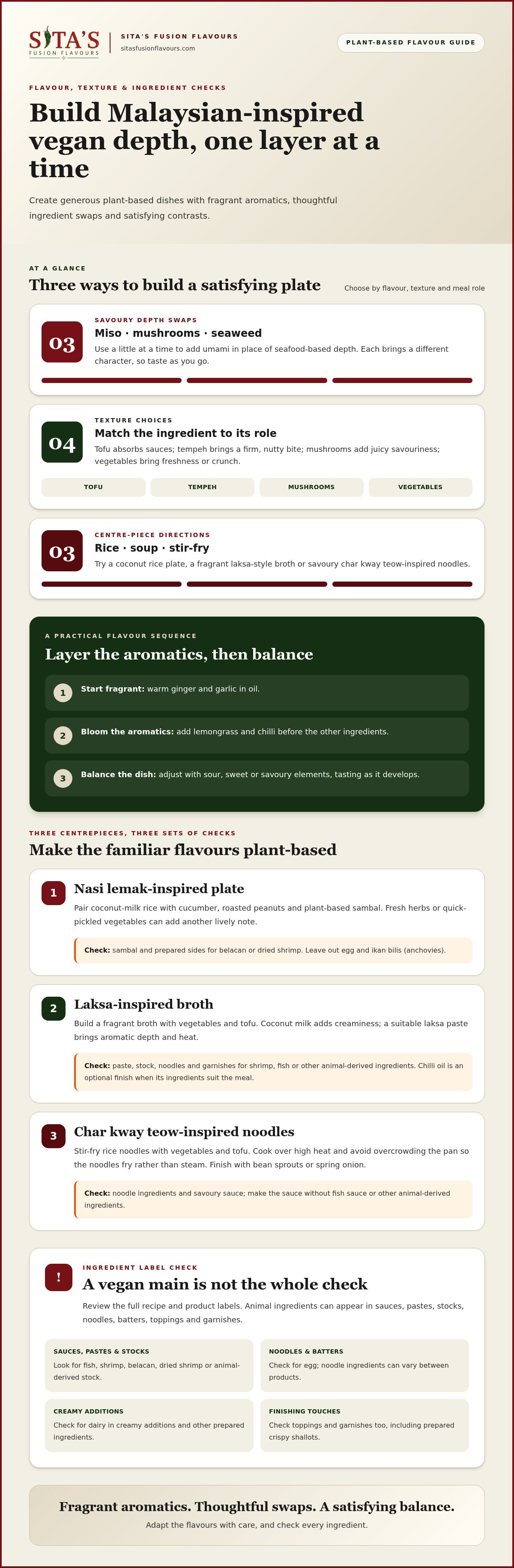
Belacan, a fermented shrimp paste, and dried shrimp give some sambals and sauces concentrated savoury depth. To build umami without seafood, try a little miso, finely chopped mushrooms or seaweed. Each brings a different character, so start with a small amount and taste as you go rather than expecting an exact match.
Check the ingredient list on curry pastes, bottled sauces, stocks and seasoning mixes, where fish, shrimp or other animal-derived ingredients may be less obvious. Look for egg in batters and noodles, dairy in creamy additions, and animal stock in soups and braises. Checking ingredients before cooking can prevent an otherwise plant-based meal from being undone by one sauce or garnish.
- For savoury depth: build flavour with miso, mushrooms or seaweed, adding small amounts and tasting between additions.
- For sauces and pastes: scan the full ingredient list for fish, shrimp, egg, dairy and animal-derived stock.
- For finishing touches: check toppings and garnishes too, including crispy shallots and other prepared extras.
How do vegan swaps preserve flavour and texture?
Start by considering the role an ingredient plays. Tofu absorbs marinades and sauces; tempeh offers a firm, nutty bite; mushrooms bring a juicy, savoury quality; and vegetables add freshness or crunch. Match your choice to the dish, then pair it with aromatics and a sauce that clings instead of relying on a direct one-for-one replacement.
Layer aromatics to build complexity. Warm ginger and garlic in oil, then add lemongrass and chilli so their fragrance blooms before the other ingredients go in. Balance that aromatic base with sour, sweet or savoury elements, tasting as the dish develops. These steps give vegan Malaysian food recipes satisfying depth and texture. The aim is a generous plant-based interpretation inspired by Malaysian flavours, not a claim that one adaptation is the definitive version.
Malaysian vegan rice and noodle recipes for a satisfying centrepiece
A fragrant rice dish or steaming bowl of noodles can anchor a plant-based meal. Crisp vegetables, creamy coconut and lively sambal bring contrast to every mouthful. These three Malaysian-inspired ideas offer different textures and flavours, from a cool, crunchy nasi lemak plate to warming laksa and a quick, savoury noodle stir-fry. Treat them as adaptable recipe directions, not fixed versions of traditional dishes.
What makes a vegan nasi lemak feel complete?
Nasi lemak centres on rice cooked with coconut milk, traditionally served with accompaniments that bring crunch, freshness and heat. For a vegan plate, add cucumber, roasted peanuts and a plant-based sambal. Check the sambal for belacan or dried shrimp, and leave out the egg and ikan bilis, or anchovies.
Those omissions change the traditional mix rather than reproduce it exactly. Balance rich, creamy rice with cool cucumber, crunchy peanuts and a bright, spicy sambal. A handful of fresh herbs or quick-pickled vegetables adds another lively note.
How can laksa and char kway teow be made plant-based?
For laksa, start with a fragrant broth, then add vegetables and tofu for substance. Coconut milk makes the soup creamy, while a suitable laksa paste brings aromatic depth and heat. Check both the paste and stock for shrimp, fish or other animal-derived ingredients. A chilli oil laksa recipe offers another flavour direction. Use chilli oil as an optional finish only when its ingredients suit the meal.
Char kway teow makes a punchy alternative. Stir-fry rice noodles with vegetables and tofu, then coat them in a savoury sauce made without fish sauce or other animal-derived ingredients. Cook over high heat and avoid overcrowding the pan so the noodles fry rather than steam. Finish with bean sprouts or spring onion for a crisp, fresh contrast.
Use these checks as you plan each dish:
- Nasi lemak: check sambal, toppings and any prepared sides.
- Laksa: review the paste, stock, noodles and garnishes.
- Char kway teow: check the noodles and savoury sauce, then add tofu for a more substantial plate.
Small details make a difference. Noodle ingredients vary between products, so read the label rather than assuming they contain only rice or wheat. Clear recipe notes also help distinguish a suggested plant-based variation from a traditional recipe, leaving room to adapt without making broad claims about authenticity.
For a final spark at the table, explore handcrafted Malaysian-inspired chilli oils as optional accents. Check that the ingredients suit your vegan meal, then add a little at a time so the heat complements rather than overwhelms the broth or noodles.
Vegan Malaysian curries and protein-rich mains with layers of flavour
A satisfying main needs more than a good sauce. Your choice of ingredient shapes the dish’s bite, how it absorbs spice and whether it feels tender, crisp or pleasantly chewy. Firm tofu suits a mellow, coconut-rich curry; tempeh brings a nuttier, more robust character to sambal; and mushrooms or jackfruit take a slow-simmered, rendang-style sauce in a different direction.
Think of these as adaptable cooking ideas, not fixed recipes or nutrition guarantees. The texture you get depends on your ingredients and how you prepare them. For any option, read the labels on curry pastes and sambal, as some contain shrimp paste or fish. Check stocks too, and choose a plant-based alternative if they include animal-derived ingredients.
Which plant-based protein works best in a Malaysian-inspired curry?
Firm tofu is flexible and absorbs the surrounding spices. Pat it dry and brown it before adding the sauce so it holds its shape during simmering. Tempeh is denser, with a distinct, nutty taste that stands up well to bold sambal. For an option beyond soy, chickpeas add a soft, substantial bite, while vegetables such as eggplant or cauliflower carry a fragrant curry sauce.
| Main idea | Main ingredient | Texture | Flavour profile | Meal role |
|---|---|---|---|---|
| Malaysian-inspired curry | Firm tofu | Tender inside, lightly browned outside | Creamy, aromatic and gently spiced | Spoon over rice for a comforting main |
| Tempeh sambal | Tempeh | Firm and satisfyingly chewy | Nutty, savoury and chilli-led | Serve with rice and a fresh side |
| Rendang-style dish | Mushrooms or jackfruit | Juicy and tender, or soft and fibrous | Deeply spiced with a rich, reduced sauce | Make it the centrepiece of a shared meal |
How can a vegan rendang-style dish build depth?
Mushrooms and jackfruit offer different textures, so choose according to the experience you want. Mushrooms become tender and savoury; jackfruit softens into strands that hold onto sauce. Simmer either with a suitable spice paste, aromatics such as ginger, garlic and lemongrass, and coconut milk if it suits the recipe. Let the sauce reduce until it clings to the ingredients rather than pooling on the plate.
Slowly reducing the sauce concentrates the spices and coconut, but it doesn’t make the dish identical to rendang made with meat. Describe it clearly as a rendang-style plant-based adaptation. This thoughtful variation lets you keep the aromatic spirit of a dish while choosing ingredients for their own qualities.
Malaysian vegan sides, snacks and breakfast ideas to round out the table
A full table needs contrast as much as it needs a hearty main. Tangy acar, spicy vegetable sambal, crisp raw vegetables and soft rice or noodles each bring a different texture and temperature. These smaller dishes can refresh a rich curry, add crunch beside laksa or turn a few vegan Malaysian food recipes into a generous spread for sharing.
Which vegetable sides bring freshness and crunch?
Acar is a tangy pickled vegetable side that cuts through creamy or richly spiced mains. Use crisp vegetables such as cucumber and carrot, then let them sit in a sharp, lightly sweet dressing so their freshness carries across the plate. For a warmer, punchier option, serve vegetables with sambal made without shrimp paste or other animal-derived ingredients.
Gado-gado-inspired salad adds another combination of crunch and sauce to a regional spread. Gado-gado is Indonesian in origin, so describe it as a neighbouring cuisine’s contribution rather than a Malaysian dish. Its vegetables and peanut sauce can complement Malaysian-inspired mains, but check the sauce ingredients to keep the meal plant-based.
Mix textures deliberately: pair crisp vegetables with soft rice, noodles or a spoonable curry. A tangy side can brighten a creamy main, while a small serving of spicy sambal offers adjustable heat. Not every dish needs to be hot. Cucumber, pickles and fresh vegetables give diners a cooling choice.
What can you serve for a Malaysian-inspired vegan breakfast or snack?
Vegan roti jala makes a lacy, tender snack or breakfast when prepared with plant-based batter. Serve it with a vegetable curry for dipping, and check the batter for egg and the curry for animal-derived stock or paste ingredients. It’s a lighter way to enjoy these flavours rather than another main-meal centrepiece.
Kuih-style treats and coconut rice can also suit a plant-based menu with deliberate adaptations. Check sweet recipes for egg, dairy and other animal-derived ingredients, and use coconut milk where it fits the dish. Pair coconut rice’s soft, fragrant grains with a savoury or tangy accompaniment. It works as a breakfast or snack idea, rather than a complete main.
- For freshness: add acar or a simple plate of crisp vegetables.
- For heat: serve a plant-based vegetable sambal on the side so everyone can adjust their portion.
- For a lighter bite: offer vegan roti jala with curry, or a clearly adapted kuih-style treat.
For another finishing touch, browse handcrafted chilli oils from SITA'S Fusion Flavours to bring aroma and heat to a side or snack. Check the ingredient list before serving one with a vegan meal, and offer it separately so guests can choose how much spice they’d like.
Build a balanced Malaysian vegan menu and finish it with bold flavour
A memorable spread doesn’t need a complicated menu. Give each dish a clear role: one filling centrepiece, something to carry or complement it, and a fresh or crunchy side to lift the plate. This simple structure helps you combine vegan Malaysian food recipes without crowding the table with dishes that are all rich, soft or spicy.
How do you put together a simple vegan Malaysian spread?
Start with a rice or noodle dish, such as coconut rice or vegetable-rich laksa. Add one protein-rich main, perhaps tofu curry or tempeh sambal, then finish with acar, cucumber or another crisp vegetable side. The contrast matters: creamy rice and a savoury main feel brighter beside something tangy, cool or crunchy.
For a larger meal, add a second vegetable dish rather than another rich main. Stir-fried greens or a fresh salad bring colour and a lighter texture, while a small bowl of sambal lets diners choose their own heat. Keep the main dishes milder and serve spicy components separately. Guests can then build a plate that suits their palate without every bite being fiery.
- Choose a centrepiece: pick a rice or noodle dish to anchor the meal.
- Add substance: serve one tofu, tempeh, chickpea or vegetable-based main.
- Bring contrast: include a fresh, pickled or crunchy side, then offer chilli separately.
For an easy balance, think about the whole spread rather than seasoning every dish the same way. Coconut rice or a creamy curry brings richness; a savoury main adds depth; pickles provide tang; and fresh vegetables cool the palate. Keep one dish mild, and let sambal or chilli oil provide optional heat at the table.
How can chilli oil add a finishing note?
Chilli oil is an optional finishing accent, not a replacement for seasoning the dish as it cooks. A small spoonful can add aroma and heat to rice, noodles or a vegetable side, but taste the meal first and use it sparingly. For more inspiration, the Kaffir Lemongrass Chilli Oil Australia guide and small-batch chilli oil guide offer ideas for pairing chilli oils with different dishes.
SITA'S Crispy Chilli Oil can be served as an optional table accent when its ingredient list suits the vegan meal. Keep it separate so diners can control the amount. This finishing touch personalises the plate without making every dish hotter.
Bring your menu together with flavours that feel generous, balanced and made for sharing. Explore SITA'S handcrafted chilli oils and choose one as an optional accent when its ingredients suit your meal.
Bring a little more flavour to your next shared meal
Let your next meal be a chance to experiment. Choose one new combination of aromas or textures, taste as you cook and make the dish your own. The best vegan Malaysian food recipes leave room for curiosity, whether you’re preparing a relaxed weeknight dinner or setting out a table for friends.
For an extra spark, explore SITA'S Malaysian-inspired flavours. Our handcrafted condiments are made in small batches with Australian-sourced ingredients and draw on family recipes passed down through generations. If you’re considering a chilli oil for a vegan meal, check its ingredient list first to ensure it suits the dish.
Explore SITA'S handcrafted Malaysian-inspired flavours and find a fresh note to inspire your next meal. A little aroma, a touch of heat and your own creative flair can make the table feel wonderfully yours.
Frequently Asked Questions
Is Malaysian food traditionally vegan?
No, Malaysian food isn’t automatically vegan, even though rice, noodles, vegetables, coconut and spices feature in many dishes. Recipes differ between households and regions, so check the ingredients rather than relying on a dish name. For vegan Malaysian food recipes, pay close attention to condiments and finishing touches: a vegetable dish may still use seafood seasoning, while a noodle topping or soup base can contain animal ingredients.
Can Malaysian curry paste contain shrimp or fish?
Yes, some curry pastes and sambal include belacan, dried shrimp or other seafood. Check the full ingredient list on packaged products, including seasoning sachets sold with noodles or meal kits. For homemade paste, build a savoury base with browned onion, garlic and spices, then add a small amount of mushroom or miso if it suits the flavour. Taste before adding extra salt, as prepared pastes can already be salty.
How can I make Malaysian sambal vegan?
Make sambal with chilli, aromatics and a balance of savoury, sweet and tangy flavours, leaving out belacan and dried shrimp. As a starting point, cook chilli with shallot and garlic, then adjust with a little sugar and lime juice to taste. Mushrooms, miso or seaweed can add savouriness, though none will taste exactly like shrimp paste. Add chilli gradually and taste between additions.
Are rice noodles always vegan?
No, don’t assume every rice noodle product is vegan. Check its packet for ingredients and allergen information, then inspect the sauce, seasoning and toppings separately. In char kway teow, for example, rice noodles may be plant-based while the stir-fry sauce contains fish sauce or the garnish includes dried seafood. If cooking for someone with an allergy, keep utensils and preparation surfaces clean and separate from ingredients that could trigger a reaction.
What is a good vegan substitute for belacan?
There isn’t one substitute that tastes exactly like belacan. Try a small amount of miso for fermented savouriness, finely chopped mushrooms for a rounded, earthy note, or seaweed for a briny quality. Choose according to the dish and adjust gradually: miso can be salty, mushrooms add moisture, and seaweed can quickly dominate. These swaps offer different ways to build flavour rather than a one-for-one replacement.
Can Malaysian vegan recipes be made gluten-free?
Yes, many recipes can be adapted, but check every packaged ingredient, especially soy sauce, kecap manis, curry paste, stock and seasoning blends. Choose products clearly labelled gluten-free and confirm that noodles and garnishes also suit your needs. Rice and plain rice noodles can be useful starting points, but labels still matter. If cooking for someone with coeliac disease or a serious allergy, prevent cross-contact during preparation.
How do I make a vegan Malaysian meal less spicy?
Keep chilli out of the main pot where practical, then serve sambal or chilli oil separately so diners can choose their own heat. Build fragrance with ginger, garlic and lemongrass rather than adding more chilli for intensity. Coconut-rich dishes, cucumber and tangy pickles can soften the overall impression of a spicy menu. Since chilli strength varies, add it in small amounts and taste as you go.
Can Malaysian vegan recipes be prepared ahead of time?
Yes, you can prepare some components ahead, such as a curry base or pickled vegetables, but storage depends on the recipe and ingredients. Refrigerate cooked food promptly, store it in suitable containers and follow Australian food-safety guidance for storage and reheating. Keep crisp toppings, herbs and fresh garnishes separate until serving so they don’t soften in the sauce. Reheat only what you plan to serve.