
Ultimate Chilli Oil for Dumplings: Home Yum Cha Guide
·
SITA'S Fusion Flavours
Why settle for a watery, one-dimensional sauce that does nothing but burn your tongue and mask the delicate flavour of a prawn har gow? Most of us have been there, staring at a dull, oily mess from the supermarket or a disappointing takeaway packet that lacks any real soul. It’s frustrating when the heat feels like a blunt instrument rather than a balanced symphony of spice. You deserve that vibrant, restaurant-quality yum cha experience in your own kitchen without the fear of blowing your head off.
Finding the right chilli oil for dumplings is about more than just adding fire; it's about finding a handcrafted companion that respects the ingredients. In this guide, you’ll discover how to choose and use the perfect infusion to transform a simple snack into a gourmet feast. We’ll preview the best small-batch textures, explore aromatic profiles like kaffir lemongrass, and show you how supporting local Australian makers can turn your pantry into a treasure trove of flavour. Get ready to elevate every bite with a crunch and a pop that lingers long after the meal is over.
Key Takeaways
- Ditch the flat, metallic taste of supermarket alternatives and learn why a handcrafted oil acts as a sophisticated flavour delivery system.
- Learn to balance aromatic notes like kaffir lime and garlic with the right heat level to enhance your food rather than mask it.
- Master the art of matching specific proteins to your infusion, such as using a citrusy Aji Limon or Kaffir Lemongrass chilli oil for dumplings filled with delicate seafood.
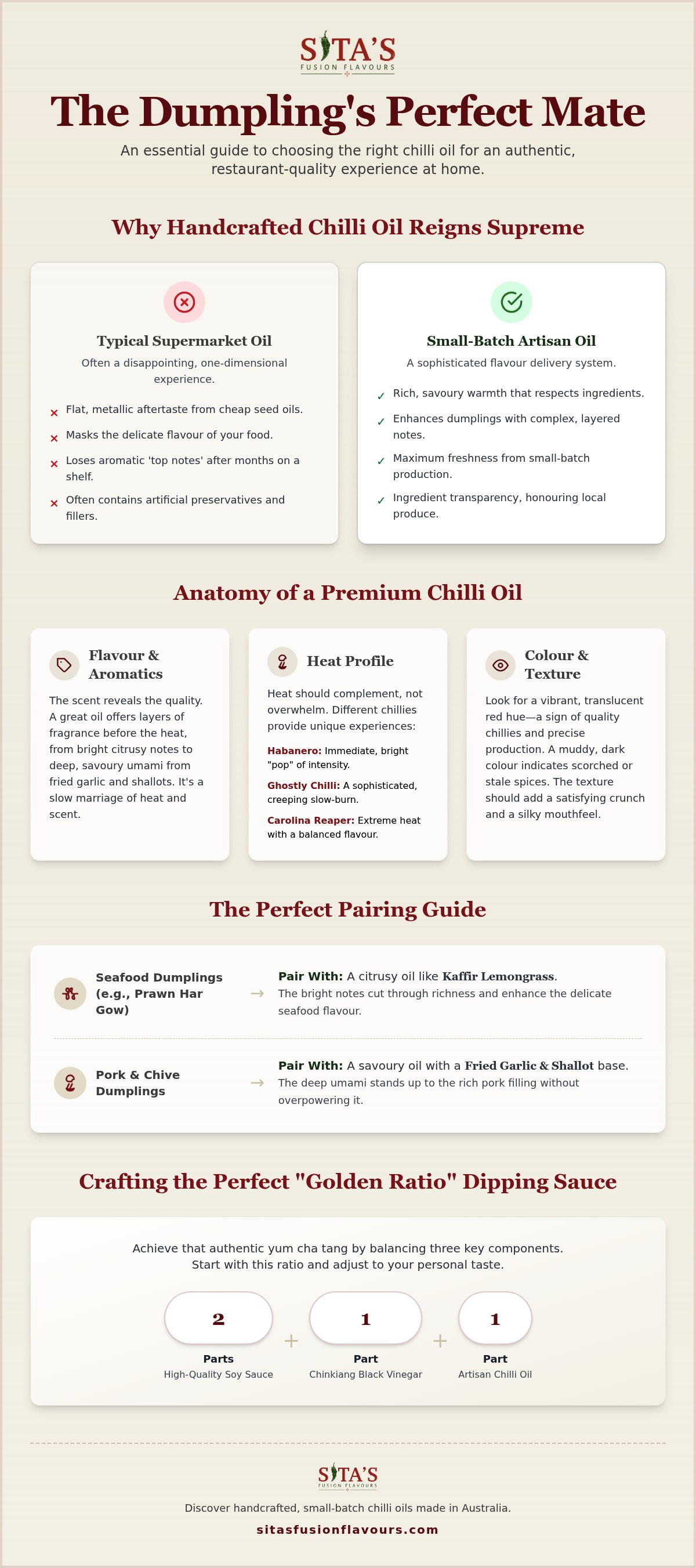
- Discover the "golden ratio" for the perfect dipping sauce by combining high-quality soy and Chinkiang black vinegar for that authentic yum cha tang.
- Connect with the legacy of local Australian craftsmanship by choosing small-batch oils that prioritise fresh ingredients and time-honoured family recipes.
The Dumpling’s Best Mate: Why Quality Chilli Oil is Non-Negotiable
A proper chilli oil for dumplings isn't just a side thought. It’s the conductor of the entire culinary orchestra. While many see it as a simple way to add heat, Chili oil actually functions as a sophisticated flavour delivery system. Because capsaicin and many aromatic compounds are fat-soluble, the oil acts as a vehicle, carrying the deep scents of toasted spices and charred chillies directly to your taste buds. Without a high-quality base, those intricate notes of garlic or star anise simply vanish before they hit your tongue.
We embrace a "Fusion" philosophy that honours traditional slow-infusion methods while celebrating bold Australian ingredients. It’s about the legacy of a family recipe meeting the vibrant zing of local produce. Industrial versions often rely on cheap seed oils that leave a flat, metallic aftertaste, masking the food they’re meant to enhance. By contrast, a handcrafted oil respects the dumpling, bridging the gap between the dough and the filling with a rich, savoury warmth.
The Anatomy of a Perfect Dumpling Sauce
Balance is king. A truly great dip requires a careful architecture of acidity, salt, and umami, all anchored by that essential spicy kick. The right oil does more than just season; it provides a necessary silkiness that prevents delicate skins from sticking together. There is a psychological "pop" when you bite into a dumpling slicked with a well-balanced oil. That immediate burst of texture and temperature creates a sensory spark that makes the meal feel like a special occasion rather than a quick snack. It’s the difference between a dull bite and a gourmet feast.
Small-Batch vs. Supermarket: What’s the Difference?
Freshness is the defining line. Oils sitting on supermarket shelves for months lose their volatile "top notes", those bright, citrusy, or floral aromas that define a premium product. Choosing a handcrafted chilli oil for dumplings means you are opting for a product that hasn't spent months in a warehouse. Our small-batch process ensures every jar retains its aromatic intensity. We avoid the artificial preservatives and fillers found in corporate formulas, opting instead for ingredient transparency and Australian-sourced components. This manual, human touch allows for a more complex profile. You can taste the time-intensive methods in the depth of the colour and the clarity of the spice. It’s a "maker-to-consumer" intimacy that industrial vats simply cannot replicate.
Flavour, Heat, and Texture: What Makes a Top-Tier Chilli Oil?
A vibrant, translucent red hue is the first sign of a premium chilli oil for dumplings. This colour isn't just for aesthetics; it’s a testament to the quality of the chillies and the precision of the temperature control during production. If an oil looks muddy or dark brown, it usually indicates the spices were scorched or have grown stale on a shelf. High-quality oils maintain a brilliant clarity that promises a clean, sharp taste rather than a heavy, greasy residue. With home use of these condiments reaching a 30.8% market share in 2026, more Australians are looking for that visual spark to recreate the restaurant experience at home.
Decoding the Aromatics: Lemongrass and Beyond
The secret to a truly transformative dip lies in the layers of scent that hit you before the heat even touches your tongue. While a basic Homemade Chili Oil Recipe provides a solid foundation of toasted flakes, an artisan blend introduces complex "top notes" like the citrusy lift found in kaffir lemongrass chilli oil Australia. These bright elements cut through the richness of fatty pork fillings, while a base of fried garlic and shallots provides a deep, savoury umami. Infusion is the slow, patient marriage of heat and scent. This process ensures the aromatics are deeply embedded in the oil rather than just floating on the surface.
Managing the Heat: From Mild to Reaper
Choosing the right heat level is a delicate balance. You want a spice that complements the dough and filling rather than killing your palate. Our Ghostly Chilli Oil offers a sophisticated, creeping slow-burn that builds over time, whereas a Habanero blend provides an immediate, bright "pop" of intensity. For the truly daring, a Carolina Reaper chilli oil delivers extreme heat, but even at that level, the focus remains on a balanced flavour profile. If you are trying a new chilli oil for dumplings, always test a small drop on a plain piece of dough or a bit of rice first. This simple step prevents you from accidentally overwhelming a whole batch of carefully prepared food.
Texture provides the final sensory layer. The "crunch" of fried garlic, seeds, and chilli bits creates a satisfying contrast against the soft, silky skin of a steamed wonton. This interplay of textures is why crispy styles have become a global phenomenon. Whether you prefer a smooth drizzle or a chunky topping, our Dad’s Pick Three allows you to explore these different sensory profiles to find your perfect match. It’s about more than heat; it’s about the soul of the sauce.
The Pairing Guide: Matching Your Oil to Your Favourite Dumplings
Pairing your chilli oil for dumplings is an exercise in sensory balance, much like matching a fine wine to a multi-course meal. It requires a thoughtful eye for how heat interacts with different proteins and textures. For a classic Pork and Chive dumpling, our Crispy Chilli Oil stands as the ultimate companion. The toasted garlic and onion bits provide a deep, savoury crunch that echoes the juicy interior of the meat, creating a satisfying contrast between the soft dough and the crispy toppings.
Vegetarian and mushroom dumplings often require a different approach to unlock their full potential. Without the heavy fats found in meat, these fillings rely on earthy notes and umami. Using a Masala-inspired oil or one with deep, woodsy aromatics can bridge this gap, boosting the natural flavours of the vegetables. The cooking method also dictates your choice. Steamed dumplings have a delicate, velvety skin that benefits from a lighter, fragrant drizzle. Fried dumplings, with their golden, crispy bases, can stand up to thicker, chunkier sauces that add another layer of "pop" to every bite.
The Seafood Specialist: Lemongrass and Lime
Delicate proteins like prawn har gow or scallop dumplings are easily silenced by heavy, smoky flavours. Using an oil that is too dark or overly charred can mask the natural sweetness of the seafood, turning a light lunch into something cloying. This is where the magic of citrusy infusions comes into play. Our Kaffir Lemongrass Chilli Oil provides a bright, zesty finish that acts as a palate cleanser. The acidity from the lemongrass cuts through the richness of the seafood, ensuring each bite feels fresh and vibrant. For those who enjoy a sharper citrus note, our Aji Limon Chilli Oil offers a similar high-register heat that respects the integrity of the prawn.
Bold Meats and Extreme Heat
When you're serving robust meats like beef or lamb, you can afford to be daring with your heat levels. These dumplings carry a higher fat content, and that fat acts as a natural buffer for capsaicin. It coats the tongue, allowing the heat to bloom slowly rather than stinging immediately. This makes beef dumplings the perfect canvas for our Ghostly Chilli Oil or the intense Carolina Reaper Chilli Oil. You get the thrill of the heat without losing the flavour of the meat. For a truly sophisticated experience, try creating a layered profile by mixing your oils. Start with a base of Crispy Chilli Oil for the essential texture, then add a few drops of Reaper to provide a lingering, professional burn that commands attention.
Crafting the Perfect Dip: A Step-by-Step Guide to the Golden Ratio
Building the ultimate dipping sauce is a craft that requires more than just a random splash of condiments. It begins with a high-quality soy sauce. For most, a premium light soy is the preferred base; it delivers the necessary salt and umami without masking the delicate filling of your meal. If you prefer a thicker, more robust dip with a deeper colour, adding a splash of dark soy can provide that desired body. This foundation sets the stage for the other elements to shine.
The secret weapon in any kitchen is Chinkiang black vinegar. This "sour" element is essential for cutting through the richness of the dough and the fat of the meat. It offers a complex, malty tang that white or apple cider vinegars simply cannot match. Once your base is set, it’s time for the star of the show: adding 2-3 teaspoons of handcrafted chilli oil. When you reach for the jar, ensure you dig deep to capture plenty of the sediment. These crispy bits of garlic, onion, and toasted spices are where the true heart of the flavour lives, providing the texture and intensity that defines a gourmet experience.
The 3-2-1 Dumpling Sauce Formula
For those who value precision, the 3-2-1 ratio is a reliable starting point: 3 parts soy sauce, 2 parts black vinegar, and 1 part chilli oil for dumplings. This formula ensures no single element overpowers the others. However, a passionate artisan knows when to break the rules. If you are serving crispy potstickers, you might tilt the ratio towards more oil to complement the fried base. For boiled wontons, a heavier hand with the vinegar provides a bright, refreshing lift that balances the soft, slippery skins. Remember, the sediment in your oil is the soul of the sauce; those concentrated pockets of spice are what elevate a simple dip into something extraordinary.
Advanced Tweaks for Foodies
If you find your chosen heat level is a little too daring, a tiny pinch of sugar can work wonders to round out the extreme edges of the spice. For a truly unique "fusion" depth, a dash of Masala Chai spices can introduce an unexpected aromatic warmth that surprises the palate. Timing is also critical to the sensory experience. You should never mix your sauce more than 10 minutes before you plan to eat. Preparing it too early allows the aromatics to dull and the textures to soften. To finish, top your creation with fresh coriander, sliced spring onions, or a single drop of toasted sesame oil for a professional, fragrant finish. Ready to master your own blend? Explore our full range of infusions and find your perfect chilli oil for dumplings today.
The Small-Batch Revolution: Why Artisan Oils Reign Supreme
Choosing a premium chilli oil for dumplings is a commitment to the craft. While it’s tempting to grab a cheap, industrial bottle from the supermarket, the difference in quality is staggering. Mass-produced oils are often made in massive vats where spices sit for months, leading to a flat, sometimes rancid profile. Investing in a single jar of handcrafted oil is a far better choice than buying five cheap ones. You aren't just paying for heat; you are paying for a legacy of flavour that corporate formulas simply cannot replicate. Our family recipes are passed down through generations, ensuring every spoonful carries a heritage of taste and a human touch that machines can't mimic.
The versatility of a high-quality infusion extends far beyond the dumpling steamer. Once you experience the depth of a small-batch oil, you’ll find it becomes a kitchen essential for almost every meal. It adds a sophisticated "pop" to morning eggs, transforms a simple bowl of noodles into a gourmet lunch, and brings a daring heat to avocado toast. It’s about more than just one dish; it’s about having a pantry staple that elevates your entire culinary repertoire.
Small-Batch Craftsmanship in Australia
Small-run production is the only way to guarantee maximum freshness. At SITA’S Fusion Flavours, we organise our production cycles to ensure that the spices and oils never lose their aromatic intensity. By sourcing ingredients from local Australian growers, we support our community while securing the most vibrant produce available. This "Modern Traditionalist" approach allows us to innovate with bold infusions like kaffir lemongrass while respecting the slow, time-intensive methods of the past. There are no stale spices here, only the sharp, clean scent of manual labour and passion.
Joining the Fusion Community
To preserve the delicate aromatics of your artisan oil, store it in a cool, dark place away from direct sunlight. This keeps the "top notes" of the citrus and garlic as fresh as the day the jar was sealed. Sharing this passion with others is part of the joy of the foodie lifestyle. Because our oils are both a luxury craft and a kitchen essential, chilli oil gift sets have become the ultimate present for those who value flavour over filler. We encourage you to experiment with your own fusion pairings at home. Whether you're drizzling it over seafood or stirring it into a hearty stew, the only limit is your imagination. Welcome to a world where heat and heritage meet in every bite.
Elevate Your Home Yum Cha Experience
Transforming your kitchen into a gourmet sanctuary starts with the right bottle on the table. You've discovered how a handcrafted chilli oil for dumplings acts as more than just a condiment; it’s a bridge between heritage and innovation. By prioritising small-batch quality over industrial convenience, you ensure every bite is rich with aromatic intensity rather than flat, metallic heat. Whether you’re perfecting the golden ratio of soy and vinegar or pairing a citrusy infusion with delicate prawns, the secret lies in the craftsmanship.
We honour this process through family recipes that blend traditional roots with a modern fusion twist. Every jar is handcrafted in small batches using Australian-sourced ingredients to guarantee a freshness you can actually taste. It’s time to move beyond watery takeaway sauces and embrace the bold, sensory crunch of a truly premium oil. Browse SITA’S Handcrafted Chilli Oil Range and discover the difference that a passionate artisan makes. Your next meal deserves that professional spark. Happy dipping!
Frequently Asked Questions
Does chilli oil for dumplings go bad or expire?
Chilli oil for dumplings doesn't necessarily expire like fresh produce, but the oil can go rancid over time. Handcrafted versions usually maintain peak freshness for six to twelve months if stored correctly in a cool, dark place. You'll know it's past its best if the aroma loses its bright, spicy punch and starts to smell like old cardboard. Because we produce in small batches, our oils reach you much fresher than mass-produced supermarket alternatives.
What is the best type of oil for making chilli oil?
Neutral vegetable oils with high smoke points, such as rice bran or grapeseed oil, are the best choices for a clean finish. These oils allow delicate aromatics like kaffir lime and lemongrass to shine without adding a heavy or greasy aftertaste. We avoid industrial seed oils in our production to ensure the highest quality. Using a premium, stable base ensures the infusion remains clear and vibrant, providing a sophisticated vehicle for the heat of the chillies.
Can I use chilli oil for things other than dumplings?
Absolutely, your chilli oil for dumplings is a versatile pantry staple that works across countless dishes. It adds a bold, savoury kick to fried eggs, stir-fried noodles, and even smashed avocado on sourdough. Many of our customers use it as a finishing drizzle for grilled seafood or a spicy boost for a weekend pizza. The layers of garlic and toasted spices provide an instant flavour upgrade to almost any simple meal in your kitchen.
How do I make my dumpling sauce less spicy if I added too much oil?
If you've been a bit heavy-handed with the spice, you can easily balance the heat by adding more soy sauce or black vinegar to the dip. A tiny pinch of white sugar also helps to round out the sharp edges of extreme capsaicin. For a more substantial fix, try whisking in a small amount of peanut butter or tahini. This creates a creamy, nutty sauce that buffers the intensity while adding a rich, new dimension to the meal.
Why is some chilli oil crunchy while others are smooth?
The difference comes down to the sediment or the solid ingredients left in the jar after the infusion process. Smooth oils are typically strained to provide a clean, spicy drizzle that is perfect for delicate seafood. Crunchy versions, often called chilli crisp, contain fried garlic, shallots, and chilli flakes that haven't been removed. This texture provides a satisfying pop and a more intense, savoury experience that many people prefer for hearty meat fillings or noodles.
Is Australian-made chilli oil better than imported versions?
Australian-made artisan oils often surpass imported versions because they are produced in smaller runs with higher quality control. Local makers use fresh, Australian-sourced ingredients that haven't spent months in shipping containers or international warehouses. This proximity ensures the volatile aromatic notes remain intact. Supporting local growers also means you are getting a product made with transparent processes and a genuine human touch that is often missing from global, mass-produced brands.
What is the difference between chilli oil and chilli crisp?
While the terms are often used interchangeably, chilli oil is the infused liquid, whereas chilli crisp is a condiment packed with crunchy solids. A standard oil provides a smooth, consistent heat throughout the dish. In contrast, a crisp includes fried aromatics like garlic and soybeans to create a multi-sensory experience. Our Crispy Chilli Oil bridges this gap, offering both the deep infusion of a traditional oil and the addictive crunch of toasted family recipes and spices.
How should I store my handcrafted chilli oil to keep it fresh?
You should store your handcrafted oil in a cool, dark cupboard away from the heat of the stove or direct sunlight. Exposure to light and warmth can cause the fats to oxidise and the aromatics to fade prematurely. Always use a clean, dry spoon when serving to prevent cross-contamination. While refrigeration isn't strictly necessary for oil-based products, it can extend the shelf life even further, though the oil may thicken or cloud slightly when cold.