
How to Make Nasi Lemak Sambal: A Step-by-Step Guide
·
SITA'S Fusion Flavours
What makes the difference between balanced nasi lemak sambal and a raw, one-note paste? Often, it is knowing when to slow down. If you’ve wondered how to make nasi lemak sambal with the right balance of heat, sweetness and tang, the key is to understand what each ingredient brings and watch how the paste changes as it cooks.
This step-by-step guide covers preparing chillies, choosing ingredients such as tamarind and gula Melaka, and adjusting the flavour as you cook. You’ll also learn what to look for at the pecah minyak stage, when oil separates from the paste and its colour and aroma deepen. Follow the cues rather than relying on time alone, then serve the sambal with coconut rice, crunchy ikan bilis, peanuts and cucumber.
Key Takeaways
- Learn how to make nasi lemak sambal with a flexible method that lets you adjust the chilli choice and heat to suit your taste.
- Watch the paste’s aroma, colour and texture as it cooks instead of relying on time alone.
- Taste for heat, savouriness, sweetness and acidity separately, then make small, deliberate adjustments.
- Look for signs that the sambal is cooked through, so it tastes fragrant and rounded rather than raw or burnt.
- Serve a modest spoonful with complementary sides, then adjust each bite to suit your preference.
What Makes Nasi Lemak Sambal Distinctive?
Nasi lemak sambal is a chilli-based condiment served with nasi lemak. A small spoonful brings fragrant coconut rice into sharper focus. The aim is not simply to turn up the heat. A well-balanced sambal combines chilli warmth with savoury depth, measured sweetness and a gentle tang, so each flavour has room to come through.
Sambal is a broad family of chilli condiments, and ingredients and methods vary between households and regions. Nasi lemak sambal has a particular role at the table: it complements the rice and accompaniments without overwhelming them. Some recipes build savouriness with dried anchovies or belacan, while sugar and tamarind can contribute sweetness and acidity. No single version defines every cook’s sambal.
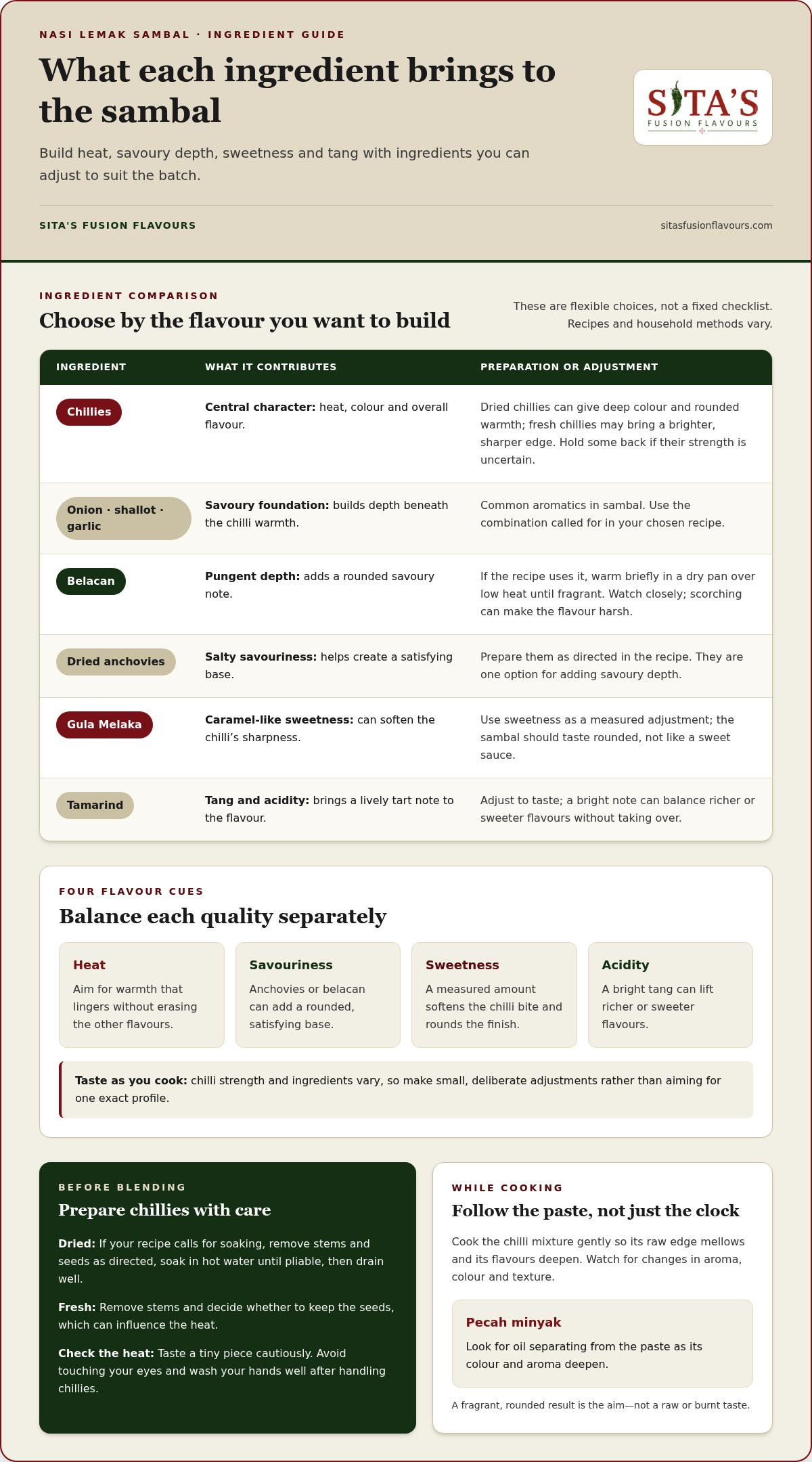
Use this flavour framework rather than treating one profile as a rule. As you learn how to make nasi lemak sambal, think of each quality as a separate dial. Chillies set the warmth and colour; savoury ingredients add depth; sweetness softens the edges; and acidity lifts the flavour. Since chilli varieties and ingredients differ, tasting as you cook is more useful than aiming for an exact profile.
- Heat: Aim for a warm, lingering chilli presence that suits your preference without erasing the other flavours.
- Savouriness: Ingredients such as anchovies or belacan can add a rounded, satisfying base.
- Sweetness: A measured amount can soften the chilli’s bite and give the sambal a fuller finish.
- Acidity: A bright, tangy note can keep richer or sweeter flavours from feeling heavy.
What does nasi lemak sambal taste like?
Expect chilli warmth first, followed by savoury richness and restrained sweetness. Sweetness should round the flavour rather than make the sambal taste like a sweet sauce. A little acidity can brighten the finish and cut through the richness without taking over. When the balance is right, no single note juts out. The sambal tastes lively and rounded, with warmth that lingers rather than a sharp, one-note sting.
How does sambal fit into a nasi lemak meal?
Nasi lemak pairs fragrant coconut rice with sambal and contrasting sides. Nasi lemak’s rice is cooked in coconut milk and pandan leaf, and the dish is served with a range of accompaniments. A modest serving of sambal brings a bright, spicy contrast to the rice. Cucumber cools the palate, egg adds a soft, creamy bite, peanuts bring crunch, and dried anchovies contribute savoury crispness.
That contrast is the point. Take a little sambal with a forkful of rice, then add a side and notice how the flavours shift. A balanced sambal supports the whole plate, leaving room to enjoy each texture and taste.
Choose and Prepare Ingredients for Nasi Lemak Sambal
Think of the ingredients as flavour-building tools, not a fixed checklist. Dried chillies can bring deep colour and rounded warmth, while fresh chillies may add a brighter, sharper edge. The variety, freshness and amount all affect the result. Start with the chillies specified in your recipe, and adjust to their strength. If you’re unsure how hot they are, try a small piece cautiously before deciding how much to include.
Onion, shallot and garlic are common aromatics that give the paste a savoury foundation. Recipes may also use belacan for pungent depth, dried anchovies for a salty, savoury note, tamarind for tang or gula Melaka for caramel-like sweetness. These are not universal requirements. Choose according to the flavour you want and the recipe you’re following. BBC Good Food’s Nasi Lemak recipe includes ingredients and steps for its sambal, offering one example of how these elements can come together.
What do the key sambal ingredients contribute?
Chillies provide the sambal’s central character, shaping its heat, colour and overall flavour. Aromatics build savoury depth beneath that chilli warmth. Sweet, sour and savoury additions help steer the finished paste: gula Melaka can soften chilli’s sharpness, tamarind can add a lively tart note, and belacan or dried anchovies can lend savouriness. Treat these as adjustable choices. Taste as you go rather than assuming every batch needs all of them.
That flexibility matters because ingredients vary. Dried and fresh chillies can differ in strength, even within the same variety. If yours are potent, hold some back when blending. If the paste tastes one-dimensional later, you can refine its balance during cooking. For another Malaysian-inspired cooking idea, explore this authentic chilli oil laksa recipe.
How should you prepare chillies and flavourings?
Prepare each ingredient according to the recipe you’ve chosen. If it calls for dried chillies to be soaked, remove stems and seeds as directed, cover them with hot water and leave them until pliable. Drain well before blending, since excess soaking water can loosen the paste. For fresh chillies, remove the stems and decide whether to keep the seeds, which can influence the heat.
- Check the heat: Taste a tiny piece cautiously before blending. Avoid touching your eyes after handling chillies, and wash your hands well.
- Toast belacan gently: If the recipe uses it, warm it briefly in a dry pan until fragrant. Keep the heat low and watch closely, as scorching can make its flavour harsh.
- Prepare anchovies as directed: If they’re included, follow the preparation instructions in your recipe before adding them.
Once the ingredients are ready, you’ll have more control over the paste’s texture and flavour. SITA'S Fusion Flavours makes small-batch Malaysian-inspired condiments and handcrafted chilli oils, offering another way to explore bold chilli flavours alongside your cooking.
How to Cook Nasi Lemak Sambal Until It Is Fragrant
Cook the chilli mixture gently so its raw edge mellows and its flavours deepen. Follow your recipe’s quantities, but let the paste’s aroma, texture and appearance guide you. These cues are more reliable than watching the clock alone, since batch size, pan shape and heat affect how quickly it cooks.
- Prepare the ingredients. Drain soaked dried chillies well, and have the aromatics and any other recipe ingredients ready. This helps keep the cooking process steady once the pan is hot.
- Blend the paste. Process the chillies and aromatics to the texture your recipe calls for. A smooth paste cooks evenly; a coarser blend keeps more texture. If the mixture is stiff, use only the liquid your recipe recommends.
- Fry gently. Warm the oil over low-to-medium heat, add the paste carefully and stir to coat it. At first, it may smell sharp and raw. Stir frequently as it cooks. The aroma should become warmer, fuller and more savoury, while the paste darkens slightly and thickens.
- Season in stages. Add the recipe’s sweet, sour or savoury ingredients as directed. Stir well, then taste a small amount once it has cooked. Adjust gradually, letting each change blend in before adding more.
- Assess doneness. Look for a thicker, glossy paste with a cooked, aromatic smell and signs of oil separating around it. Use these cues together rather than relying on one sign or a set cooking time.
What does pecah minyak look like?
Pecah minyak is the stage when oil visibly separates from the cooked chilli mixture, appearing as small pools or a sheen around the paste. The sambal should smell cooked and fragrant, not raw or scorched. As The Guardian describes, cooking until the oil separates is known as pecah minyak. Treat it as a useful cue, not the only test of readiness.
Timing varies with the amount in the pan, its width and the strength of the heat. A small batch in a wide pan may reach this stage differently from a larger quantity in a deeper one. Watch the surface and stir through the paste. Check whether the glossy oil remains visible rather than disappearing as you mix.
How can you avoid raw or bitter sambal?
Keep the heat steady and stir frequently, especially around the pan’s base and edges, where paste can catch. If the mixture spits or browns too quickly, lower the heat. Burnt aromatics or chilli paste can leave bitterness that extra sweetness won’t neatly fix. Once it smells rounded and cooked, taste cautiously and make small seasoning adjustments.
Patience is part of making sambal: the aroma shifts, the colour deepens, and the paste slowly turns glossy. If you enjoy exploring bold, handcrafted chilli flavours alongside Malaysian-inspired cooking, discover SITA'S handcrafted chilli oils.
How to Balance Heat, Sweetness and Tang in the Finished Sambal
A final taste is more than a quick check for chilli strength. Let a small spoonful cool slightly, then assess each part of the flavour in turn. How much heat arrives, and how long does it linger? Does the savoury base feel rounded? Is sweetness supporting the flavour or dominating it? Does acidity lift the finish? This sequence helps identify what needs adjusting instead of adding ingredients at random.
Chilli variety and quantity shape the heat, so there’s no universal spice level to aim for. A batch made with one type of chilli may feel warmer or brighter than one made with another, even if you use the same amount. As you learn how to make nasi lemak sambal, keep your chosen recipe close and make one small change at a time. Stir thoroughly, taste again and give the flavours a moment to settle.
- Heat: Is the warmth comfortable, or does it drown out the other flavours?
- Savouriness: Does the sambal taste rounded, or does it need a little more of a savoury ingredient already in the recipe?
- Sweetness: Does it soften the chilli, or leave a sugary aftertaste?
- Acidity: Does it brighten the finish, or make the sambal taste too sharp?
How do you adjust sambal that tastes too hot or too sweet?
If the heat is stronger than you’d like, avoid trying to mask it with a large spoonful of sugar. If you have extra cooked chilli base from the recipe, blend in a little at a time to spread the heat through more sambal. If it is too sweet, add a small amount of the recipe’s acidic or savoury ingredient, if available. Stir well and taste after each change. Gradual corrections are easier to control.
Keep the sambal’s original character intact. The goal isn’t to remove every trace of chilli or sweetness, but to bring the other flavours back into view. If you don’t have extra cooked base, resist adding several new ingredients at once. Make the smallest adjustment your recipe allows, mix thoroughly, then pause and taste again before deciding what it needs next.
What if the sambal tastes flat, sharp or bitter?
A flat taste may need a little more savoury depth or salt, if either is already part of your recipe, before you consider adding chilli. If the acidity feels too sharp, a small addition of the recipe’s sweetener can soften the edge. Bitterness may point to scorched chilli paste or aromatics. Seasoning can’t always disguise burnt flavours, so avoid scraping any stuck, darkened residue back into the sambal.
Handcrafted chilli condiments show how different ingredients can shape heat and flavour. If you’re curious about that craft, explore this guide to small-batch chilli oil. For a bold chilli accompaniment to keep on hand, explore SITA'S handcrafted chilli oils.
Serve Nasi Lemak Sambal and Make the Meal Your Own
Serve cooked, balanced sambal as part of the meal, not as a flavour that has to cover every bite. A modest spoonful beside fragrant coconut rice lets you control the heat and enjoy the contrast with each accompaniment. Start small, then add more as you eat. This makes the plate easy to adjust for different tastes around the table.
What goes on a nasi lemak plate?
Use coconut rice as the fragrant base, with sambal served alongside rather than mixed through by default. Familiar additions include cucumber, egg, peanuts and dried anchovies, though household and regional preferences vary. Add a little sambal to one bite first, then adjust the next to suit your taste. The best balance can shift from bite to bite.
- Cucumber brings a cool, fresh contrast to the chilli.
- Egg adds a soft, creamy texture.
- Peanuts contribute a firm, satisfying crunch.
- Dried anchovies bring a crisp, savoury note.
Build the plate with the textures you enjoy, and keep the sambal within easy reach. Try a small amount with rice and cucumber, then taste it with egg or anchovies. The accompaniments change how the sambal comes through, so serving it separately gives everyone room to find their own balance.
For leftover sambal, use a clean container and follow the handling and storage guidance in your recipe. Don’t assume its ingredients or appearance indicate how long it will keep. If the recipe gives specific instructions, follow those rather than relying on a general rule.
How can you explore more Malaysian-inspired flavours?
Making sambal is a chance to discover how chilli, aromatics and careful balancing create layers of flavour. You can bring the same curiosity to other condiments, each with its own character and place at the table. Keep exploring at your own pace, and let the finished nasi lemak reflect the flavours and textures you enjoy most.
SITA’S Fusion Flavours makes Malaysian-inspired condiments and chilli oils in small batches, using Australian-sourced ingredients and family recipes passed down through generations. Explore SITA’S handcrafted chilli oils for another way to enjoy bold chilli flavour.
Bring Your Own Flavour to the Table
Your next batch doesn’t need to match anyone else’s idea of perfect. Let your palate guide the final touches, and make a note of what you’d adjust next time. That’s how a familiar recipe becomes part of your own kitchen rhythm.
If you’re ready to keep exploring Malaysian-inspired flavour, SITA’S handcrafted condiments are made in small batches with Australian-sourced ingredients and family recipes passed down through generations. Choose a chilli oil or condiment to bring a different kind of bold chilli character to everyday meals.
Explore SITA’S handcrafted Malaysian-inspired condiments, then bring what inspires you back to your own table. You’ve learnt how to make nasi lemak sambal with care. Now trust your taste, cook with confidence and enjoy sharing the meal.
Frequently Asked Questions
Is nasi lemak sambal the same as sambal oelek?
No. Sambal oelek is one style of chilli condiment, while nasi lemak sambal describes sambal prepared to accompany the rice dish. The first name points to a particular kind of chilli paste; the second describes its role in the meal and its intended flavour pairing. Recipes vary between cooks, so either may differ in heat, texture and seasoning. The names alone don’t guarantee one fixed balance of sweet, savoury or sour flavours.
Can I make nasi lemak sambal without belacan?
Yes, belacan isn’t essential in every recipe. This fermented shrimp paste gives sambal concentrated savoury depth and a distinctive aroma, so leaving it out will change the flavour, but you can still make a satisfying condiment. Some recipes use other seasonings or omit it altogether. If you’re avoiding seafood or have dietary needs, choose a recipe designed without belacan rather than removing it from a recipe where it provides much of the savoury character.
Can I make nasi lemak sambal vegetarian?
Yes. A recipe containing belacan or dried anchovies isn’t vegetarian, as both are seafood ingredients. Choose a version without them, and build savoury depth with suitable plant-based seasonings, such as mushroom seasoning or a little soy sauce, if they suit the recipe. Check labels on prepared pastes and seasonings too, since fish or shrimp ingredients can be easy to overlook. Taste as you adjust, because these alternatives can also add salt.
Why is my nasi lemak sambal bitter?
Burnt chilli paste, aromatics or belacan can make sambal bitter, particularly if they catch on the base of the pan. Next time, use gentler heat and stir often, scraping the pan’s base so the paste cooks evenly. If the finished batch is already bitter, taste a little before deciding what to do. Extra seasoning may not remove the burnt flavour. Don’t keep serving it if the bitterness is strong or unpleasant.
Can I use a food processor to make sambal?
Yes, a food processor can chop and combine the ingredients into a sambal paste. If you’re learning how to make nasi lemak sambal, pulse in short bursts and check the texture between them. A few pulses can leave a coarser mixture, while longer processing makes it finer, but the result depends on your machine and the amount inside. Scrape down the sides as needed, and avoid adding extra liquid unless your recipe calls for it.
Can nasi lemak sambal be frozen?
Freezing may be an option for cooked sambal, although thawing can alter its texture or cause the oil to separate. Cool it promptly, then transfer it to a suitable sealed freezer container, preferably in portions you’ll use at once. Follow the recipe’s handling directions and reliable food-safety guidance for cooling, freezing and thawing. Don’t assume a frozen batch will keep indefinitely, or judge its safety by smell or appearance alone.
What is the difference between sambal tumis and sambal belacan?
Sambal tumis refers to a cooked sambal style, with the chilli mixture fried in oil; sambal belacan describes a version that features belacan, or shrimp paste. The names point to different things: one highlights a cooking method, the other a flavouring ingredient. A recipe can use belacan and also be fried, so the categories may overlap. Naming and preparation vary across cooks and households.