
How to Make Bland Food Taste Good: A Simple Flavour-Fixing Guide
·
SITA'S Fusion Flavours
What if bland food doesn’t need more seasoning, just the right kind? If you’ve ever stood over a pot wondering whether to reach for salt, lemon or something richer, you’re not alone. Learning how to make bland food taste good starts with identifying what’s missing, not adding a bit of everything and hoping for the best.
A flat dish can be frustrating, especially when you’re short on fresh herbs or pantry staples. The good news is that a small, thoughtful adjustment with everyday ingredients can bring it to life without overwhelming the flavours already there.
In this guide, you’ll learn to spot whether your meal needs seasoning, brightness, aroma, richness or textural contrast. Then you can adjust one thing at a time and taste again. A squeeze of citrus, a pinch of salt or a crisp finishing touch can make a difference. With practice, you’ll build confidence in your palate and season as you cook.
Key Takeaways
- Learn to spot whether a dish needs more seasoning, brightness, savoury depth or contrast before reaching for an ingredient.
- Discover how to make bland food taste good with small, purposeful adjustments suited to the dish.
- Match common flavour problems in soups, vegetables, grains and sauces with a cautious first fix.
- Use a taste, adjust and taste-again routine to build flavour without over-seasoning the whole pot or tray.
- Create a simple finishing habit with a few fresh, acidic, savoury or aromatic ingredients on hand.
Why does food taste bland, and what can you fix first?
A flat-tasting meal is often fixable, so don’t assume you need to start again. Blandness usually means the dish lacks balance or definition: seasoning, aroma, brightness or contrast may be too faint for the other flavours to come through. A mild dish, by contrast, can still have plenty of character without being hot. A gently flavoured soup with fragrant herbs, for example, may be delicate rather than bland.
Flavour involves more than what your tongue detects. Smell and other sensory signals also shape how food comes across, as explained in this overview of what flavor is. That’s why salt won’t always solve a dish that seems dull. Before reaching for an ingredient, take a small taste and describe the problem: does it seem flat, heavy, muted or one-note? Naming the gap gives you a useful direction and helps you avoid adding several fixes at once.
Is bland food always under-salted?
No. Too little salt can mute existing flavours, but it’s only one possibility. A dish can taste salty and still feel dull if it lacks brightness from an acidic ingredient or lift from fresh aroma. Taste a spoonful or small portion first, then adjust that sample to see whether salt helps. This is especially useful before seasoning a whole pot or tray, where an over-correction is harder to undo.
What to check before changing the recipe
Pause for a quick kitchen check. Have dried spices or herbs lost their fragrance? Are the main ingredients cooked enough, or could more browning deepen their savoury character? Would a fresh finishing element add contrast? The answer depends on the recipe, so make one small change and taste again rather than adding a handful of extras.
If you enjoy heat, a little chilli oil can be an optional finishing touch, not a universal fix. Add a small amount to one serving first, then decide whether it suits the dish. For more on handcrafted condiments, explore this small-batch chilli oil guide. Check the product label for details before choosing a particular oil.
This diagnosis is the starting point for how to make bland food taste good: identify what’s missing, then choose a fix that addresses that specific gap. Build flavour with more confidence, one considered adjustment at a time.
How salt, acid, savouriness and aroma bring food to life
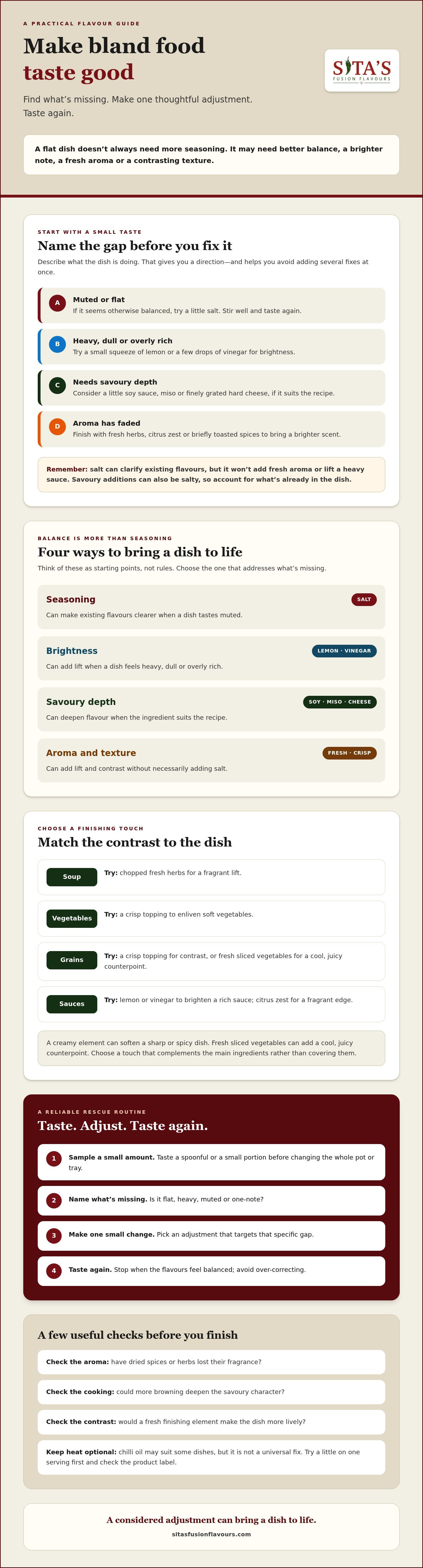
Once you’ve identified what seems missing, choose the flavour tool that fits. Salt can make existing flavours clearer, but it can’t add fresh aroma or lift a heavy sauce. A squeeze of lemon or splash of vinegar may brighten richness, while a savoury ingredient can add depth. Adjust one dimension at a time rather than piling on seasonings and hoping they work together.
Flavour balance is the interaction of seasoning, brightness, aroma and texture in a dish. Use that as a guide to how to make bland food taste good: salt for muted flavour, acid for heaviness, savoury ingredients for depth, and aromatic or textural touches for lift and contrast. These are starting points, not rules. The right adjustment depends on what’s already in the dish.
When should you add salt, acid or savoury ingredients?
If a dish tastes muted but otherwise balanced, add a little salt, stir well and taste again before adding more. If it tastes heavy, dull or overly rich, try a small squeeze of lemon or a few drops of vinegar instead. For savoury depth, consider a little soy sauce, miso or finely grated hard cheese if it suits the recipe. These ingredients can also be salty, so account for what’s already in the dish. Testing a small portion helps you choose confidently; guidance on ways to fix a bland recipe also explores how different additions can shift flavour.
How aroma, herbs and texture change the experience
Sometimes a dish tastes flat because its aroma has faded. Fresh herbs, citrus zest or briefly toasted spices can bring a brighter scent, particularly when added near serving. Chopped herbs may lift a bowl of soup, while zest can add a fragrant edge to a rich sauce. Add these with a light hand so they complement, rather than cover, the main ingredients.
Texture creates another kind of contrast. A crisp topping can enliven soft vegetables or grains; a creamy element can soften a sharp or spicy dish; fresh sliced vegetables can bring a cool, juicy counterpoint. These touches add variety to each mouthful without necessarily adding salt.
If you’re curious about how aromas can layer in a condiment, explore this Kaffir Lemongrass Chilli Oil flavour guide. Chilli oil is an optional finishing touch for those who enjoy heat, but it won’t suit every dish. Add a little to a sample first, taste, and check the label for product details.
Which bland-food fix suits your dish and the flavour you want?
More salt or chilli isn’t automatically the answer. The best fix depends on the dish and what seems absent: a heavy soup may need brightness, while plain grains might benefit from savoury depth or a fragrant finish. This quick guide suggests a cautious first move, not a one-size-fits-all recipe. Taste after each adjustment, and let the ingredients already in the dish guide you.
| What you notice | Dish or texture | Try first |
|---|---|---|
| Flat, but not heavy | Soup or sauce | Test a small spoonful with a little salt, then taste again. |
| Rich or dull | Creamy soup or sauce | Try a few drops of lemon juice or vinegar in a sample. |
| Plain and one-note | Rice or other grains | Add a little suitable sauce, chopped herbs or citrus zest. |
| Soft, with little contrast | Vegetables | Consider more browning, a bright dressing or a crisp topping. |
These pairings are starting points. A salty sauce may already season grains, and extra acid may not suit every soup. The science behind the recipe includes how cooking changes flavour and texture, helping explain why browning or a contrasting finish can matter as much as seasoning.
What can you add to bland soup, rice or vegetables?
For soup, taste for salt, brightness and fresh aroma before choosing a fix. A small squeeze of lemon may suit one broth, while another may need fresh herbs or simply more cooking time. Plain rice or grains can take a modest spoonful of a complementary sauce, herbs or zest. Start with less than you think you need, especially if the sauce is salty. For vegetables, browning can deepen flavour, while a sharp dressing or crunchy topping adds another kind of lift.
How to add flavour without making food too hot
Chilli is optional. Try chopped herbs, citrus zest, toasted spices or a suitable savoury ingredient such as miso or hard cheese to build character without adding heat. If chilli oil sounds right, begin with a small amount on a sample and check its flavour and heat on the product label. SITA'S Fusion Flavours makes handcrafted chilli oils that can be used as optional finishing condiments for people who enjoy chilli, not as universal fixes. The aim is to make bland food taste good in a way that suits the meal and everyone sharing it.
How to rescue bland food without over-seasoning it
The safest way to fix a finished dish is to slow down. Too much salt, a generous splash of vinegar or an enthusiastic pour of chilli oil can change the whole pot before you’ve judged the result. If you’re adjusting a large pot or tray, test a small serving first. It’s a low-risk way to check your idea before changing dinner for everyone.
A simple taste-adjust-taste method
Follow this sequence when deciding how to make bland food taste good. Keep each adjustment separate so you can tell what helped.
- Taste: Take a small spoonful or serving and check the overall flavour.
- Identify: Name what seems absent, such as salt, brightness, savoury depth or aroma.
- Add a little: Choose one ingredient that addresses that specific gap. Use restraint with concentrated additions, which can bring salt, acidity or heat through quickly. Check the label where relevant.
- Mix: Stir or toss thoroughly so the change is distributed through the sample.
- Wait briefly, then taste again: Give the ingredient a moment to blend in before deciding whether to add more.
For example, if a lentil stew tastes flat, test a small serving with a little salt and taste again. If it’s now seasoned but still seems dull, try a few drops of lemon juice in a fresh spoonful. You’ll know which adjustment made the difference and can scale it up carefully if it works.
When a dish is already too salty, sour or spicy
If you’ve overdone an ingredient, don’t reach for another strong flavour to cover it. Where the recipe allows, dilute the dish with more unsalted stock, water or the main ingredients, then taste again. Adding cream, yoghurt or another suitable rich ingredient may soften sharpness or heat; a little sweetness can round some flavours. Neither approach removes every imbalance, so add gradually and check the result as you go.
Sometimes the most practical fix is to serve the dish with a plain accompaniment, such as unsalted rice, bread or vegetables, if it suits the meal. That can help balance each bite without disguising the whole dish. Aim for a better balance, not a perfect rescue, and let each taste guide your next adjustment.
If you enjoy a chilli finish, explore SITA'S Fusion Flavours for handcrafted chilli oils. Start with a small amount, taste as you go and check the label before choosing an oil for your dish.
Make better-tasting meals a habit with confident finishing touches
Good flavour doesn’t have to come from a last-minute rescue. Build it gradually as you cook, then finish with a touch of contrast that suits the meal. This routine makes it easier to understand how to make bland food taste good while keeping each adjustment measured and intentional.
Build flavour gradually from the first step to the last
Season ingredients at suitable stages rather than leaving all the seasoning until serving. For example, season vegetables as they cook, then taste them before plating. A final addition might be citrus for brightness, fresh herbs for aroma or a crisp topping for texture. Choose one that complements the dish rather than several that compete for attention.
Keep a small selection of options handy: fresh herbs, lemon or vinegar, a savoury ingredient such as miso or soy sauce, and an aromatic spice. You don’t need a crowded pantry. A few flexible ingredients make it easier to respond to what a particular meal needs.
Make a quick note when a combination works. Record the dish and what you added, such as “roast pumpkin, lemon dressing, toasted seeds”. Over time, these reminders help you repeat successes and give you a starting point for new meals without turning cooking into guesswork.
Choose a finishing condiment that suits the meal
A condiment should complement the main ingredients, not mask them. Consider the dish’s existing seasoning, richness and aroma before choosing a finishing touch. Chilli oil is optional and best suited to diners who enjoy its heat and flavour. Add a small amount to one serving first, taste, then decide whether the whole dish needs any. Check the product label for details rather than assuming every chilli oil tastes the same.
With practice, the routine becomes familiar: season in layers, taste as you cook, then finish with one element that brings the meal into balance. Confidence comes from noticing what works, not from having every spice or condiment on hand.
If you’d like to explore a handcrafted finishing option for meals where chilli feels right, explore SITA'S Fusion Flavours. Add thoughtfully, taste as you go, and let the food lead.
Bring more confidence to your next meal
The best way to learn how to make bland food taste good is to pause before seasoning, identify what seems missing, then make one small adjustment. Salt can sharpen muted flavours, acid can brighten a rich dish, and fresh aroma or a crisp finish can add lift without extra heat. Taste as you cook, and give each change a moment to settle before deciding what comes next.
This thoughtful approach turns seasoning from guesswork into a habit. Keep a few flexible ingredients nearby, notice which combinations work for your favourite meals, and remember that chilli oil is an optional finish for those who enjoy its heat and flavour.
SITA’S Fusion Flavours makes handcrafted condiments in small batches, drawing on family recipes and Australian-sourced ingredients. For a considered finishing touch on a suitable dish, explore SITA’S handcrafted flavours.
Trust your palate, adjust with care and enjoy the confidence that comes with making each meal your own.
Frequently Asked Questions
What can I add to bland food to make it taste better?
Choose an addition based on what the dish lacks. A little salt may help if it tastes under-seasoned; lemon juice or vinegar can brighten some rich dishes, while fresh herbs add aroma. Suitable savoury ingredients or a crisp topping may work better for other meals. This is a practical way to learn how to make bland food taste good without overdoing it: add one small amount, mix well and taste before making another change.
How do you fix bland soup without making it too salty?
Taste a spoonful first, then adjust only what seems missing. If the soup genuinely needs seasoning, add a little salt, stir thoroughly and taste again. If it tastes flat rather than under-seasoned, try a small amount of suitable lemon juice or fresh herbs instead. Go carefully with concentrated stock, sauces or savoury pastes, as these may already contribute salt. Testing a spoonful before changing the pot helps avoid over-seasoning the whole batch.
Can chilli oil make bland food taste better?
Yes, chilli oil can add flavour and heat to a meal it suits, but it isn’t the answer for every bland dish. Try a small amount on one serving first, then taste before adding more. If the meal needs fresh aroma or brightness rather than heat, herbs or citrus may be a better fit. Check the product label for ingredient and heat information, as these details can vary between chilli oils.
How can I make vegetables taste better without adding chilli?
Build flavour without chilli by improving browning, then checking whether the vegetables need seasoning or freshness. A suitable squeeze of lemon, chopped fresh herbs, toasted spices or a crunchy topping can add brightness, aroma or contrast. Choose one that complements both the vegetables and the rest of the meal. Add it gradually and taste as you go, so the finishing touch lifts the vegetables without hiding their natural flavour.
What should I do if I have already added too much salt?
If the recipe allows, add more of the main unsalted ingredients or dilute the dish with a suitable unsalted component. This can reduce the saltiness per serving, though it may also change the texture and overall flavour. Avoid adding more salty sauces or seasonings. Make gradual adjustments and taste each time. If the dish remains too salty, serve a smaller portion with a compatible unsalted accompaniment, such as plain rice or vegetables.
When should I season food to avoid blandness?
Season during cooking when it suits the ingredients, then taste again before serving. Layering seasoning can help flavours develop throughout a dish, while a final taste gives you the chance to make a careful adjustment. Timing depends on the recipe, so avoid adding all the salt or concentrated seasonings at once. Near the end, consider whether herbs, citrus or a textural finish would complement the meal, then add only what it needs.