
Handcrafted Spicy Condiments vs Industrial Food Brand Sauces: What’s the Difference?
·
SITA'S Fusion Flavours
The chilli sauce with the biggest heat isn’t always the one that brings the most to dinner. When comparing handcrafted spicy condiments vs industrial food brand sauces, look beyond the burn: flavour, texture and how each product works in everyday cooking can matter just as much.
A small-batch condiment may have a distinctive maker-led story, while a widely distributed sauce may be a familiar all-rounder. Neither approach guarantees a particular taste or quality. Recipes, ingredients and production methods vary, so broad marketing claims won’t tell you everything about what’s in the jar.
This guide explains how production scale can shape what you notice, from consistency and flavour to how easily a condiment works as a finishing touch or cooking ingredient. You’ll also find practical ways to compare labels and choose by taste, texture and intended use. SITA'S Fusion Flavours’ range includes Kaffir Lemongrass, Aji Limon and Crispy Chilli Oils, offering different styles to consider for your pantry. The aim is simple: find a distinctive favourite that earns its place in your kitchen.
Key Takeaways
- “Handcrafted” usually describes a smaller-scale, maker-led approach, not a guarantee of better flavour or quality.
- To compare handcrafted spicy condiments vs industrial food brand sauces, look beyond heat: recipe, preparation and texture can all shape how a sauce tastes and feels.
- Choose with a dish in mind, then consider the heat, texture and label details that suit your preferences.
- Different condiments can play different roles in the kitchen, from adding a finishing touch to bringing character to a meal as you cook.
- Explore SITA'S Fusion Flavours’ small-batch chilli oils for a maker-led take shaped by family recipes and Australian-sourced ingredients.
Handcrafted Spicy Condiments vs Industrial Sauces: What Do the Terms Mean?
Handcrafted spicy condiments are generally made through a smaller-scale, maker-led process. Industrial brand sauces are produced at a larger scale using manufacturing systems designed to serve broader markets. These descriptions offer context about how a product is made, but they don’t reveal its full flavour, texture or quality. For a fair comparison of handcrafted spicy condiments vs industrial food brand sauces, assess each product rather than relying on the category alone.
Food processing covers a wide range of methods, from traditional preparation to large-scale manufacturing. Food Processing: An Overview offers broader context on how varied those methods can be. Recipes and processes differ between makers and brands, so “handcrafted” and “industrial” aren’t precise descriptions of every step involved.
What does handcrafted mean for a spicy condiment?
Handcrafted usually points to a smaller production scale and a closer connection between the maker, recipe and finished condiment. Small-batch production describes a choice about scale and process. It doesn’t prove that a product tastes better or uses a particular method. The recipe still matters: two handcrafted condiments can have very different flavours and textures.
At SITA'S Fusion Flavours, handcrafted chilli oils draw on family recipes passed down through generations. The range includes varieties such as Kaffir Lemongrass Chilli Oil and Crispy Chilli Oil, reflecting a maker-led approach to pantry flavours. That gives useful context about the brand’s roots, but the name or production scale alone can’t tell you exactly how a condiment will taste in your kitchen.
What does industrial production tell a shopper?
Producing sauce at a larger scale can support wider distribution and repeatable manufacturing. Those features may suit a brand supplying many shops or customers. But “industrial” doesn’t automatically mean a sauce has a particular ingredient list, contains preservatives or tastes a certain way. Nor does the term establish quality on its own.
Instead, assess the details available for the product in front of you. Read its label for the listed ingredients and product information, then consider aroma, flavour and texture where you can. A smooth, pourable sauce and a thicker or textured condiment may each suit different uses, regardless of production category.
Think of the terms as a starting point, not a verdict. Production scale adds context, but the best guide is the individual recipe and whether the condiment’s character works with the meals you enjoy.
How Production Approach Can Shape Flavour, Texture and Character
A chilli condiment’s character comes from more than the size of the operation behind it. Recipe, chilli variety and preparation all influence what reaches your plate: aroma, savoury depth, citrus-like brightness, lingering warmth, and a smooth, crisp or chunky texture. Production scale alone does not determine a sauce’s flavour or quality.
Manufacturing methods can shape how food is processed and brought to market, as outlined in the USDA Economic Research Service’s Understanding Food and Beverage Manufacturing. But the finished sensory experience still depends on the individual product and its recipe. A handcrafted or industrial label can’t tell you on its own whether a sauce will taste tangy, savoury or mild.
Flavour is more than the chilli’s heat
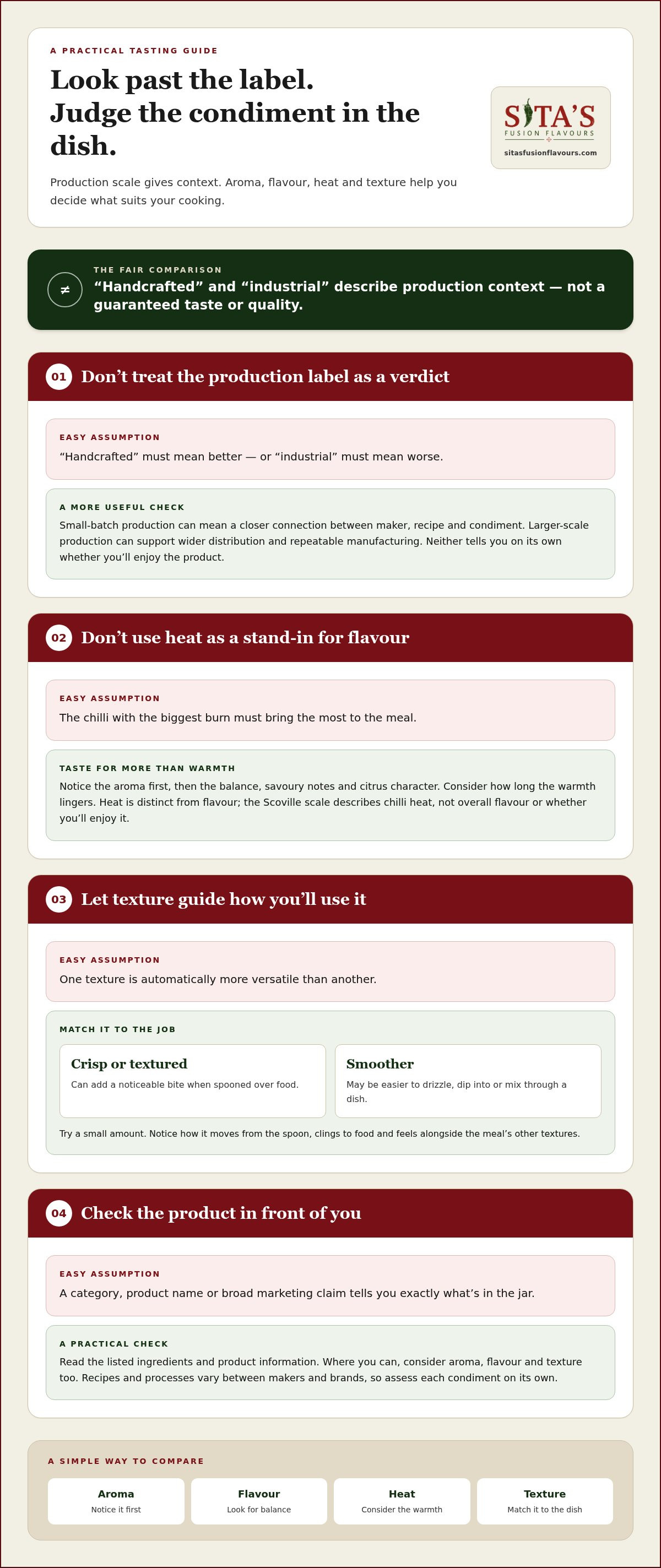
Heat gets your attention; flavour gives you a reason to take another bite. When tasting a condiment, notice its aroma first, then look for balance, savoury notes, citrus character and how long the warmth lingers. These qualities are distinct from heat intensity. The Scoville scale can help describe chilli heat, but it doesn’t rank a condiment’s overall flavour or tell you whether you’ll enjoy its aroma and balance.
SITA'S Fusion Flavours’ range includes Kaffir Lemongrass, Aji Limon and Habanero Chilli Oils. Their names offer a starting point for exploring different varieties. Consider the product information and your own preferences rather than assuming a particular flavour or heat level from a name alone.
Texture changes how a condiment works on a plate
Texture affects both the eating experience and how easily you can use a condiment. A crisp, textured chilli oil can add a noticeable bite when spooned over food. A smoother sauce may be easier to drizzle, dip into or mix through a dish. Neither texture is automatically more versatile: it depends on whether you want a distinct finishing layer or an even coating.
Try a small amount and notice how it moves from the spoon, clings to food and feels alongside the other textures in your meal. For a closer look at one texture-led option, explore SITA’S Crispy Chilli Oil, then consider how crispness might suit the way you like to serve a condiment.
This sensory check is more useful than choosing by production category alone. Start with aroma and flavour, then consider heat and texture. A condiment that brings the right balance to your table is the one that earns its place in your kitchen.
Does Handcrafted Mean Better? Compare the Trade-Offs Fairly
No. Handcrafted doesn’t automatically mean better, and industrial doesn’t automatically mean worse. A maker-led approach may offer a closer connection to the recipe and a distinctive range. Larger-scale manufacturing can support broader distribution and repeatable production. Neither tells you by itself whether a condiment will suit your taste, cooking habits or budget.
Compare the product in front of you, not just its production label. Use these questions to guide your choice:
| What to compare | What to look for | Question to ask yourself |
|---|---|---|
| Ingredients and label | Ingredient list, allergen information, stated origin and serving guidance, where available | Do the listed details suit my preferences and needs? |
| Flavour and texture | Aroma, savoury or citrus character, heat and consistency | Will I enjoy this on its own and with the foods I eat? |
| Production and range | Information about the maker, recipe or production approach, and the range of styles available | Am I looking for a familiar staple or a more distinctive flavour? |
| Access and value | How the product is sold, its price, and how often you expect to use it | Does it earn a regular place in my pantry? |
Which product details are worth comparing?
Start with the label. Check the ingredient list, allergen information, stated origin and serving guidance where available. Food Standards Australia New Zealand (FSANZ) is a useful reference for current Australian food-labelling guidance. A short ingredient list doesn’t prove a product is better, just as a longer one doesn’t prove it’s worse. Use the list to assess the product against your own preferences, not as a simple quality score.
Likewise, don’t assume a production category tells you about freshness, additives, safety, sustainability or nutritional value. Those are separate claims and shouldn’t be inferred from “handcrafted” or “industrial” alone.
How to judge value beyond production scale
Price matters, but value is personal. Consider how much you enjoy the flavour, whether the texture works with your meals and how often you expect to use the condiment. A special-occasion flavour may be worthwhile if you savour it; an everyday favourite may offer more value if you reach for it often.
For a grounded example of a maker-led range, SITA'S Fusion Flavours draws on small-batch production and family recipes passed down through generations. The useful comparison isn’t that one approach must win. It’s whether a particular condiment brings the character, practicality and enjoyment you want at your table.
How to Choose a Spicy Condiment for Your Kitchen
Choose for the meal you actually make, not just the heat level on a label. This quick routine can help you compare options and find a condiment you’ll reach for again:
- Choose a use: Will it be for dipping, topping, cooking or finishing?
- Assess the heat: Start with your own comfort level and build from there.
- Consider texture: Think about whether you want crisp pieces, an oily drizzle or a smooth sauce.
- Read the label: Review ingredients and allergen information, as well as the product’s serving guidance.
- Taste: Try a small amount with food and decide whether its flavour and intensity work for you.
There’s no single correct pairing. A crunchy condiment might add contrast to a soft dish, while a smoother sauce may be easier to mix through a meal. Your preference matters most.
Match heat and texture to how you cook
Think about the job you want the condiment to do. For dipping, a texture that clings to food may be handy; for topping, you might enjoy a spoonful with more presence. If you’re cooking with it, consider how readily it can be stirred through. A crisp chilli oil, an oily drizzle and a smooth sauce each bring a different feel, so choose according to the dish and the effect you want.
If you’re deciding between styles, a small-batch chilli oil guide or a chilli oil versus hot sauce comparison can help clarify what you’re looking for. For a meal-specific idea, consider how chilli oil might work with laksa, adjusting the amount to suit your taste.
Read labels and choose with confidence
Look past broad words such as “bold” or “premium”. Check the ingredient list and allergen statements, then use current product descriptions for stated information about ingredients, flavour and heat. If you’re trying something unfamiliar, begin with a small amount and add more only if you enjoy the balance. A condiment should lift your meal, not overwhelm it.
With handcrafted spicy condiments vs industrial food brand sauces, production approach is only one part of the decision. Your cooking habits, heat comfort and preferred texture are just as useful guides. Put that framework into practice by exploring SITA’S handcrafted chilli oil range and considering which style could suit your kitchen.
Discover a Maker-Led Take on Spicy Condiments
Once you’ve considered flavour, texture and how you’ll use a condiment, a maker-led range can be another way to explore what suits your pantry. SITA'S Fusion Flavours makes handcrafted chilli oils and Malaysian-inspired condiments in small batches, drawing on family recipes passed down through generations and Australian-sourced ingredients. That story offers context for the range, not a claim that handcrafted products are always better than industrial sauces. The right choice still comes down to what you enjoy and how you cook.
Explore handcrafted chilli oils by preference
The range includes Kaffir Lemongrass, Crispy, Habanero and Aji Limon Chilli Oils, alongside Ghostly and Carolina Reaper Chilli Oils. The names give you options to explore, but they aren’t a substitute for product-specific details. Read each product description for stated ingredient and flavour information, then choose according to what you’re looking for, whether that’s a particular style of chilli oil or a condiment to try with a familiar meal.
If you’re curious about one variety, a guide to Kaffir Lemongrass chilli oil can help you explore that option in more detail. As with any product, use its description to understand what’s stated about it rather than assuming ingredients or tasting notes from its name.
Bring a distinctive condiment to the table
A small-batch, family-recipe approach may appeal if you’re looking for a maker-led condiment with Malaysian-inspired roots. SITA'S range is available online to customers across Australia, so you can compare the options at your own pace. Consider the product details alongside your preferences, then think about whether you’d use the chilli oil for cooking, topping or finishing a dish.
The comparison of handcrafted spicy condiments vs industrial food brand sauces isn’t about declaring one style the winner. It’s about finding a flavour, texture and level of heat that feels right in your kitchen. Explore SITA'S Fusion Flavours to discover a chilli oil that suits your taste and the meals you love to share.
Choose a Condiment That Belongs in Your Kitchen
The difference between handcrafted spicy condiments vs industrial food brand sauces isn’t a simple matter of better or worse. Production scale offers context, but the recipe, flavour, texture and intended use matter more when choosing a condiment for your table. Read the product details, consider your heat comfort and let personal taste lead.
SITA'S Fusion Flavours brings a maker-led approach to its small-batch handcrafted condiments, shaped by family recipes passed down through generations and Australian-sourced ingredients. The range includes chilli oils in different styles, so you can look for an option that suits your meals and preferences. Online orders are shipped across Australia.
Curious to try a family-inspired take on spicy condiments? Explore handcrafted chilli oils and condiments from SITA’S Fusion Flavours and find a distinctive addition for your pantry. Start with what sounds delicious, then make it your own.
Frequently Asked Questions
Are handcrafted spicy condiments better than industrial sauces?
Not necessarily. Production scale alone doesn’t establish a sauce’s quality or whether you’ll enjoy it. Compare the ingredient and allergen information, then consider flavour, texture and how you plan to use it. In the choice between handcrafted spicy condiments vs industrial food brand sauces, a small-batch recipe might appeal for its maker-led character, while a widely distributed sauce might suit familiar everyday uses. Judge each product on its own merits.
What is the difference between handcrafted and mass-produced sauces?
Handcrafted generally describes a smaller-scale, maker-led approach, while mass-produced sauces are made at a larger scale. The distinction can offer clues about production and distribution, but it doesn’t explain every step: methods vary between individual makers and brands. Nor does the category alone tell you a sauce’s ingredients, flavour or quality. Read the product information and consider the condiment itself rather than relying only on its production label.
Can handcrafted chilli oil be used for everyday cooking?
Yes, chilli oil can suit everyday meals, depending on the product and how you like to cook. You might use a little as a topping, serve it for dipping or add it as a finishing touch. Start with a small amount so you can gauge its flavour and heat in the dish. Always follow the product’s own directions for serving and use, as guidance can differ between condiments.
How can I compare the heat of different chilli condiments?
Use stated Scoville information as a guide to chilli heat only, not as a rating of overall flavour. Check that the figure applies to the specific product and comes from verified product information. Heat can also feel different depending on how much you use and what you eat it with. If no verified rating is provided, start with a small taste and increase gradually to suit your comfort level.
What should I check on a spicy sauce label?
Read the ingredient list and allergen statements, and look for stated origin and serving guidance where available. Use current product information to understand what’s in the condiment and how it’s intended to be served. For Australian food-labelling guidance, refer to Food Standards Australia New Zealand (FSANZ), and check current requirements rather than relying on general marketing language. A short ingredient list alone doesn’t prove a product is better.
Does small-batch production mean every jar tastes different?
Not necessarily. Whether flavour varies between batches depends on the maker, recipe and production approach, so small-batch production alone doesn’t tell you how much variation to expect. It also doesn’t mean every jar will taste different. Look for product-specific information from the maker, and assess the condiment by its own flavour, texture and label details instead of assuming batch variation based on scale alone.
What happens if a chilli condiment is too hot for a dish?
If the heat feels too strong, use less next time and add it gradually, tasting as you go. You can also serve the condiment on the side so each person controls how much they add. Pairing a small amount with other ingredients in the dish may help create a better balance of flavour and texture. Keep the condiment’s serving directions in mind, and adjust to your own preference.