
Handcrafted Masala Chai: The Ultimate Stovetop Brewing Guide
·
SITA'S Fusion Flavours
True chai is never just a quick recipe; it is a slow-simmered ritual where crushed botanicals, full-bodied tea, and rich milk collide. Yet, so many attempts at brewing handcrafted masala chai at home fall flat. You follow an ambiguous method, only to end up with pale, watery milk or an acrid punch of bitter cloves.
We get it. It is deeply frustrating when a cup meant to comfort your soul tastes like lukewarm disappointment. Striking the balance between fiery ginger, fragrant green cardamom, and brisk black tea leaves can feel like guesswork, particularly when commercial syrups and powders strip away all the authentic soul and depth of the brew.
It doesn't have to be that way. Discover the time-honoured secrets to selecting, balancing, and simmering your spices for an authentic cafe-style experience straight from your own stovetop. Ahead, we will unpack the traditional decoction method, explore the wellness benefits of whole botanicals, and give you the confidence to craft a rich, creamy, and perfectly spiced brew every single time.
Key Takeaways
- Master the traditional stovetop decoction technique to brew rich, cafe-quality handcrafted masala chai that never turns out thin or watery.
- Understand the essential spice balancing framework to let vibrant green cardamom and fiery ginger shine without overwhelming bitter notes.
- Learn why small-batch, whole-spice blends yield far deeper complexity and natural wellness benefits than supermarket tea dust.
- Discover the ideal water-to-milk simmering ratios and aeration tricks to achieve a velvety, full-bodied texture straight from the pan.
- Explore how a restorative, spiced brew acts as the ultimate comforting counterpoint to bold, heat-packed savoury dishes.
The Soul of Handcrafted Masala Chai: More Than Just a Cuppa
Crush a single green cardamom pod between your fingers. The sudden rush of citrus and camphor tells you everything you need to know about real spice. Authentic handcrafted masala chai is not a powdered shortcut or a squirt of sugary concentrate from a plastic bottle. It is an honest, culinary union between robust black tea and potent whole spices, simmered slowly to pull out their aromatic oils.
Across Australia, local cafes often miss the mark entirely. Most commercial venues steam milk over pre-mixed syrups or low-grade tea dust, dusting the froth with cinnamon sugar as an afterthought. The result is cloying, thin, and hollow. By contrast, tracing the traditional masala chai history and preparation reveals a communal stovetop practice anchored in slow extraction. The crack of whole spices hitting warm water creates an intoxicating kitchen atmosphere, filling your home with the fiery warmth of ginger and the gentle sweetness of cloves long before the first sip.
The Heritage Behind the Blend
Generational recipes protect the integrity of a good brew. When botanicals are crushed by hand and blended in small batches, their natural volatile oils stay locked within the spices rather than oxidising on an industrial shelf. We reject artificial colourings, anti-caking agents, and synthetic extracts because real flavour demands patience. Small-batch blending ensures that every spoonful holds the exact proportion of whole bark, seed, and root required for a balanced brew.
Choosing the Right Base: Why Assam Matters
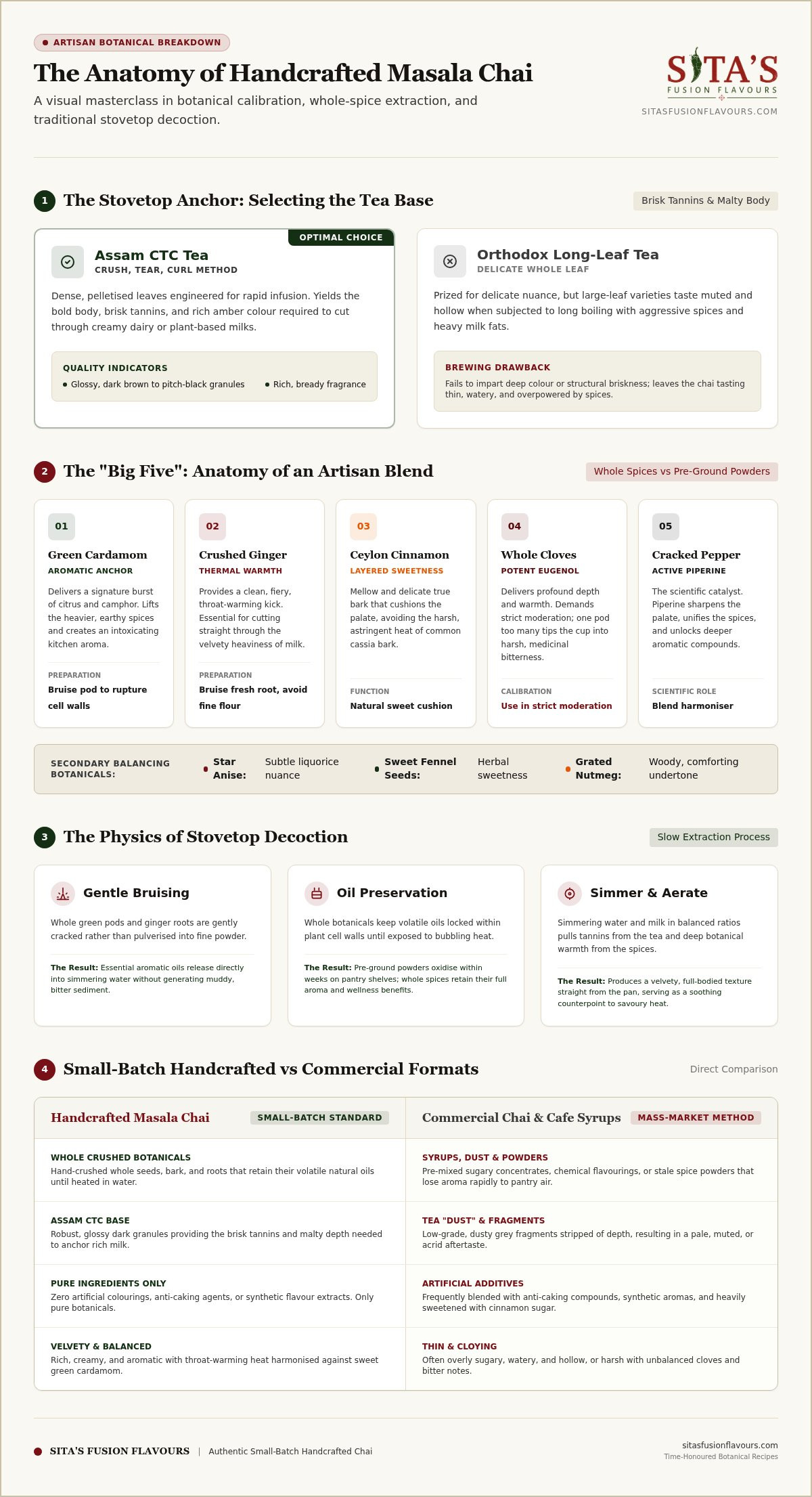
Spices need an anchor. Without a strong black tea base, rich milk and vibrant aromatics easily overwhelm the cup. Assam tea provides the brisk tannins and deep, malty foundation essential for authentic stovetop simmering.
- CTC (Crush, Tear, Curl) tea: These dense, pelletised leaves infuse quickly, offering the bold body and deep amber colour needed to cut through creamy dairy or plant-based milks.
- Orthodox long-leaf tea: While prized for delicate nuance, large-leaf varieties tend to taste muted and thin when boiled with heavy spices and milk.
- Quality indicators: Look for glossy, dark brown to pitch-black granules that carry a rich, bready fragrance rather than dry, dusty grey fragments.
Anatomy of an Artisan Blend: Balancing the Spices
A truly memorable cup relies on precision, not guesswork. At the heart of genuine handcrafted masala chai sits the "Big Five": green cardamom, ginger, cinnamon, cloves, and cracked black pepper. Pre-ground spice powders lose their volatile oils to pantry air within weeks, leaving behind stale, gritty dust. Whole spices, however, hold their aromatic potency until heat meets water. Black pepper provides a clever scientific advantage here; its active compound, piperine, sharpens your palate and unifies the blend, unlocking the deeper notes of neighbouring spices.
The Warmth of Ginger and Cardamom
Balancing fiery heat with bright aromatics requires a deliberate hand. Pungent ginger delivers a clean, throat-warming kick that cuts straight through the richness of milk. Cardamom acts as the aromatic anchor of the blend, imparting an unmistakable sweet-citrus fragrance that lifts the heavier, earthy spices. Rather than grinding these botanicals into fine flour, gently bruising whole green pods and ginger roots ruptures their cell walls. This releases their potent essential oils directly into the liquid during the boil without creating muddy sediment.
Cinnamon and Cloves: The Foundation of Heat
Warmth shouldn't mean overwhelming astringency. While pungent cassia bark brings an assertive heat, delicate true Ceylon cinnamon offers a mellow, layered sweetness that cushions the palate. Cloves demand strict moderation. Packed with intense eugenol, just one pod too many can tip a brew from deeply comforting to harshly medicinal.
Secondary aromatics such as star anise, sweet fennel seeds, and grated nutmeg introduce subtle liquorice and woody undertones. When these botanicals meld with the robust antioxidant and health benefits of black tea, they create a balanced, invigorating decoction. For those who want the ideal balance calibrated straight out of the jar, brewing a small-batch handcrafted Masala Chai takes the guesswork out of measuring every single seed and bark shard at home.
Handcrafted vs. Commercial Chai: Why Small-Batch Wins
Tear open a standard supermarket tea bag and you will rarely find whole spices. Instead, commercial brands rely on tea "dust" and factory fannings, blended with synthetic flavour granules that faintly mimic cinnamon or ginger. These mass-produced boxes often languish in distribution centres for months, completely drying out what little natural oil remained. Choosing authentic handcrafted masala chai flips this dynamic entirely, placing real culinary craftsmanship back into your mug.
The Problem with Chai Syrups and Powders
Commercial cafe options frequently cut corners through ultra-processed syrups, powders, and chemical flavour enhancers. Many instant blends contain upwards of 50% refined sugar, masking stale ingredients behind intense sweetness. Synthetic syrups also fail the mouthfeel test; they dissolve into hot milk without structure or substance. Without the natural tannins extracted from whole tea leaves, the beverage feels slick and watery rather than full-bodied and satisfying.
The Artisan Difference: Freshness You Can Taste
Small-batch blending prioritises ingredient integrity and transparency above all else. When you spoon an artisan blend into your saucepan, the quality is immediately obvious:
- Visible botanicals: You can clearly identify real shards of cinnamon bark, cracked green cardamom pods, and wrinkled black peppercorns rather than an indistinguishable grey-brown powder.
- Potent essential oils: Whole, carefully handled spices retain their aromatic potency until they hit simmering liquid, meaning a single spoonful yields immense depth.
- Clean pantry credentials: Small runs mean zero anti-caking agents, artificial preservatives, or chemical flavourings.
Opting for small batches crafted by dedicated Australian blenders ensures your leaves haven't spent years in overseas transit or sitting forgotten on commercial pallets. A little bit of real spice goes a long way. Investing in a thoughtfully made handcrafted masala chai gives you unmatched value for money, exceptional flavour density, and an honest kitchen ritual you can taste in every velvety sip.
The Masterclass: How to Brew Handcrafted Masala Chai at Home
Steeping a tea bag in a mug will never produce genuine chai. Authentic flavour demands a rolling stovetop decoction, where continuous heat extracts both water-soluble aromatics and fat-soluble essential oils. For a rich, cafe-style body, stick to a 1:1 or 2:1 water-to-milk ratio. Full-cream dairy milk offers classic richness, while creamy barista oat milk serves as an exceptional plant-based base. Sweeten during the simmer using raw sugar or mineral-rich jaggery to marry the spices together. Before serving, pour the strained tea from a height between two vessels; this traditional aeration aerates the liquid and emulsifies the milk fats into a silky microfoam.
Step-by-Step Stovetop Instructions
Follow this three-stage method to get the absolute best out of your handcrafted masala chai:
- Step 1: Bruise and simmer: Lightly crack your whole spices in a mortar. Add them to cold water in a saucepan, bring to a boil, and simmer gently for four minutes to release their botanical oils.
- Step 2: Add tea: Tip in your CTC Assam leaves. Simmer for just two minutes so the malty tannins build body without introducing bitterness.
- Step 3: Milk and the double rise: Pour in your milk and sweetener. Bring the pan to a gentle boil until the liquid crowns near the rim, pull it off the heat briefly, and let it rise once more before straining.
Common Brewing Blunders and How to Fix Them
Even confident home cooks hit stumbling blocks with stovetop brewing. Here is how to fix the three most common pitfalls:
- The bitter bite: Boiling black tea leaves too long draws out harsh astringency. Always simmer your crushed whole spices in water first, adding the tea leaves only during the final minutes before pouring in milk.
- Plant milk curdling: Fresh ginger and acidic spices can cause delicate soy or almond milks to split under high heat. Prevent curdling by using heat-stable barista-grade oat milk, pre-warming your milk, and keeping the stove on medium-low.
- The watery brew: Skimping on tea leaves or adding too much water will wash out the spices. Keep your water-to-milk ratio balanced and ensure your simmer is active rather than stagnant.
Ready to upgrade your morning cup? Order authentic handcrafted Masala Chai directly from our Melbourne kitchen and master the ritual at home.
Elevating Your Pantry with SITA’S Fusion Flavours
Great cooking thrives on contrast. While our fiery condiments ignite the palate, a steaming cup of handcrafted masala chai offers the ultimate soothing balance. Picture a slow weekend arvo: fried eggs drizzled with Crispy Chilli Oil over warm roti, followed by a velvety sip of freshly simmered tea. The rich dairy fats and aromatic botanicals gently cool the lingering heat, cleansing the palate and leaving you deeply satisfied.
Our kitchen philosophy celebrates the intersection between bold intensity and comforting heritage. We believe everyday cooking should excite your senses, turning routine meals into vibrant rituals through honest, artisan pantry essentials.
Crafted with Care, Delivered to Your Door
Every blend we produce stems from treasured family recipes passed down across generations. Blended in small batches right here in Melbourne, we combine rich culinary roots with Australian-sourced ingredients wherever possible. This patient approach preserves the natural oils in every pod and seed. It mirrors the exact philosophy behind our small batch chilli oil, where slow craftsmanship always takes precedence over industrial shortcuts.
Start Your Handcrafted Journey Today
Revitalising your daily routine starts with ingredients that demand attention. A jar of artisan chai makes a generous gift for the food lover who values slow morning rituals, offering a cafe-quality experience without synthetic syrups. Pair our soothing spices with our handcrafted chilli oils to build a versatile fusion pantry that balances daring heat with soulful comfort. Shop our handcrafted Masala Chai today and bring authentic stovetop warmth into your own home.
Master the Ritual of Authentic Stovetop Chai
Brewing exceptional chai isn't about shortcuts. It is about slowing down, lightly bruising whole botanicals, and letting bold Assam leaves simmer gently with rich milk in a fragrant saucepan. Moving away from supermarket dust to real, whole spices gives you complete control over texture, sweetness, and depth.
At SITA’S Fusion Flavours, our handcrafted masala chai is blended in small batches in Melbourne, built upon treasured family heritage recipes and packed with premium whole-spice ingredients. Whether paired with a spicy afternoon treat or enjoyed as a grounding morning pause, every cup delivers comforting warmth without synthetic flavours or fillers. Grab your favourite pan, embrace the slow simmer, and transform your daily cup into an authentic culinary ritual. Explore our Handcrafted Masala Chai and elevate your tea ritual today.
Frequently Asked Questions
Is handcrafted masala chai better for you than instant chai?
Yes, authentic handcrafted masala chai is significantly better for you because it uses real, whole botanicals instead of chemical flavourings and refined sugar fillers. Instant powders and cafe syrups often contain up to 50% sugar alongside artificial preservatives. Simmering whole spices like crushed ginger, green cardamom, and cloves delivers real functional benefits, including gut-friendly anti-inflammatory compounds and natural polyphenols from pure black tea leaves.
How much caffeine is in a cup of handcrafted masala chai?
A standard mug typically contains around 40 to 60 milligrams of caffeine, roughly half the amount found in a standard cup of coffee. The robust CTC Assam black tea base provides a gentle, alert lift without coffee's sharp jitters. In addition, the amino acid L-theanine present in black tea helps promote sustained focus, working alongside warming spices to keep your energy balanced throughout the morning.
Can I make masala chai with dairy-free milk alternatives?
You certainly can, provided you choose the right plant-based milk. Creamy barista-blend oat milk is the gold standard alternative because its higher fat content emulsifies smoothly during simmering without separating. Soy milk also works well, though you should keep your stovetop heat on medium-low to prevent curdling. Avoid very thin rice or coconut milks, which dilute the spices and leave your brew tasting watery.
What is the difference between Chai Tea and Masala Chai?
The difference comes down to language and spices. In Hindi, "chai" simply translates to "tea," making the phrase "chai tea" a redundant phrase meaning "tea tea." Plain chai often refers to basic black tea with milk. Masala chai, however, explicitly translates to "spiced tea," denoting the traditional stovetop union of black tea simmered with a blend of warming whole aromatics like cardamom, cinnamon, pepper, and ginger.
How long does handcrafted masala chai blend stay fresh?
A whole-spice handcrafted masala chai blend retains optimal vibrancy for six to twelve months when stored in an airtight tin away from direct heat and sunlight. Whole spices hold their aromatic essential oils far longer than pre-ground powders, which oxidise rapidly. Even past the six-month mark, your tea remains completely safe to brew, though you might find yourself adding an extra pinch to achieve that signature punchy warmth.
Do I need a special pot to brew authentic chai at home?
No special equipment is required, though a small, heavy-bottomed stainless steel saucepan is ideal. Heavy bases distribute heat evenly, preventing dairy fats from scorching against the bottom of the pan as the milk comes to a simmer. A simple fine-mesh stainless steel sieve is also essential for straining out the crushed spices and tea leaves when pouring your tea straight into your mug.
Should I add the sugar during the brewing process or after?
Always add your sweetener directly into the saucepan while the chai is simmering on the stove. Heating unrefined sweeteners such as raw sugar, honey, or jaggery together with the milk and water binds the spices to the liquid dairy fats. This thermal bonding rounds out the bitter tannins of the black tea, creating a harmonised, velvety mouthfeel that simply stirring sugar into a finished cup cannot replicate.
Can I drink masala chai every day?
Absolutely, and daily consumption has been a cherished morning and afternoon habit across South Asia for generations. Whole botanicals such as ginger and cardamom aid natural digestion and ease inflammation, making a daily cup both comforting and restorative. Just monitor your sweetener amounts if you are watching your sugar intake, or brew your stovetop pot using unsweetened oat milk for a daily nourishing ritual.