
Grazing Platter Condiments: Flavour and Texture Guide
·
SITA'S Fusion Flavours
The best condiments for a grazing platter aren’t necessarily the boldest ones. A sharp, sweet or spicy choice can bring cheese and crackers to life, but too many competing flavours may leave the spread feeling crowded rather than inviting.
If you’re unsure what pairs well, or wary of serving something too hot for your guests, start with the foods on your platter. Balance rich or salty bites with bright, tangy options, add contrasting textures and serve stronger flavours in small portions beside milder choices.
This guide explains how to choose complementary condiments, match them to the foods on your platter and offer variety without adding more than you need. It also shows how to include handcrafted chilli oil as an optional accent. SITA’S Fusion Flavours makes small-batch chilli oils with Australian-sourced ingredients and family recipes. Serve the oil separately so guests can choose whether to try it and how much to add. Think balance first, then let everyone find a favourite bite.
Key Takeaways
- Choose a few distinct flavour and texture roles for the best condiments for a grazing platter, rather than filling every gap with another pot.
- Compare dips, chutneys, mustards, relishes and pickled vegetables to see how each can contrast with cheeses, crackers and other platter foods.
- Arrange the platter in stages, then serve condiments in separate small dishes for easy dipping and cleaner flavours.
- Offer a small serving of handcrafted chilli oil as an optional accent beside milder choices, so guests can decide whether to add it to their bite.
Best condiments for a grazing platter: what makes a balanced selection?
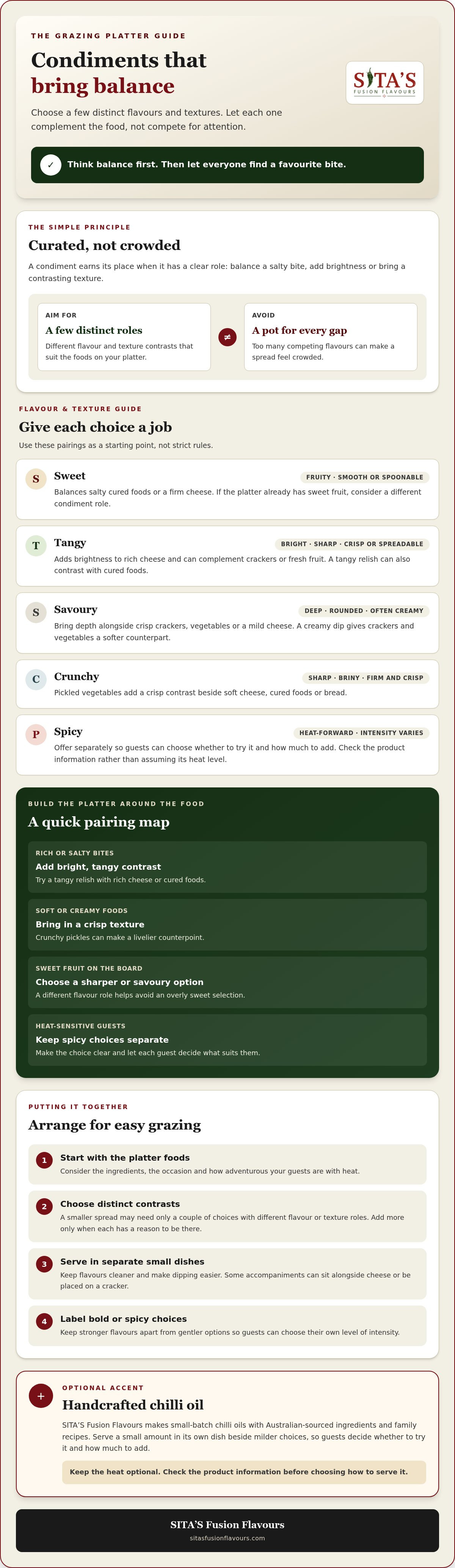
A well-planned platter doesn’t need a bowl for every flavour. The best condiments for a grazing platter each have a clear role: one might balance a salty bite, another add brightness, while a contrasting texture makes familiar cheese and crackers more interesting. Think curated, not crowded.
Build your choices around the food you’re serving. A tangy relish can add contrast to rich cheese or cured foods; a sweet option can balance salty flavours; and a creamy dip gives vegetables and crackers a softer counterpart. Fruit brings its own sweetness and freshness, so it may pair better with a sharper or savoury condiment than with another sweet choice.
A practical mix might include a gentle option, something tangy, and a choice with a different texture. Add a spicy condiment only if it suits the occasion and your guests. You don’t need to cover every role if the platter already has plenty of contrast. Consider the ingredients, the occasion and how adventurous your guests are with heat.
What counts as a grazing-platter condiment?
Condiments are flavour additions served with food. For a broad overview of what a condiment is, see Wikipedia’s definition and examples. On a platter, the category can include spreads, relishes, chutneys, mustards, pickles, dips and chilli oils.
Some are spooned or dipped from small bowls; others are placed directly on a cracker or served alongside cheese. Pickled vegetables, for example, can be offered as an accompaniment, while a dip is usually served in a dish for guests to scoop. These are general food categories, not a claim that SITA’S Fusion Flavours sells each one.
How many condiment choices does a platter need?
Let the platter size, guest count and food selection guide you instead of following a fixed number. A smaller spread may need only a couple of choices with different flavour or texture roles. A larger gathering or a board with a wide mix of foods may suit more options, provided each one has a reason to be there.
Fewer, contrasting choices are often easier to navigate than several similar ones. If you include a particularly bold or spicy condiment, serve it separately from gentler options and identify it clearly. Guests can then choose their own level of intensity without it taking over the spread.
How to balance sweet, tangy, savoury and spicy platter flavours
Contrast helps make each bite feel considered. Sweetness can balance salty or rich foods, while tangy flavours add brightness. Savoury spreads bring depth, and crunchy pickles give softer foods a livelier counterpoint. Use the guide below as a starting point, not a set of strict pairing rules. The best condiments for a grazing platter depend on the foods you’ve chosen and what your guests enjoy.
| Condiment role | Flavour character | Texture | Suggested pairings |
|---|---|---|---|
| Sweet | Fruity or gently sweet | Smooth or spoonable | Try with salty cured foods or a firm cheese for contrast. |
| Tangy | Bright, sharp or acidic | Juicy, crisp or spreadable | Can cut through rich cheese and complement crackers or fresh fruit. |
| Savoury | Deep and rounded | Often creamy or soft | Consider serving with crisp crackers, vegetables or a mild cheese. |
| Crunchy | Sharp, briny or tart | Firm and crisp | Add a crisp contrast beside soft cheese, cured foods or bread. |
| Spicy | Heat-forward | Varies by condiment | Offer separately, letting guests add a little to their own bite. |
Which flavours pair well with cheese, crackers and fruit?
Let the cheese guide your contrast. A soft, creamy cheese may suit a crisp or tangy accompaniment; a firm cheese can be balanced with something sweet; and a strongly flavoured cheese may pair best with a simple cracker or fresh fruit that keeps its character in focus. These are suggestions, not fixed matches. Taste preferences vary, so offer more than one way to enjoy the platter.
For example, try a savoury spread with crisp crackers, or serve fresh fruit beside a tangy option. If the board already includes sweet fruit, choose a different condiment role to avoid making the whole selection taste sugary. Adjust the combination to the ingredients you’re serving.
How can you add chilli without overpowering the platter?
Chilli oil can be an optional heat accent rather than a flavour that spreads across the whole board. Serve a small amount in its own dish beside gentler choices, and label it clearly so heat-sensitive guests can decide for themselves. Don’t assume an oil’s heat level or flavour from its name. Check the product information before choosing how to serve it.
For more on the craft behind this style of condiment, read this small-batch chilli oil guide. If you’re considering a chilli oil for your table, you can also explore SITA’S handcrafted chilli oils and check the current product details before serving.
Grazing-platter condiment ideas compared by texture and intensity
Texture can change the feel of a bite. If the platter is already full of soft cheese and creamy dips, add something crisp or chunky. If it’s mostly crackers, vegetables and firm foods, a smooth spread can bring a softer contrast. The best condiments for a grazing platter have distinct roles, rather than offering several versions of the same flavour and texture.
| Category | Typical texture | General role | Intensity to consider |
|---|---|---|---|
| Dips | Smooth or thick | Add a soft, scoopable element for crackers and vegetables. | Often a gentle starting point, though flavours vary. |
| Chutneys | Smooth or chunky | Bring a spoonable contrast to cheese and savoury foods. | Can range from mellow to strongly flavoured. |
| Mustards | Creamy or coarse | Add a concentrated, sharp accent in a small serving. | Use sparingly if guests prefer milder flavours. |
| Relishes | Often chunky | Give crackers, cheese or vegetables a more substantial topping. | Depends on the relish; check its flavour before serving. |
| Pickled vegetables | Crisp or firm | Bring a fresh textural contrast beside softer foods. | Their sharpness can stand out, so keep them distinct. |
| Chilli oils | Oil-based, with product textures varying | Offer an optional chilli accent for guests to add themselves. | Check product information before serving, especially for heat. |
Which condiment categories suit different platter styles?
For a classic, broadly appealing spread, start with a gentle option and a tangy one, then look at what the rest of the platter needs. A selection with lots of soft textures may benefit from crisp pickled vegetables or a chunky relish. A platter with plenty of crunchy crackers might be better balanced by a smooth dip or spread. If guests enjoy chilli, serve an oil separately so it doesn’t determine the flavour of every bite.
How do SITA’S chilli oils fit into the comparison?
SITA’S confirmed chilli oil names include Crispy Chilli Oil, Kaffir Lemongrass Chilli Oil and Aji Limon Chilli Oil. A product name alone doesn’t confirm its texture, flavour profile or heat level. Check current product information and availability before choosing an oil for your table, and serve it in a separate dish beside milder options.
This keeps general condiment ideas separate from the specific products SITA’S offers. To review the SITA’S condiment range, check the product details and select an option that suits your guests.
How to arrange grazing-platter condiments for guests
A thoughtful layout makes the spread easier to serve and enjoy. Assemble the platter in stages, placing condiments where they’re handy without letting them crowd the food.
- Choose the platter foods. Start with the cheeses, cured foods, vegetables, fruit and crackers you plan to serve. Notice which flavours and textures are already present, then choose condiments that add contrast rather than repeat what’s there.
- Pick the condiment roles. Select a manageable mix, such as a gentle spread and a tangy or crunchy option. Add a bold or spicy choice only if it suits the occasion and your guests.
- Set out separate dishes. Use small bowls for dips, oils and other wet condiments. Keeping them apart helps flavours stay distinct and gives guests room to scoop or dip.
- Arrange the main foods. Place cheeses and other larger items first, then fill the open spaces with crackers, fruit and vegetables. Keep wet condiments away from crackers and other foods that soften quickly.
- Position and label the condiments. Set bowls securely near foods they may complement, with room for serving utensils. Keep oil-based condiments away from edges and busy areas where they could spill. Place bold choices apart from gentler ones and label them clearly.
- Check guest needs before serving. Ask about dietary needs where appropriate, and only label allergens when you’ve verified the information from reliable product details. Follow product storage instructions and current food-safety guidance for the foods you’re serving.
How should you place dips, oils and crunchy condiments?
Give each condiment its own dish and serving utensil. Place bowls beside compatible foods, but leave enough room for guests to reach them without knocking them over. A stable, flat spot is especially useful for oil-based options. Put pickles and other crunchy, wet accompaniments where their liquid won’t run onto crackers or delicate foods.
How can you make one platter work for different tastes?
Keep a mild option available alongside any stronger flavour, and let guests choose what goes on their own plate. A separate, clearly labelled chilli dish makes the choice visible without spreading heat across the platter. Use separate utensils for each condiment to reduce flavour transfer and make serving easier.
For an optional chilli accent, explore SITA’S handcrafted chilli oils, and check current product details before serving them to guests.
Choose SITA’S handcrafted condiments for a grazing platter
A chilli oil can add an optional accent to a wider condiment selection without making the whole platter spicy. Serve it in a small, separate dish beside milder options, so guests can decide whether to try it and how much to use. This gives guests a choice while keeping the rest of the spread approachable.
SITA’S Fusion Flavours makes small-batch, Malaysian-inspired condiments using Australian-sourced ingredients and family recipes passed down through generations. The confirmed chilli oil range includes several options, but product names alone don’t confirm their flavour, texture or heat. Check current product information before choosing one for your platter, and include gentler alternatives in the rest of your selection.
Which confirmed SITA’S chilli oils could you consider?
Confirmed offerings include Crispy Chilli Oil, Kaffir Lemongrass Chilli Oil and Aji Limon Chilli Oil. Ghostly, Carolina Reaper and Habanero Chilli Oil are also listed among SITA’S offerings, but check current availability and product details before including them. Don’t assume a product’s heat level or pairing from its name; use verified descriptions to help decide what may suit your guests.
For more context about one of the named options, read the guide to Kaffir Lemongrass Chilli Oil. As with any condiment, whether it works on your platter depends on the other foods and your guests’ tastes.
Where can you explore the range?
SITA’S products are available through its online store, with orders shipping across Australia. Check the store for current product details and availability, then choose according to the role you want the condiment to play: an optional chilli accent among a broader mix, not a replacement for milder choices.
If you’re choosing the best condiments for a grazing platter, a handcrafted chilli oil can be one distinctive possibility among the dips, spreads and other accompaniments you select. Browse the SITA’S handcrafted condiments and choose an option that feels right for your table.
Bring your grazing platter together with confidence
The best condiments for a grazing platter each earn their place. Choose a few with contrasting flavours and textures, match them to the foods you’re serving, and keep bolder options separate so guests can decide what suits their taste. A small dish of chilli oil can offer an extra accent beside gentler choices.
SITA’S Fusion Flavours makes small-batch handcrafted condiments with Australian-sourced ingredients and family recipes passed down through generations. To explore the range for your next shared spread, browse SITA’S handcrafted condiments. Online orders ship across Australia.
Start with flavours your guests enjoy, add a little contrast and leave room for everyone to make each bite their own. A thoughtful platter doesn’t need to be complicated to feel generous.
Frequently Asked Questions
What are the best condiments for a grazing platter?
The best condiments for a grazing platter bring different flavour and texture roles without crowding the spread. Choose a gentle dip or spread, a tangy option such as pickles or relish, and something sweet if it complements your cheese and other foods. Add a chilli oil separately if guests enjoy heat. Let the platter ingredients and your guests’ preferences guide the mix, rather than following a rigid list.
How many condiments should you put on a grazing platter?
Choose enough condiments to add contrast, but not so many that guests struggle to navigate the flavours. The right amount depends on the platter’s size, guest count and variety of foods. A smaller spread may only need a couple of distinct options, while a larger platter may suit more. If two choices serve the same purpose, keep the one that best complements the rest of the board.
What condiments go well with cheese and crackers?
Match the condiment’s flavour and texture to the cheese and cracker. A sweet accompaniment can contrast with a salty cheese, while a tangy relish or pickle may balance a richer bite. A smooth dip or spread can work with crisp crackers, and fresh fruit offers another possible contrast. Treat these as suggestions, not rules: cheese intensity, cracker flavour and personal taste all affect what feels balanced.
Can you put chilli oil on a grazing platter?
Yes, chilli oil can sit alongside other platter condiments as an optional accent. Serve a small amount in its own stable dish, with a separate spoon, so guests can control how much they add. Place it beside milder choices and label it clearly for anyone avoiding heat. Check the product information for its specific flavour and heat details rather than making assumptions based on the name.
How do you keep grazing-platter condiments from making crackers soggy?
Serve dips, oils and other wet condiments in separate bowls instead of spreading them across crackers ahead of time. Position the bowls near suitable foods, but leave a gap between them and crackers or other items that soften quickly. Keep pickles and similar accompaniments in their own dish so their liquid stays contained. Guests can add condiments to individual bites just before eating.
What mild condiments can you serve alongside spicy options?
Offer a mild dip or spread, or a gentle sweet accompaniment, alongside a spicy condiment. Plain crackers, bread, cheese and fresh vegetables can also give guests less intense options, depending on what else is on the platter. Keep the chilli in a separate, clearly labelled dish. Guests who enjoy heat can add it to their own bite without affecting the rest of the spread.
How should you serve condiments for guests with different tastes?
Offer a few distinct choices in separate, labelled dishes, including at least one mild option if you’re serving something bold or spicy. Use a separate serving utensil for each condiment to help keep flavours apart. Ask guests about dietary needs where appropriate, and check reliable product information before labelling allergens. Clear labels and easy-to-reach bowls help everyone choose comfortably and serve themselves.