
Ghost Pepper Jolokia: Heat, Flavour Profile & Artisan Chilli Oil Guide (2026)
·
SITA'S Fusion Flavours
The fiercest superhot pepper on the planet was never meant to scorch your dinner into oblivion. For years, the fearsome ghost pepper jolokia has been treated like a reckless dare, drowned in acrid vinegar extracts that leave your palate battered and bitter. If you've ever hesitated to bring one near the stove for fear of ruining a meal, you're not alone. Most novelty sauces sacrifice authentic flavour for cheap shock value.
There is a far richer way to experience this botanical marvel. When coaxed gently through slow, fat-based infusions, Bhut Jolokia surrenders its aggressive edge, revealing surprising notes of sun-dried fruit and delicate floral sweetness. You'll discover how to harness its slow-creeping burn, see how its million Scoville heat units compare to habaneros and Carolina reapers, and learn to pair balanced, small-batch chilli oils with slow braises, noodles, and everyday cooking. Here is how to welcome a legendary chilli to your table with absolute confidence.
Key Takeaways
- Understand the true botanical origins of the ghost pepper jolokia, including why its slow-building million-Scoville warmth differs fundamentally from the sharp spike of habaneros or Carolina reapers.
- Discover the culinary science of capsaicin solubility to safely tame intense chilli fire using lipid-rich ingredients without blistering your palate.
- Learn how to identify authentic artisan condiments crafted with whole chillies and cold-pressed bases rather than bitter, industrial capsaicin extracts.
- Master precise home-cooking techniques to balance micro-doses of superhot heat across morning fried eggs, hearty braises, and fragrant noodle broths.
What Is the Ghost Pepper Jolokia? Origins, Heat, and Flavour Anatomy
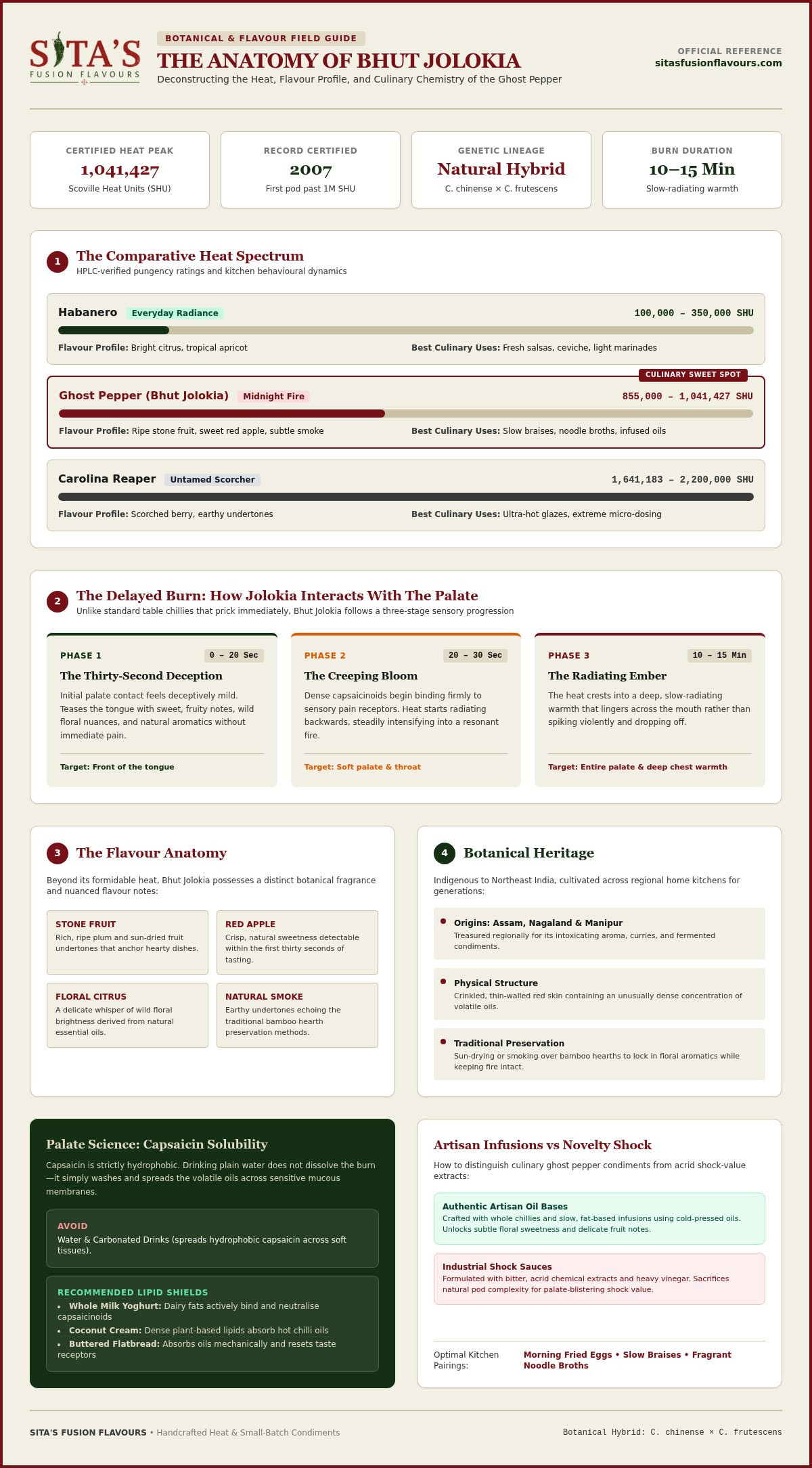
Few chillies carry a reputation as formidable as the ghost pepper jolokia. Long before it became an internet sensation, this botanical powerhouse was treasured across Northeast India for its intoxicating fragrance and fierce, medicinal warmth. Certified in 2007 as the world's hottest chilli, the pepper registers between 855,000 and 1,041,427 Scoville Heat Units (SHU). It broke scientific records as the first pod to surpass the one-million mark. Yet, boiling it down to sheer pungency ignores the pepper's true culinary brilliance.
Beyond the inferno lies an intricate flavour profile. Take a measured taste, and you're greeted with ripe stone fruit, sweet red apple, and a whisper of wild floral citrus. Subtle undertones of natural smoke follow quickly behind. Unlike plain table chillies, Bhut Jolokia offers remarkable aromatic depth that rewards patient cooks.
The Botanical Heritage of Naga Jolokia
Known traditionally as the Ghost Pepper (Bhut Jolokia), this extraordinary plant traces its roots through Assam, Nagaland, and Manipur. It isn't an ordinary garden variety; it represents a rare, naturally occurring interspecific hybrid between Capsicum chinense and Capsicum frutescens. This unique genetic pairing yields its crinkled, thin-walled red skin alongside an unusually rich concentration of volatile essential oils. For generations, regional home cooks preserved these pods by sun-drying or smoking them over bamboo hearths, locking in delicate floral aromatics while keeping their formidable fire intact for everyday curries and fermented condiments.
The Delayed Burn: How Ghost Pepper Interacts with the Palate
Most sharp chillies hit you instantly. A bird's eye or standard habanero delivers a swift prick to the front of the tongue. The ghost pepper jolokia behaves entirely differently:
- The Thirty-Second Deception: Initial contact feels surprisingly gentle, teasing the palate with sweet, fruity notes.
- The Creeping Bloom: Around twenty to thirty seconds in, dense capsaicinoids begin binding firmly to pain receptors across the soft palate, throat, and back of the mouth.
- The Radiating Ember: The heat crests into a deep, slow-radiating warmth that lingers for ten to fifteen minutes rather than spiking violently.
To test these intense profiles without blowing out your taste buds, avoid downing water. Water merely spreads hydrophobic capsaicin across sensitive tissues. Instead, coat your tongue with whole milk yoghurt, coconut cream, or buttered flatbread to absorb the oils safely and reset your senses.
Ghost Pepper Jolokia vs Habanero and Carolina Reaper: Heat Comparison
Understanding where a chilli sits on the Scoville scale is about more than chasing bragging rights. It dictates how a pepper behaves in your frying pan. While some pods deliver a quick burst of sunshine, others provide sustained warmth that anchors hearty winter braises. When university HPLC testing confirmed the Bhut Jolokia's heat level above the one-million mark, it established a culinary sweet spot between approachable kitchen staples and untamed novelty scorchers.
| Chilli Variety | Scoville Heat (SHU) | Flavour Profile | Best Culinary Uses |
|---|---|---|---|
| Habanero | 100,000 - 350,000 | Bright citrus, tropical apricot | Fresh salsas, ceviche, light marinades |
| Ghost Pepper (Bhut Jolokia) | 855,000 - 1,041,427 | Ripe stone fruit, subtle smoke | Slow braises, noodle broths, infused oils |
| Carolina Reaper | 1,641,183 - 2,200,000 | Scorched berry, earthy undertones | Ultra-hot glazes, extreme micro-dosing |
To master these distinctions in your kitchen, explore our foundational guide to small batch chilli oil for deeper extraction techniques.
Habanero vs Ghost Pepper: Everyday Radiance vs Midnight Fire
The habanero is an instant crowd-pleaser. Its citrus snap pricks the tongue immediately, pairing effortlessly with lime juice, fresh coriander, and grilled seafood. The ghost pepper jolokia, by comparison, offers midnight fire. It demands time to bloom. In slow-cooked curries and long-simmered stocks, Jolokia releases a resonant, rounded warmth that lingers pleasantly in the chest rather than nipping at the lips. If you're adapting a recipe designed for habaneros, start with just one-quarter the amount of Jolokia to keep the heat balanced.
Carolina Reaper vs Ghost Pepper: Pushing the Extreme Heat Boundaries
At the far end of the scale sits the Carolina Reaper. While Reaper delivers a sharp, immediate throat strike that can quickly overwhelm nuanced ingredients, the ghost pepper jolokia leaves room for culinary storytelling. It delivers genuine superhot pungency without muting garlic, star anise, or toasted cumin. For home cooks seeking authentic intensity that respects rather than bullies the palate, discovering family-crafted condiments from SITA’S Fusion Flavours makes superhot heat genuinely delicious.
Culinary Chemistry: Harnessing Superhot Capsaicin in Home Cooking
Working with the ghost pepper jolokia at home feels daunting when you treat it like an ordinary vegetable. Chop a fresh pod carelessly, and airborne capsaicin can sting your eyes, irritate your skin, and trigger coughing fits. Worse yet, tossing raw slices into a stir-fry produces jagged, uncurated pockets of heat. One bite tastes mild; the next sets your mouth ablaze. Harnessing superhot chillies requires working with their natural biochemistry rather than fighting against it.
Capsaicin is entirely hydrophobic and fat-soluble. Because it dissolves readily in lipids, high-quality cooking oils act as culinary shock absorbers. When bound to healthy fats, intense capsaicin spreads uniformly across the palate, softening the sudden strike into a sustained, luxurious warmth.
The Power of Fat Infusion: Taming the Fire
Slow oil extraction transforms ferocious heat into an approachable, kitchen-ready condiment. By gently heating whole dried or crushed pods in oil at strictly controlled low temperatures, you draw out delicate fat-soluble flavour compounds without burning fragile skins. The resulting oil coats taste receptors evenly, preventing the sudden, sharp shock associated with raw pods. In broths and noodle soups, infused oils float lightly across the surface, dispersing complex heat through every spoonful rather than pooling into aggressive, concentrated clumps.
Balancing Deep Flavours: Pairing Notes for Jolokia
Taming superhot heat requires complementary culinary counterpoints. Groundbreaking research from New Mexico State University's Chile Pepper Institute highlighted the dense capsaicinoid concentration within Bhut Jolokia, but balancing those compounds in real cooking depends on classic kitchen pairings:
- Rich Lipids: Marbled meats like slow-braised beef brisket, pork belly, and roasted lamb readily absorb potent chilli oils, mellowing sharp edges through renderable animal fats.
- Fragrant Alliums: Slowly fried garlic, golden shallots, and fresh ginger create an aromatic savoury base that grounds the chilli's sharp pungency.
- Warm Spices: Toasted star anise, cinnamon bark, and sesame seeds mirror the pepper's natural botanical smoke and sweetness.
- Acidity and Umami: Dark soy sauce, aged black vinegar, or a squeeze of fresh lime juice cut through dense richness, ensuring clean palate recovery after each mouthful.
These harmonious flavour profiles form the foundation of our citrus-infused kaffir lemongrass chilli oil, demonstrating how thoughtful botanical pairings elevate pure fire into daily dining luxury.
Selecting Artisan Ghost Pepper Condiments: What Discerning Foodies Look For
Walk down any commercial condiment aisle, and you'll find shelves dominated by extreme novelty hot sauces. Most rely on cheap, pungent vinegar to preserve the bottle, drowning out delicate flavours while delivering an unpleasant acidic bite. True artisan condiments take the opposite path. Rather than relying on industrial shortcuts, skilled makers celebrate the natural fire of the ghost pepper jolokia through gentle, slow-crafted fat infusions. Choosing a pantry staple that elevates your meals requires an eye for craftsmanship, much like the standards we explore in our comprehensive guide to small business condiments Australia.
Whole Chillies vs Artificial Capsaicin Extracts
Turn a commercial bottle around, and you will often spot ingredients like "capsicum oleoresin" or "chilli extract". These laboratory-isolated concentrates provide aggressive pungency, but they also bring a bitter, chemical aftertaste that lingers unpleasantly. They scorch the mouth without contributing any genuine culinary character.
Dedicated crafters avoid extracts entirely, working only with sun-ripened, naturally dried whole pods. Authentic pods preserve the chilli's complex plant flavonoids and aromatic oils. When evaluating your next jar, look for these quality benchmarks on the label:
- Whole, recognisable ingredients: look for dried chilli pods, fresh garlic, and whole spices listed near the top.
- Clean fat carriers: choose unadulterated vegetable, canola, or cold-pressed seed oils over hydrogenated blends.
- Zero chemical short cuts: avoid artificial thickeners, synthetic extracts, and laboratory colour additives.
Texture, Sediment, and Aromatics: The Sensory Hallmarks
A truly exceptional condiment engages all your senses. Peer through the glass jar. High-calibre infused oil displays distinct layers of rich sediment: golden, crispy shallots, slowly toasted garlic crisps, and fractured chilli seeds resting beneath a luminous ruby oil. The ghost pepper jolokia yields a uniquely warm, toasted perfume. The second you break the seal, your kitchen should fill with rich roasted alliums and fruity dried chilli, not the sharp sting of acetic acid.
To preserve those fragile volatile aromatics across warm Australian summers, store your artisan oils in a cool, dark pantry away from the heat of the stovetop. Seal the lid firmly after every use to lock in the crunch and protect the infused oils from light exposure.
Ready to upgrade your home cooking with balanced, handcrafted fire? Order your jar of artisan chilli oil and taste the dedication behind authentic small-batch production.
Mastering Jolokia at Home: Everyday Dishes to Elevate with Ghostly Heat
Transforming your everyday cooking with the ghost pepper jolokia doesn't require culinary acrobatics. It simply calls for moderation and respect. Instead of dumping large spoonfuls onto a dish, think of superhot infused oil as a finishing perfume. A few measured drops can wake up quiet flavours, lend complex warmth to mild fats, and turn familiar comfort foods into unforgettable meals.
Beyond sauces and curries, fiery chilli oil breathes new life into simple vegetable sides and barbecue plates. Drizzle it over honey-roasted carrots or charred broccolini straight off the grill. Spoon it generously over sliced flank steak, charred lamb cutlets, or smoky pulled pork just before serving. The radiant heat cuts through savoury meat drippings, enhancing each bite without masking natural woodsmoke or caramelised crusts.
Breakfast and Brunch: Waking Up the Palate
Morning staples provide the ideal canvas for superhot oils because breakfast food is rich in natural fats. Creamy poached egg yolks, rich avocado, and salted butter naturally tame fiery heat, making the slow-blooming burn deeply satisfying rather than punishing. Try these simple morning upgrades:
- Crispy Fried Eggs: Fry your eggs in neutral oil until the edges blister, then finish with three or four drops of infused oil right over the runny yolk.
- Avocado on Sourdough: Layer toasted rustic bread with crushed avocado, a smear of whipped feta, fresh dill, and a delicate half-teaspoon drizzle of warm chilli oil.
- Savoury Breakfast Bowls: Top warm brown rice and steamed greens with bacon lardons, sesame seeds, and a subtle touch of sediment-rich oil.
Night-Time Noodles, Soups, and Stir-Fries
When the sun dips, the ghost pepper jolokia shines brightest in steaming dinner bowls. Swirl a light spoonful into rich coconut laksa, tonkotsu ramen, or delicate chicken wonton broths. Because the oil floats across the hot surface, each dip of your noodles picks up a subtle, fragrant sheen that warms the throat without scorching your palate. It also works wonders in a hot wok. Toss Chinese broccoli, bok choy, or sugar snap peas through minced garlic and tamari soy, pulling the pan off the burner before finishing with infused oil to keep its vibrant aromatics intact.
To experience this delicate balance straight from the pantry, reach for SITA’S Fusion Flavours handcrafted Ghostly Chilli Oil. Made in small artisan batches right here in Australia, it unites heritage infusion techniques with intense, slow-creeping Jolokia heat for home cooks who refuse to compromise on flavour.
Bring Legendary Fire to Your Everyday Table
Superhot cooking is never about enduring pain; it's about unlocking flavour you can't find anywhere else. The ghost pepper jolokia is far more than a novelty dare. When coaxed patiently through lipid infusion rather than drowned in harsh, vinegar-heavy extracts, its million-Scoville heat blooms into luscious stone fruit notes and deep, savoury warmth. A few careful drops across morning eggs or evening noodles can effortlessly transform everyday home meals into rich culinary experiences.
That balance is why we pour so much care into every jar. Handcrafted in Australia using time-honoured family techniques, our small-batch kitchen pairs wild fire with crisp shallots and slow-roasted aromatics. You don't have to fear scorching your palate to enjoy authentic botanical heat. Experience the lingering warmth of our handcrafted Ghostly Chilli Oil and discover how vibrant, balanced fire can elevate your everyday table.
Frequently Asked Questions
How hot is the ghost pepper jolokia on the Scoville scale?
The ghost pepper jolokia measures between 855,000 and 1,041,427 Scoville Heat Units (SHU). It earned international recognition in 2007 as the first recorded pepper variety to surpass one million Scoville units. That makes it roughly three to ten times hotter than a standard habanero, delivering substantial warmth that lingers across your entire palate rather than vanishing quickly.
Is ghost pepper hotter than the Carolina Reaper chilli?
No, the Carolina Reaper is significantly hotter than the ghost pepper. A Carolina Reaper ranges from 1.5 million to roughly 2.2 million SHU, which is about double the heat intensity of Bhut Jolokia. While the Reaper delivers an immediate, biting burn, Jolokia offers a more gradual, full-bodied warmth that allows complex stone fruit aromatics to shine through in cooked dishes.
Why does the heat of the ghost pepper take so long to kick in?
Bhut Jolokia contains a distinct distribution of heavy capsaicinoid compounds that bind slowly to pain receptors in the mouth. Unlike smaller chillies that trigger instant surface prickling on the tip of the tongue, the ghost pepper jolokia takes twenty to thirty seconds to activate. It blossoms gradually across the throat and soft palate, creating its signature deep, radiating warmth.
Can eating ghost pepper jolokia cause permanent physical harm?
Eating ghost pepper does not cause permanent physical injury or burn human tissue. Capsaicin triggers a neurological reaction by binding to heat receptors, tricking your brain into sensing intense physical heat without causing cellular damage. Extreme doses can cause temporary discomfort, including stomach cramping, sweating, or nausea, which is why thoughtful cooks prefer diluted, slow-infused oils over biting into whole raw pods.
What is the best way to neutralise the burn of ghost pepper?
Consume full-fat dairy products like milk, yoghurt, sour cream, or rich coconut cream to neutralise the fire quickly. Capsaicin is hydrophobic and fat-soluble, which means drinking plain water simply spreads the oils around your mouth. Dairy contains casein, a protein that binds to capsaicin molecules and strips them away from your nerve endings to provide immediate physical relief.
How does ghost pepper chilli oil differ from vinegar-based hot sauce?
Chilli oil relies on lipids to temper and distribute heat evenly, while commercial hot sauces use heavy vinegar bases for acidity and shelf stability. Vinegar produces a sharp, acidic bite that often masks subtle botanical notes. Infused oils coat your mouth gently, softening the sudden punch of the chilli while carrying rich, savoury aromas from fried shallots and garlic directly into your food.
How should I store ghost pepper condiments in the Australian climate?
Keep your chilli oil jars in a cool, dark cupboard away from direct sunlight, humidity, and the heat of your cooktop. Australian summer temperatures can warm pantry spaces quickly, but keeping the lid tightly fastened locks in aromatic freshness and preserves the crunchy sediment. There is no need to refrigerate infused oils unless you prefer them chilled, as condensation can soften crispy shallots.