
Ghost pepper-infused condiment vs standard habanero hot sauce: which suits your plate?
·
SITA'S Fusion Flavours
The hotter pepper doesn’t always make the better match for your meal. In the ghost pepper infused condiment vs standard habanero hot sauce comparison, the chilli matters, but so does what carries it: chilli oil brings a different texture and serving style from a vinegar-based sauce.
You might expect ghost pepper to bring a fiercer hit and habanero to offer a more familiar kick. But heat alone won’t tell you whether a condiment will lift noodles, brighten eggs or take over the whole plate. The burn’s pace, the flavour around the chilli and the way the condiment meets your food all count.
This guide compares heat and flavour, explains how oil and sauce play different roles, and helps you choose for your dish and spice comfort. It also looks at SITA’S handcrafted Ghostly Chilli Oil and Habanero Chilli Oil as two distinct ways to bring chilli to the table. Both are made in small batches with Australian-sourced ingredients and family recipes. Bold or balanced? Let the plate decide.
Key Takeaways
- In the ghost pepper infused condiment vs standard habanero hot sauce comparison, consider both the chilli and the condiment’s base. They shape how heat and flavour meet your food.
- Oil and vinegar-based sauce bring different textures and serving styles, so match the format to how you want to dress your dish.
- Choose according to your heat comfort, the meal and whether you want to cook with the condiment or add it at the table.
- Start with a small taste and adjust gradually to find the balance that suits your plate.
- SITA’S handcrafted Ghostly Chilli Oil and Habanero Chilli Oil offer two distinct oil-based options, made in small batches with Australian-sourced ingredients and family recipes.
Ghost pepper-infused condiment vs habanero hot sauce: what are you comparing?
The pepper and the carrier play different parts. Pepper variety influences the chilli’s character and heat, while the condiment’s base affects its texture and how it sits on food. That’s the useful starting point for comparing a ghost pepper-infused condiment with a standard habanero hot sauce: you’re weighing both the chilli and the format, not just two pepper names.
What does “ghost pepper-infused condiment” mean?
“Infused” simply means the condiment incorporates ghost pepper. The word alone doesn’t tell you how it’s made, what else it contains, or whether the finished condiment is oily, pourable, smooth or textured. Those details depend on the recipe.
Ghost pepper is also known as Bhut Jolokia. It and habanero are associated with the Capsicum chinense species, but sharing a botanical group doesn’t make their flavours or heat identical. A pepper’s name also doesn’t describe the finished condiment: the recipe and serving format shape that experience.
How is standard habanero hot sauce different from chilli oil?
“Standard habanero hot sauce” is a category-level comparison, not a description of a SITA’S product. Conventional hot sauce is generally pourable and often includes vinegar, though recipes vary. Its acidity and flowing texture can make it easy to drizzle or stir through a dish.
Chilli oil has an oil-based texture and dresses food differently. It can coat ingredients and bring a distinct richness to the serving experience, rather than the tang associated with many vinegar-based sauces. The exact flavour and texture depend on the recipe, so not every chilli oil or habanero sauce tastes alike.
SITA’S offers Ghostly Chilli Oil and Habanero Chilli Oil. Both are chilli oils, not hot sauces. Their names identify two separate options, but don’t establish their precise ingredients or heat. The broader comparison helps explain the formats, while SITA’S Habanero Chilli Oil remains distinct from a generic habanero sauce.
For a closer look at the craft and character of this format, explore our small-batch chilli oil guide. The ghost pepper infused condiment vs standard habanero hot sauce choice isn’t settled by pepper alone. Consider the condiment’s base and how you want it to meet the food.
Ghost pepper and habanero heat: how flavour changes the experience
A pepper’s reputation can hint at what to expect, but it can’t tell you exactly how a finished condiment will taste. Perceived heat depends on the pepper and how it’s used in the recipe, including its concentration and the other ingredients around it. A sharp, tangy sauce and a rich oil can make the same chilli feel like a different companion to your meal.
A pepper’s heat rating describes its chilli heat, not the complete sensory profile of the condiment it goes into. The Scoville Scale is a useful way to discuss pepper heat, but a rating for a pepper shouldn’t be treated as a rating for a finished sauce or oil. Don’t assign a Scoville figure to a condiment based on its name alone.
What flavour notes can ghost pepper bring?
Ghost pepper is known for pronounced heat. Some descriptions also note sweet, fruity qualities, but that’s a possibility, not a guarantee of what you’ll taste in every condiment. The recipe can soften, sharpen or surround those notes with other flavours, while the chilli’s intensity may still take centre stage. Think of the pepper as one voice in the mix, not the whole flavour story.
What does habanero add beyond heat?
Habanero is often associated with fruity notes too, particularly in hot sauce descriptions. That doesn’t mean every habanero sauce tastes the same, or that one pepper is universally more flavourful. Acidity can bring a bright tang, seasonings can add savoury depth, and the base affects how those tastes reach your palate.
That’s why a vinegar-based sauce may come across as lively and sharp, while an oil-based condiment offers a different, less acidic backdrop. Neither format guarantees a particular flavour: the finished recipe matters. When deciding between the ghost pepper infused condiment vs standard habanero hot sauce, consider whether you want the chilli’s fruitiness, the sauce’s tang or the oil’s distinct feel to lead on your plate.
For a practical taste comparison, try a small amount alongside a familiar dish, then adjust gradually. To explore the oil-based side of the comparison, browse SITA’S handcrafted chilli oils and think about how that format might suit your meal.
Chilli oil vs habanero hot sauce: which format fits your cooking?
The format changes how chilli lands on the plate. Oil can coat food and leave its texture noticeable, while a pourable, often vinegar-based hot sauce can flow into dips or mix through a dish. Choose based on whether you want a distinct finishing layer or an easily blended chilli element.
| What to compare | Chilli oil | Habanero hot sauce |
|---|---|---|
| Base | Oil-based; other ingredients vary by recipe. | Often vinegar-based, though recipes differ. |
| Texture | Can coat or dress food, with texture depending on the product. | Typically pourable and easy to stir through. |
| Flavour balance | The oil and any seasonings shape how the chilli comes through. | Acidity and other ingredients can add tang or extra flavour. |
| Application | Spoon or drizzle over a dish, or use as part of cooking. | Mix into dips or marinades, or add a finishing splash. |
| Portion control | Add a little at a time and spread it across the serving. | Pour or mix in gradually, tasting as you go. |
The condiment’s format shapes whether chilli coats, pools on or blends into a dish. Neither style is automatically more versatile. Sauce can be convenient when you want to stir chilli through a dip or marinade; oil may suit a dish where you want a finishing drizzle to remain distinct. The recipe affects the final taste, so begin with a small amount and adjust to your preference.
When does chilli oil make the better finishing touch?
Try spooning or drizzling chilli oil over rice, noodles or dumplings when you want the topping to stay noticeable rather than disappear into a sauce. It can also bring a final flourish to other dishes, depending on their flavours and the oil’s character. For an example of chilli oil used in a meal, explore this chilli oil laksa recipe.
When might habanero hot sauce suit the dish?
A pourable sauce can be handy when you want to blend chilli evenly through a dip or marinade, or add a quick splash at the table. Start with a little, taste, then build towards the flavour you want. Hot sauce recipes vary: vinegar and other ingredients can bring acidity and alter the balance, so consider how those flavours will sit alongside the rest of your meal.
This practical distinction can clarify the ghost pepper infused condiment vs standard habanero hot sauce choice: decide how you want to apply the condiment before settling on which pepper style appeals to you.
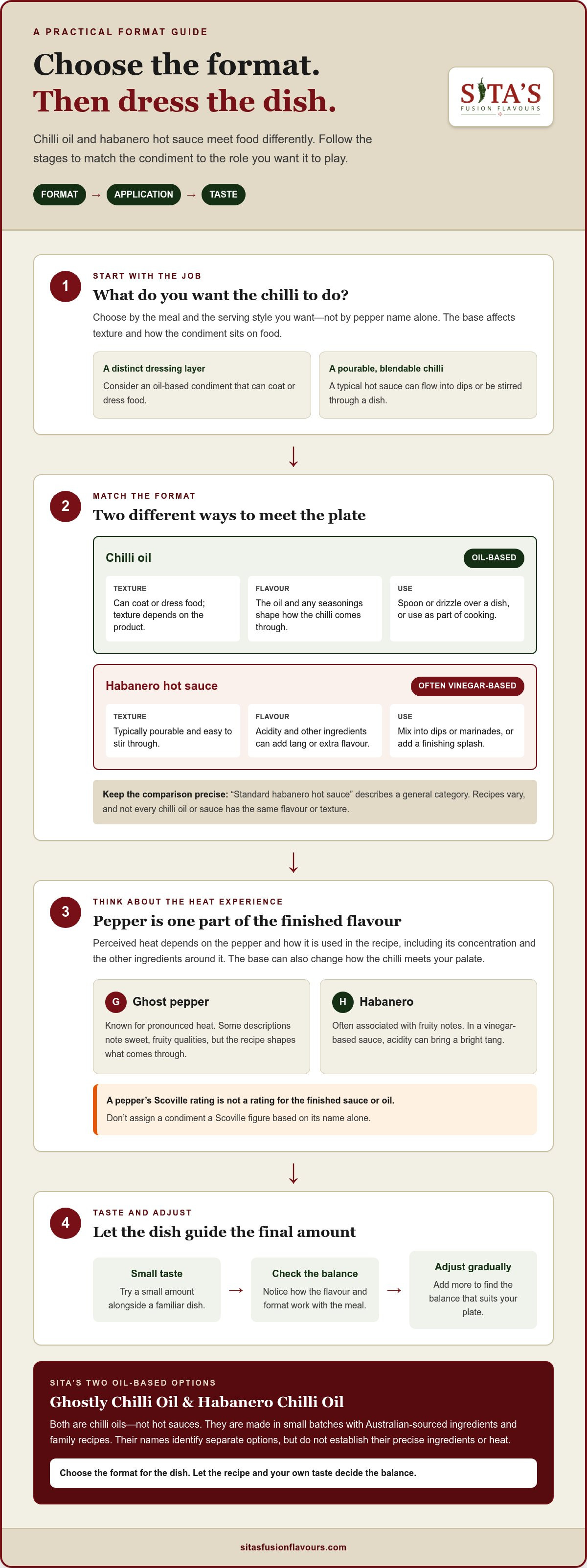
How to choose between ghost pepper and habanero for your meal
Choose for the whole plate, not just the pepper name. Your usual chilli tolerance, the condiment’s texture and the role you want it to play all affect whether the result feels balanced or overwhelming. Use this sequence to narrow down your choice:
- Check your heat comfort. If the pepper or condiment is unfamiliar, start with a small amount.
- Pick the format. Choose an oil for a spoonable finish and a pourable sauce when you want to mix chilli through a dish.
- Think about the meal. Consider whether the dish will welcome an oily finish or benefit from a sauce’s possible acidity.
- Add gradually. Taste between additions so the chilli supports the other flavours rather than taking over.
How spicy do you want the finished dish to taste?
Think about the chilli you normally enjoy, but don’t rely on a generic ranking to predict the exact result. A pepper’s reputation doesn’t tell you how concentrated it is in a particular condiment, or how the other ingredients affect the overall experience. If you’re trying a new style, add a little to a small portion first. Taste, pause, then decide whether the rest of the dish needs more.
This measured approach helps preserve balance. Adding chilli gradually lets you notice it alongside the dish’s existing flavours, whether you’re finishing a rice bowl or bringing a little warmth to a shared meal. It’s easier to build up than to pull back once the condiment is stirred through.
Do you need a finishing oil or a pourable sauce?
Choose an oil when a spoonable finish suits the plate and you’d like the condiment to dress the food in its own way. A pourable sauce may suit dips, marinades or a quick finishing splash when you want an easily mixed chilli element. Its acidity and flavour vary by recipe, so taste as you go and consider how it sits with the dish.
Keep the product category clear, too: SITA’S Habanero Chilli Oil is an oil, not standard habanero hot sauce. The broader ghost pepper infused condiment vs standard habanero hot sauce comparison can guide your choice of pepper and format, but it can’t determine your ideal amount. Your palate does that. Add a little, taste, and adjust to suit the meal and the people sharing it.
Ready to choose an oil-based option for your plate? Explore SITA’S Ghostly Chilli Oil and Habanero Chilli Oil, handcrafted in small batches with Australian-sourced ingredients and family recipes.
SITA’S Ghostly Chilli Oil and Habanero Chilli Oil: two handcrafted ways to add heat
Once you’ve weighed the chilli, texture and role you want on the plate, the choice becomes more personal. SITA’S offers two oil-based options: Ghostly Chilli Oil and Habanero Chilli Oil. They’re handcrafted in small batches using Australian-sourced ingredients and family recipes passed down through generations. That craft is part of their story; your own palate is the best guide to what suits your meal.
Which SITA’S chilli oil better matches your preference?
If you’re drawn to the ghost pepper side of the comparison, explore Ghostly Chilli Oil. It’s an oil-based option, not a standalone ghost pepper hot sauce. If you’re curious about habanero in a chilli oil format, consider Habanero Chilli Oil. Neither name alone tells you the exact heat, ingredients or flavour of the finished product, so don’t assume one is hotter or fruitier than the other.
Think about the flavour direction you want to explore, then consider whether an oil-based condiment suits your dish. You may want to add chilli in a way that differs from a pourable, acidic sauce. The ghost pepper infused condiment vs standard habanero hot sauce comparison can help clarify the pepper and format you’re interested in, but both SITA’S options are chilli oils.
How to explore handcrafted chilli oil with confidence
Start with a small amount alongside a familiar meal, then taste before adding more. This lets you notice how the condiment meets the food and helps keep the dish’s other flavours in balance. Use the same careful approach whether you’re exploring a new pepper direction or choosing an oil to accompany a meal you already enjoy.
Small-batch making and family recipes speak to the care behind SITA’S chilli oils, not a promise that every product will taste the same or suit every palate. Let the product’s character and your preferences guide the decision. If you want to bring a handcrafted oil into your cooking, explore SITA’S chilli oil range and choose the style that feels right for your table.
Choose the chilli that complements your plate
The best choice isn’t simply the pepper with the bigger reputation. In the ghost pepper infused condiment vs standard habanero hot sauce comparison, consider both the chilli’s character and the condiment’s carrier: oil dresses food differently from a pourable, often acidic sauce. Your dish, texture preference and comfort with heat all help guide the match.
Start with a small taste, especially if the chilli or condiment is new to you, and add more gradually. That way, you can build flavour without letting the heat crowd out the rest of the meal. SITA’S Ghostly Chilli Oil and Habanero Chilli Oil offer two oil-based directions to explore, handcrafted in small batches using Australian-sourced ingredients and family recipes passed down through generations.
Curious which style belongs on your table? Explore SITA’S handcrafted chilli oils and choose the style that suits your next meal.
Frequently Asked Questions
Is ghost pepper hotter than habanero?
Yes, ghost pepper is generally much hotter than habanero as a pepper. But in a ghost pepper infused condiment vs standard habanero hot sauce comparison, the finished product’s heat can’t be judged by pepper name alone. The recipe, chilli concentration and other ingredients affect the experience. A pepper’s typical heat gives context, not a guaranteed rating for every oil or sauce.
Can ghost pepper-infused condiment be used like hot sauce?
Often, you can use a ghost pepper-infused condiment to add chilli to food, but its format may call for a different approach. A pourable sauce can be easy to mix through a dish, while an oil-based condiment may dress or coat it differently. Start with a small amount, taste, then add more if the flavour and heat suit the meal.
What is the difference between chilli oil and hot sauce?
Chilli oil has an oil-based texture, while hot sauce is typically pourable and often includes vinegar, though recipes vary. Oil can coat or dress food and bring a different mouthfeel; an acidic sauce may add tang and mix readily into dips or marinades. The pepper doesn’t define the format, and the recipe shapes each condiment’s final flavour.
Does habanero hot sauce taste fruity?
It can. Habanero is often associated with fruity flavour notes, and some sauces bring those notes forward. But there’s no single taste shared by every habanero hot sauce. Vinegar may add sharpness, while seasonings and other ingredients can shift the balance. For a particular product, its recipe matters more than the pepper name alone, so taste a little before adding it generously.
How do I use ghost pepper chilli oil without overpowering a dish?
Begin with a very small amount, especially if the oil is unfamiliar, and add it to one portion or a small taste first. Check how its heat and flavour sit with the food before adding more. Build gradually and taste between additions. This gives you more control and helps the chilli complement the dish rather than drown out its other flavours.
Which is better for noodles, chilli oil or habanero hot sauce?
Chilli oil may suit noodles if you want an oil-based finish that can coat the strands; pourable habanero hot sauce may work if you want a chilli element that mixes through easily, often with acidity. Neither is automatically better. Consider the noodle dish’s existing flavours, choose the texture you prefer, then add a small amount and taste before adjusting.
Is SITA’S Habanero Chilli Oil the same as habanero hot sauce?
No. SITA’S Habanero Chilli Oil is a chilli oil, not a habanero hot sauce. Both categories can add chilli, but oil and sauce have different bases and ways of meeting food. If you’re after an oil-based option featuring habanero, the product name is Habanero Chilli Oil. Start with a small amount and adjust to your taste.