
Crispy Shallot Chilli Condiments vs Standard Garlic Hot Sauces: Which Suits Your Table?
·
SITA'S Fusion Flavours
The hotter condiment isn’t always the better match. A sharp, pourable garlic hot sauce can brighten a dish, while a crispy chilli condiment can bring oil, savoury depth and crunch. When comparing crispy shallot chilli condiments vs standard garlic hot sauces, texture and how you plan to use them matter just as much as heat.
The difference can be unclear because chilli, garlic, shallot and oil each affect a condiment’s flavour and how it works with food. This guide compares texture, taste, heat and everyday uses, from a spoonful over noodles to a drizzle across a meal. The aim is to help you choose based on what you enjoy, not just the name on the jar or bottle.
SITA'S Fusion Flavours makes small-batch, Malaysian-inspired condiments using family recipes. If you’re considering its Crispy Chilli Oil, check the current product description and ingredients rather than assuming it contains shallots. The right choice is the one that brings the texture and flavour you want to your table.
Key Takeaways
- Choose by the texture and role you want at the table, not chilli intensity alone.
- Compare how crispy shallot chilli condiments vs standard garlic hot sauces may differ, while remembering that recipes vary between products.
- Check ingredient lists for chilli, garlic, shallot, oil and allergens, then follow the product’s storage guidance.
- Consider the heat cues and how the condiment will work with the dishes you make most often.
- Before choosing SITA'S Crispy Chilli Oil, read its current product description and ingredient list to confirm its specific qualities.
Crispy shallot chilli condiments vs standard garlic hot sauces: what is the difference?
In brief, a crispy chilli condiment is often chosen for texture, while a hot sauce is often chosen for a smooth, pourable finish. But the names don’t guarantee a particular recipe. Some crunchy chilli condiments contain shallots, some don’t, and garlic may or may not feature in a hot sauce. The useful comparison is what’s in the jar or bottle, how it feels on food and the flavour it brings.
Compare four things: texture, whether it has crunchy pieces or a smooth liquid; flavour, which aromatics and other ingredients stand out; heat, how intense it tastes to you; and format, whether it is an oil-based condiment or a pourable sauce. These qualities can overlap. A hot sauce may be thick, and a chilli oil may have little or no crunch.
What makes a chilli condiment crispy?
In a textured chilli condiment, crisp pieces add little pops of crunch alongside chilli and oil. Ingredients vary, so don’t assume those pieces are shallots or garlic without checking the label. The broader style of Chili crisp is known for combining chilli with crisp texture, but each product has its own recipe.
That texture changes a mouthful. Rather than simply coating food, the condiment can add distinct pieces to each bite. A smooth sauce, by contrast, spreads more evenly. Neither format is automatically better; they do different jobs.
What does garlic add to a hot sauce?
Garlic can lend a hot sauce a savoury, aromatic note, from mellow and rounded to more prominent. It’s a possible flavour component, not a defining ingredient of every hot sauce. Likewise, “standard garlic hot sauce” doesn’t point to one fixed formula.
Hot sauces vary in thickness, acidity and heat. Some taste sharp and tangy; others are fruitier or more savoury. Their heat can also differ with the chillies and recipe. Read the ingredient list and product description to see whether garlic is present and what else shapes the flavour.
For a fair comparison, look beyond the words “crispy”, “garlic” or “hot”. Check the texture, oil or liquid base, flavour notes and any heat guidance. Recipes differ, so the label is the reliable guide to a product’s specific ingredients and the eating experience to expect.
How texture, garlic and chilli shape each condiment’s flavour
Texture affects more than appearance. It changes how each bite feels and how flavour is spread across the food. A condiment with crisp pieces can add a distinct crunch, while a pourable sauce usually coats or mixes through a dish more evenly. Ingredients and consistency vary, so use this comparison as a guide, not a guarantee about every jar or bottle.
| Feature | Crispy chilli condiment | Garlic hot sauce |
|---|---|---|
| Texture | May include crisp pieces suspended in oil; some versions may be less textured. | Often pourable, though thickness and smoothness vary by recipe. |
| How it lands | Spoon or place on top if the product has solids you want in each bite. | Drizzle or mix through food for a more even coating. |
| Flavour impression | Chilli, oil and any aromatics contribute; crisp ingredients can add contrast. | Garlic may add a savoury aroma, while other ingredients shape the overall taste. |
| Best-fit use | Consider it when added texture is welcome. | Consider it when you want a pourable sauce; check its acidity and heat first. |
Crunch, spoonability and how flavour lands
Think of a soft egg, rice or noodles. Crisp pieces, when present, can bring lively contrast to the softer texture. A spoonful also lets you place solids and oil together where you want them. A drizzle is easy to spread across several bites or stir into a dish. Neither approach is inherently better; it depends on whether you want a concentrated topping or an even layer.
Oil content, the amount and size of solids, and sauce consistency differ between products. Check the description for clues about whether a condiment is chunky, smooth, thick or thin, and follow any serving guidance on the label.
Garlic-forward savouriness versus shallot-led character
Garlic, when included, can bring a familiar savoury aroma, but its prominence depends on the recipe and how it’s prepared. Shallot is a separate ingredient and may contribute its own aromatic character, which can also change with preparation. Neither flavour is assured by a product category alone. Compare ingredient lists rather than relying on a name or style description.
Chilli matters too, but heat isn’t the only flavour cue. The pepper and other ingredients shape the overall impression. That’s why crispy shallot chilli condiments vs standard garlic hot sauces is best judged by reading product details as well as considering texture. If you’re weighing up SITA'S Crispy Chilli Oil, check its current ingredients and description in the Crispy Chilli Oil product information before deciding what flavour or texture to expect.
Which condiment suits your dish: crispy chilli or garlic hot sauce?
Start with the eating experience you want. If a dish feels soft or uniform, a textured chilli condiment may add contrast, provided it contains crisp pieces. If you’d rather spread chilli flavour across a meal with a drizzle or stir-through, a pourable garlic hot sauce may suit. Neither is a guaranteed match for a particular dish. Recipes differ, so check the product description and ingredients before serving.
When a crunchy chilli topping may work better
Try a textured chilli condiment with rice, noodles or eggs if you’d enjoy a little crunch alongside their softer texture. Add a small amount on top, then taste. If the product has crisp pieces, you’ll notice them distinctly; if it’s mostly oil or has a finer texture, the contrast may be subtler. Think of it as an optional finishing touch, not a must-have pairing.
For a shared meal, check the ingredient and allergen information before putting a condiment on the table. That’s especially helpful if you’re serving someone whose dietary needs or heat preference you don’t know.
When a pourable garlic hot sauce may fit better
Choose a pourable sauce if you prefer to drizzle it over a meal or mix it through, rather than add a spoonful of textured topping. Garlic can give a sauce a savoury aroma when included, but acidity, thickness and garlic intensity depend on the recipe. Taste first, then add a little more only if it suits the dish and your heat comfort.
This format can be handy when you want to distribute a chilli accent across several bites. But a smooth sauce won’t supply the same crisp contrast as a product with crunchy pieces. Check the label to confirm whether the sauce is thin or thick, and whether its ingredients suggest a sharp, savoury or otherwise distinctive flavour.
Try a simple side-by-side tasting
Use familiar, plainly prepared food so the condiments are easy to compare. A small serve of rice or a piece of egg works well. Keep the portions separate and add only a small amount of each condiment to its own bite.
- Notice texture: Does one add crunch, or do you prefer an even coating?
- Notice flavour: Which ingredients stand out, and does the condiment complement the food?
- Notice heat: Is the warmth comfortable, or does it take over the bite?
There’s no single winner in crispy shallot chilli condiments vs standard garlic hot sauces. Your preferred texture, flavour and heat level, alongside the product’s actual ingredients, make the better guide.
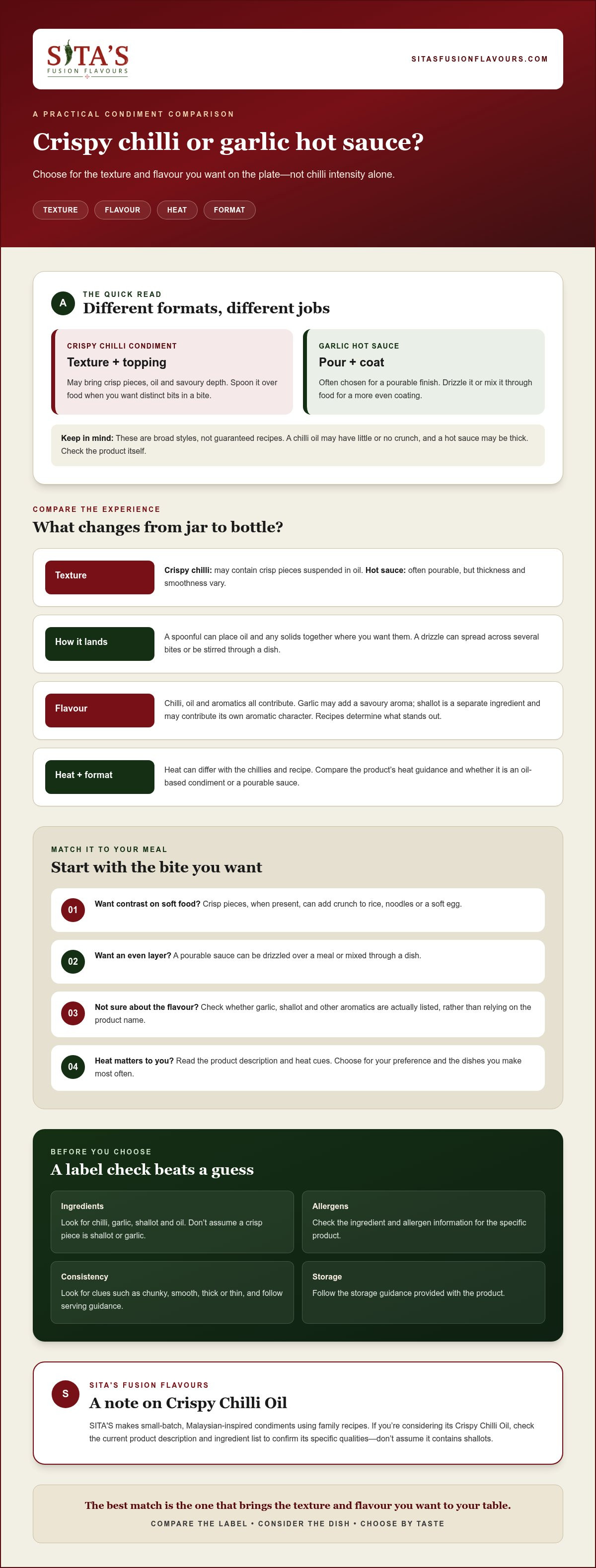
How to choose between crispy chilli condiments and garlic hot sauces
Make the choice in order: decide how you want the condiment to feel, which flavours you enjoy, how much heat suits you and how you’ll use it. In the comparison of crispy shallot chilli condiments vs standard garlic hot sauces, a fiery label alone won’t tell you which belongs in your pantry. Intended use and actual ingredients matter just as much.
A five-step tasting and label-checking method
- Choose your texture. Do you want crisp pieces, a smooth pour or something in between? Check the product description, as category names don’t guarantee consistency.
- Read the ingredients. Look for chilli, garlic, shallot and oil, and confirm each ingredient rather than inferring it from the product name.
- Check allergens and storage guidance. Read the label before serving others, and follow the product’s directions for storage.
- Consider flavour and heat. Look for the flavour notes and any heat cues provided. Don’t choose on heat alone; the condiment should also suit your taste and the food.
- Try a small amount. Taste it with a familiar dish before deciding how much to use in a regular serving.
A simple tasting helps reveal whether you enjoy the texture and flavour together, rather than judging from a description alone. Keep the first taste modest, especially if you’re unsure how the chilli will feel.
Match your choice to your pantry and cooking habits
Think about how you’ll reach for it at home. Do you prefer a topping, a dip or a finishing drizzle? A textured product may suit you if you want distinct pieces in a bite, while a pourable sauce can be easier to distribute. Check the label to see whether the consistency and ingredients fit the way you plan to use it.
Household preferences count, too. If one condiment needs to suit several diners, consider everyone’s comfort with heat and whether people can add their own amount at the table. For flavour context, SITA’S Fusion Flavours makes small-batch, Malaysian-inspired condiments using Australian-sourced ingredients. Explore SITA’S Crispy Chilli Oil, then review its current product description and ingredient list to decide whether it suits your preferences.
Explore SITA’S Crispy Chilli Oil and choose with confidence
SITA’S Fusion Flavours makes small-batch, Malaysian-inspired condiments using Australian-sourced ingredients and family recipes passed down through generations. Its confirmed range includes Crispy Chilli Oil, alongside other chilli oils. Each product has its own ingredients and character, so don’t assume the whole range offers the same texture, flavour or heat.
The comparison of crispy shallot chilli condiments vs standard garlic hot sauces comes down to what you want on your plate and what’s actually in the product. A category name alone can’t confirm the ingredients or eating experience.
What to check before choosing SITA’S Crispy Chilli Oil
Start with the current product description and ingredient list. Confirm whether shallots or other crisp ingredients are listed before describing the oil as shallot-based or expecting a particular crunch. Then consider whether the listed ingredients match the flavours you enjoy and the way you plan to use it. For broader context on artisan pantry makers, look for Small Business Condiments Australia: The Complete Artisan Pantry Guide (2026).
If a specific ingredient matters to you, rely on the product information rather than an assumption based on “crispy” or “chilli oil”. Check the allergen information and storage guidance on the product, too.
From comparison to your next meal
Let the meal guide your choice. If you’re after a topping with a particular texture, check that the product description supports it. If you prefer a sauce you can drizzle or mix through, choose a product described in a way that fits that use. The best match is the one whose ingredients, format and heat suit your table.
Ready to compare for yourself? Explore SITA’S Crispy Chilli Oil and the wider confirmed chilli oil range, reading each product’s current details before deciding what to try. A little label-checking can make the next meal a more confident choice.
Choose the chilli finish that feels right for your table
The choice between crispy shallot chilli condiments vs standard garlic hot sauces isn’t just about heat. Think first about whether you want texture or a pourable sauce, then compare flavour notes, heat cues and ingredients. Recipes vary, so check the label rather than assuming a condiment contains garlic or shallots.
For a small-batch, Malaysian-inspired option, SITA’S Fusion Flavours makes condiments with Australian-sourced ingredients and family recipes passed down through generations. Its range includes Crispy Chilli Oil, but check the current product description and ingredient list to see whether its qualities suit your preferences and intended use.
Ready to explore? Explore SITA’S handcrafted chilli condiments and choose with the next meal in mind. A little curiosity at the table can lead to a flavour you’ll love reaching for.
Frequently Asked Questions
Is crispy chilli oil the same as chilli sauce?
No, not necessarily. Crispy chilli oil is generally an oil-based condiment and may include crunchy pieces, while chilli sauce describes a broader range of sauces that can vary in texture and ingredients. Some chilli oils are smooth, and some chilli sauces are thick, so the names alone aren’t enough to predict the eating experience. Check the product description and ingredient list for the specific format you’re considering.
Can crispy chilli condiments contain shallots?
Yes, some crispy chilli condiments contain shallots, but the ingredient isn’t guaranteed by the word “crispy”. Recipes may use different aromatics and crisp ingredients, or none that create a pronounced crunch. Read the ingredient list to confirm whether shallots are present, and check allergen information before serving others. If you’re considering a particular product, use its current label and description rather than assuming its ingredients from the category name.
What is the difference between garlic hot sauce and chilli oil?
Chilli oil has an oil base, while hot sauce is a broad category that may use a different liquid base and can vary in acidity and thickness. Garlic may feature in either style, but it isn’t universal. Chilli oil may be smooth or include solids; hot sauce may be thin or thick. Compare the labels and descriptions to see how each product’s ingredients, texture and intended use differ.
Which is better for noodles, crispy chilli or garlic hot sauce?
Either can work with noodles, depending on the finish you want and the product’s flavour. Choose a chilli condiment with crisp pieces if you’d enjoy added texture, or a pourable hot sauce if you prefer to drizzle or mix it through. Start with a small amount and taste before adding more. Check the product details first, as ingredients, consistency and heat vary between recipes.
Is crispy chilli oil always hotter than garlic hot sauce?
No. The format doesn’t determine how hot a condiment will taste. Heat depends on the chillies and recipe, and products in either category can range from mild to very hot. Check the product’s heat cues and description, then try a small amount if you’re unsure. Choose for flavour and intended use as well as heat, since a hotter condiment isn’t automatically a better match for your meal.
How do I choose between a crunchy chilli condiment and a smooth hot sauce?
Start with the texture you want, then check the flavour notes, heat cues and ingredients against the food you plan to serve. In crispy shallot chilli condiments vs standard garlic hot sauces, product recipes vary, so confirm whether shallots, garlic, chilli or oil are actually listed. Taste a small amount with a familiar dish, and check allergen and storage information before serving or keeping the product.
Can I use crispy chilli oil and garlic hot sauce together?
Yes, you can combine them if their flavours suit the dish, but taste each first. Add a small amount of each to one bite, then decide whether the mix needs more sauce, crunch or heat. The hot sauce may add a pourable chilli accent, while a textured chilli oil may contribute solids if it contains them. Check both ingredient lists and heat cues, as the combination can become more intense than expected.