
Client Thank You Gift Ideas: Thoughtful Ways to Show Appreciation
·
SITA'S Fusion Flavours
The best client thank-you gift often has little to do with a logo and everything to do with showing you paid attention. If you’re looking for client thank you gift ideas, the challenge is finding something warm and memorable without making your appreciation feel like a sales tactic.
A thoughtful choice reflects the relationship, the occasion and what the recipient might genuinely enjoy. It doesn’t need to be extravagant. It should feel considered, professional and easy to accept, with no sense of obligation attached.
In this guide, compare gourmet, practical and personalised options, then choose a gift that suits your client and your budget. For someone who enjoys cooking, handcrafted condiments can be a distinctive alternative to generic corporate merchandise. SITA’S Fusion Flavours makes small-batch chilli oils and Masala Chai using Australian-sourced ingredients and family recipes passed down through generations. Consider how flavour, presentation and the nature of your business relationship can help you choose a thank-you that feels personal, not promotional.
Key Takeaways
- Compare gourmet, practical, personalised and digital client thank you gift ideas against the occasion and relationship.
- Choose a gesture that suits the recipient, feels proportionate and doesn’t create a sense of obligation.
- Use a simple selection process to make your gift feel considered, whether you’re thanking a new client or a long-standing partner.
- Make your appreciation clear with a personal note that names the reason for your thanks, and plan timing and delivery with care.
- Consider small-batch chilli oils and Masala Chai for a distinctive gift with a story rooted in Australian-sourced ingredients and family recipes.
Client thank-you gift ideas: what makes a gift feel thoughtful?
A thank-you should feel warm, not like the opening move in another negotiation. With so many client thank you gift ideas, it’s easy to wonder whether a present will feel sincere, too personal or like branded merchandise in disguise.
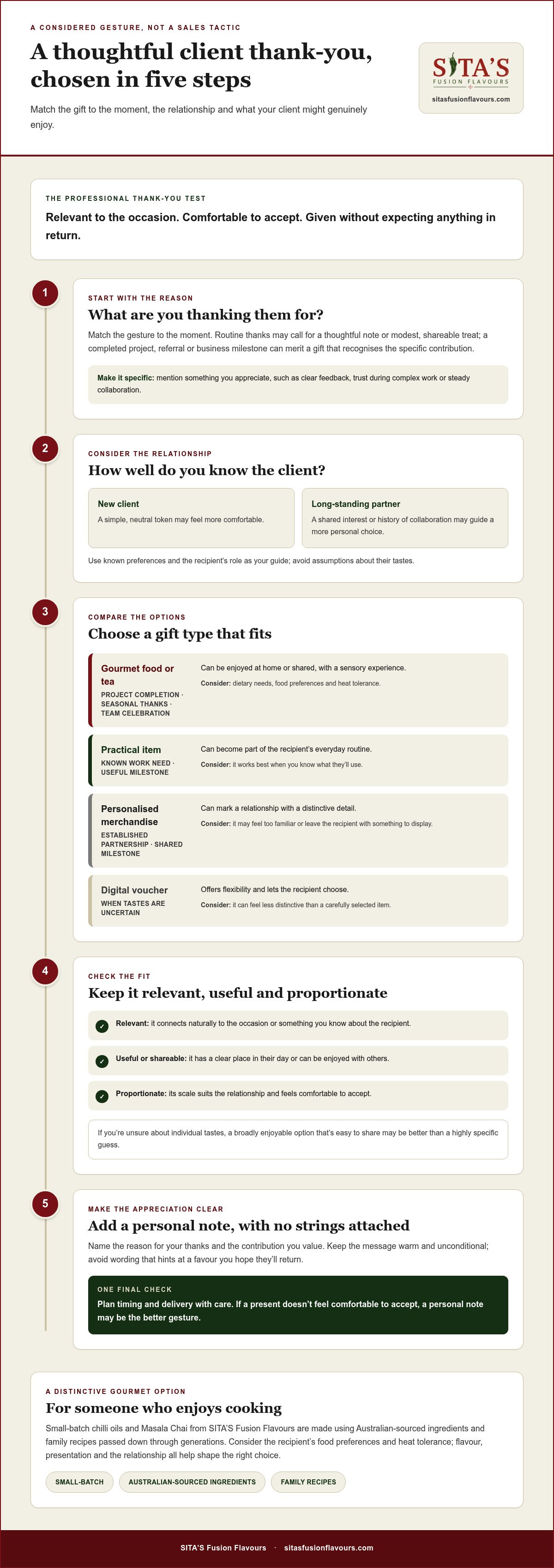
A professional thank-you gift is a relevant, useful and considerate gesture, chosen in proportion to the relationship and given without expecting anything in return. Use that as a practical test: does the gift connect to a real moment, suit the recipient and feel comfortable to accept? If not, a personal note may be more appropriate than a present.
The occasion matters. A small gesture after a helpful conversation differs from a gift marking a completed project or major milestone. The history of the relationship matters too. A new client may appreciate a simple, neutral token, while a long-standing partner may welcome a choice that reflects a shared interest or years of collaboration. Consider the recipient’s role and known preferences rather than making assumptions about their tastes.
Gift-giving can build connection, but it can also create a sense of reciprocity. The concept of a gift economy offers useful context for how gifts can express social bonds. In a professional relationship, keep that warmth while making the gesture clearly unconditional.
Start with the reason you are saying thank you
Match the gesture to the moment. For routine thanks, a thoughtful note or modest, shareable treat can recognise someone’s time without making an everyday exchange feel ceremonial. For a project completion, referral or business milestone, choose something that acknowledges the specific contribution. You might mention the client’s clear feedback, trust during a complex piece of work or steady collaboration. Name that reason in your message, and avoid wording that hints at a favour you hope they’ll return.
Make the gesture personal without making it awkward
Personal doesn’t have to mean intimate. Draw on what you’ve learned through working together, such as an interest the client has mentioned or a preference relevant to their role. If you’re unsure about individual tastes, choose a broadly enjoyable option that’s easy to share rather than guessing at something highly specific. A gourmet gift can feel considered when it suits the recipient’s interests. Handcrafted chilli oil, for example, may appeal to someone who enjoys cooking and bold flavours.
- Relevant: It connects naturally to the occasion or something you know about the recipient.
- Useful or shareable: It has a clear place in their day, or can be enjoyed with others.
- Proportionate: Its scale suits the relationship and won’t feel uncomfortable to accept.
Prominent branding can make a gift feel like advertising. Thoughtful selection puts the recipient’s preferences first. A small-batch food gift, for instance, can tell a story through its ingredients and craft without needing a large logo to explain why it was chosen. The aim is simple: let the gesture say, “I noticed and appreciate what you brought to this relationship.”
Compare client thank-you gifts: gourmet, practical or personalised?
The right gift depends on what the recipient will enjoy and how well you know them. Use this comparison to weigh the fit of each option rather than assuming one category suits every client.
| Gift type | Best-fit occasion | Strengths | Considerations |
|---|---|---|---|
| Gourmet food or tea | Project completion, seasonal thanks or a shared team celebration | Can be enjoyed at home or shared, and offers a sensory experience | Dietary needs, food preferences and heat tolerance matter |
| Practical item | A known work need or useful milestone | Can become part of the recipient’s everyday routine | Works best when you know what they’ll use |
| Personalised merchandise | A long-standing partnership or significant shared milestone | Can mark a relationship with a distinctive detail | May feel too familiar, or become something the recipient must display |
| Digital voucher | When the recipient’s tastes are uncertain | Offers flexibility and lets them choose | Can feel less distinctive than a carefully selected item |
When a gourmet gift is a good fit
A food gift can bring people together. It may be shared with a team, served at home or enjoyed during a quiet break. Compared with generic packaged treats, handcrafted condiments or tea can feel more considered because there’s a maker’s touch and a story behind the choice. SITA’S Fusion Flavours makes small-batch chilli oils and Masala Chai using Australian-sourced ingredients and family recipes passed down through generations.
Food isn’t a universal fit, though. Consider dietary needs and preferences, and don’t assume every recipient enjoys chilli or strong flavours. If you know they like cooking, choose a flavour that suits their interests. A Kaffir lemongrass chilli oil flavour guide can help you understand that particular option.
When practical, personalised or digital gifts may work better
A practical item can be a strong choice when you’ve heard the client mention a genuine need. Useful beats decorative, provided the item suits their work and won’t add clutter. Personalisation may feel warm in an established relationship, but a new client may prefer something less intimate, especially if the gift includes their name or a message meant for display.
Vouchers leave the choice to the recipient, which can help when their preferences are unclear. The trade-off is that they can feel more like a transaction than a tangible, considered gesture. If a gourmet option suits a client who enjoys cooking, explore the small-batch chilli oils and Masala Chai as alternatives to generic merchandise.
How to choose a client gift that suits the recipient
A good gift reflects the moment and the person receiving it, not just the sender’s budget or branding. Thoughtful doesn’t have to mean overly intimate, elaborate or heavily branded. A simple choice can feel considered when it recognises a real contribution and respects professional boundaries.
Choose a client gift by matching the occasion, relationship, recipient, professional boundaries and presentation. Work through these five steps before you decide:
- Occasion: Identify what prompted your thanks. A referral, completed project, shared milestone or ongoing partnership each calls for a different level of formality.
- Relationship: Consider how long you’ve worked together and how familiar the relationship is. A new client may appreciate a simple note or modest gesture, while a long-standing partner might welcome a choice that reflects shared history.
- Recipient: Use what you know from your conversations, such as an interest they’ve mentioned or a preference relevant to their work. If you’re unsure, choose something neutral or easy to share rather than guessing at a personal taste.
- Boundaries: Keep the gesture low-pressure, and follow any workplace gifting policies that apply. Consider dietary restrictions, cultural preferences and tolerance for spicy flavours before choosing food. Don’t assume someone drinks alcohol, uses personal care products or wants branded merchandise.
- Presentation: Let the message and care behind the choice do the work. A clear, personal note can explain why you’re thanking them; restrained presentation helps the gift feel professional rather than promotional.
Match the gift to the relationship and moment
Scale the gesture to the contribution, not to what you hope the client will do next. A referral might call for a brief, specific thank-you, while a completed project could merit a more considered token that recognises the work involved. Avoid making a modest milestone seem like a major personal occasion. If several people contributed, a shared gift for the team can acknowledge everyone without singling out one person or creating an awkward difference in treatment.
A newly established working relationship often suits a thoughtful note or simple item. With a long-standing partnership, you may have enough shared context to choose something more tailored. Neither requires prominent logos or a personal message that overstates closeness. The recipient should be able to accept the gesture comfortably, without feeling they owe you a return favour.
Check preferences and professional boundaries
Food can be a warm, shareable option, but only if it suits the recipient. Don’t infer dietary habits or flavour preferences from someone’s background. Rely on what they’ve told you, or choose a less specific gesture. If you know they enjoy cooking and spicy flavours, small-batch chilli oils may be worth considering. SITA’S chilli oils and Masala Chai offer a handcrafted food-and-tea option. Let the recipient’s stated preferences guide your flavour choice rather than guessing.
Plan client thank-you gifts: message, timing and delivery
A thoughtful gift can lose its meaning if it goes to the wrong address or arrives with a note that sounds like a sales pitch. Plan the practical details early so your client thank you gift ideas feel considered from the first message to delivery.
Use this checklist before arranging anything:
- Recipient details: Confirm the recipient’s name, preferred work address and who should receive a shared gift. Check spelling and any relevant dietary preferences.
- Message: Name the reason for your thanks, and keep the wording warm, specific and free of promotional language.
- Timing: Plan around the occasion and allow suitable lead time for preparation and delivery. A thank-you feels most natural when it’s connected to the moment, rather than arriving long after it.
- Delivery: Choose an address where the recipient can accept the gift, and consider whether it’s appropriate to send it to their workplace or another address they’ve provided.
- Internal approval: Follow your organisation’s process for approving and recording client gifts, including any relevant spending or workplace policies.
If you’re recognising several client contacts, decide whether a shared gift for the group or consistent individual gifts will feel fairest and most practical. A shared option can suit a team that contributed together, while separate gifts let you address each person by name. Keep the value and tone consistent, and make sure each recipient understands why they’re being thanked.
Write a thank-you note that sounds genuine
A handwritten note adds a human touch, but a short personal message works just as well. Start with a warm greeting, explain the specific reason for your thanks, then sign off simply. Avoid a product pitch, a request for more work or wording that makes the recipient feel they need to respond in kind.
For example: “Hello [Name], thank you for [specific contribution]. We appreciate your time and support. Warm regards, [Your name].” Replace the bracketed details with the real reason for your appreciation. The note should sound like you, not a template.
Keep delivery and presentation straightforward
Neat, considerate presentation helps a gift arrive as an expression of thanks, not a promotional package. Check the recipient’s details before arranging delivery, and allow enough time for it to reach them around the occasion. For food, consider whether the recipient can store it comfortably and whether their setting makes it easy to share.
SITA’S Fusion Flavours ships across Australia, making its small-batch chilli oils and Masala Chai an option for a food-loving client. Explore chilli oils and Masala Chai to choose a flavour-led thank-you that suits the recipient.
Choose a distinctive client thank-you gift with SITA'S Fusion Flavours
For a client who enjoys food, an artisan condiment or tea can feel more distinctive than another branded desk item. SITA'S Fusion Flavours is a family-owned Australian maker of small-batch chilli oils, Malaysian-inspired condiments and Masala Chai. Australian-sourced ingredients and family recipes passed down through generations give these pantry options a story to share, as well as a place in everyday cooking.
A flavour-led gift can be chosen with the recipient in mind. Think about whether they cook at home, enjoy trying new flavours or prefer tea to chilli. If you know they enjoy spicy food, use their stated heat preference to guide your choice. If you’re unsure, don’t guess. Choose a different option or keep the gift simple.
Match a flavour-led gift to the person receiving it
Crispy Chilli Oil, Kaffir Lemongrass Chilli Oil and Masala Chai offer different ways to make a thank-you feel considered. A client who likes cooking may appreciate a condiment, while a tea drinker may be more drawn to Masala Chai. Let what they’ve shared about their tastes guide you rather than assuming a particular flavour will suit everyone.
For a more informed flavour choice, the small-batch chilli oil craftsmanship guide explains the care behind the range. The artisan pantry guide offers broader context on small-business condiments. These references can help you consider what might suit a food-loving recipient, alongside what you know about their preferences.
Make the next step easy and low-pressure
Individual products suit a focused, straightforward gesture, while curated bundles let you consider more than one flavour or pantry option. Choose based on what you know about the client, not on the assumption that a larger gift is automatically more meaningful. Keep the gesture proportionate to your relationship, and let a sincere note explain why you’re grateful.
Browse individual chilli oils, Masala Chai and curated bundles through the online store. There’s no need to turn appreciation into a pitch. A brief message naming the reason for your thanks keeps the gift personal and professional, whether you choose one pantry staple or a selection to share.
Among the many client thank you gift ideas, a flavour-led option stands out when it reflects the person receiving it. A thoughtful choice, paired with a genuine note, can make a simple thank-you warmly memorable without asking for anything in return.
Make your next thank-you feel genuinely yours
A good client gift can do more than mark a moment. It can set a thoughtful tone for the next conversation, especially when the choice reflects something you’ve learned about the person rather than simply carrying your logo. Let appreciation stand on its own, with no hidden ask or pressure to respond.
As you consider client thank you gift ideas, think of one detail that would make the gesture feel true to your working relationship: a shared success, a contribution you valued or a flavour they enjoy. Then let a few sincere words bring that reason to life. The note doesn’t need to be polished to perfection; it needs to sound like you.
If a flavour-led gift feels right, explore options that could suit the recipient’s tastes and the occasion. Explore SITA’S handcrafted flavours and gift options, and choose at your own pace. A considered gesture, given warmly and without expectation, is a lovely way to keep appreciation part of the relationship.
Frequently Asked Questions
Is a food gift appropriate for a client?
Yes, a food gift can be a warm, shareable choice when it suits the relationship and the recipient’s preferences. Before choosing, consider any dietary needs or cultural preferences they’ve mentioned, and follow relevant workplace gifting policies. If you’re unsure whether a food item is welcome, a non-food gesture may be a better fit. Add a short personal note explaining what prompted your thanks, so the gift’s purpose is clear.
Can I give the same thank-you gift to every client?
Yes, a consistent gift can work for a group or an established gifting programme, particularly when you want a fair approach across clients. A small adjustment can still make it feel considered: tailor the note to the occasion, or choose a different option when you know someone’s preferences. Keep the overall value and tone consistent, but don’t assume every recipient enjoys the same things or will use the same item.
How much should I spend on a client thank-you gift?
Set a consistent internal budget before comparing gifts, guided by the occasion, the relationship and your workplace gifting policy. There’s no need to choose the most expensive option to show appreciation. A relevant, well-chosen gesture can feel more sincere than a costly but impersonal one. Consider whether the gift suits the recipient and can be accepted comfortably. Pairing it with a specific thank-you note helps express your appreciation without creating a sense of debt.
What should I write in a client thank-you card?
Keep it brief: name the reason for your thanks, acknowledge the client’s contribution and finish with a warm, professional sign-off. For example: “Hello [Name], thank you for [specific contribution]. We appreciated your [support or insight]. Warm regards, [Your name].” Make the wording sound natural, not overly familiar, and leave out sales language or requests. If the gift is shared, address the group or recognise the team rather than unexpectedly singling out one person.
Can a client thank-you gift be sent to a whole team?
Yes, a shared gift can recognise a team’s contribution and give colleagues an easy opportunity to enjoy something together. Choose an option that can be divided or shared without extra effort, and address the accompanying note to the group. Before arranging delivery, consider any known dietary preferences and workplace rules. Keep your wording inclusive, too: thank the team for its contribution without assuming one person represents everyone or has the authority to accept on their behalf.
Is a personalised gift better than a gourmet gift for a client?
Neither is automatically better. The right fit depends on the client and the occasion. Personalised items can suit an established relationship when you know what the recipient would value, while gourmet gifts can offer something to enjoy or share. Weigh up usefulness, known preferences and any restrictions. If adding a name or prominent branding might feel too familiar or promotional, choose a simpler item and let a sincere message make the gesture personal.