
Beef Rendang Slow Cooker Recipe: Rich, Tender Malaysian-Style Flavour
·
SITA'S Fusion Flavours
What if the slow cooker made beef rendang tender, while the final minutes on the stove gave it that deep, clingy finish? Slow-cooked meat can be beautifully soft, but the sauce may stay too thin. This beef rendang slow cooker recipe tackles both, with a separate finishing stage to concentrate the fragrant coconut and spice into a rich coating.
Unfamiliar aromatics don’t need to make dinner daunting. This guide covers the ingredients, how to choose a beef cut suited to a long, gentle cook, and ways to adjust chilli and aromatics for your household. Rendang has deep roots in Indonesian and Malaysian food traditions, and its layered flavours reward a little care.
From preparing the spice paste to reducing the sauce in a pan, you’ll know what to do at each stage and what to look for along the way. Expect tender beef, warm spices and a finish that’s richer than an ordinary slow-cooker curry. Serve it with rice, and let everyone add extra heat at the table if they like.
Key Takeaways
- This beef rendang slow cooker recipe takes you from preparing the aromatics to serving, with practical cues for checking tenderness and sauce consistency.
- Compare slow cooker and stovetop rendang to see where hands-off cooking helps, and where the finishing stage makes a difference.
- Use the troubleshooting tips to adjust a sauce that’s too thin or dry, beef that’s still firm, or flavours that need more punch.
- Balance the rich, spiced beef with rice and fresh, crisp accompaniments. Toasted coconut is an optional finishing touch.
- Learn how this convenient version relates to rendang’s traditional sauce-reduction method, without expecting the slow cooker alone to create the same finish.
What makes slow cooker beef rendang different from an ordinary curry?
Set the beef, coconut and fragrant aromatics to cook gently, then let time do its work. A slow cooker makes the tenderising stage hands-off, but rendang’s character comes from more than soft beef and a richly spiced sauce. The sauce is meant to cook down until it clings closely to the meat, giving each piece an intense, savoury coating rather than a ladleful of loose curry gravy.
Rendang has deep cultural roots and is especially associated with the Minangkabau people of West Sumatra. Recipes and preparation traditions vary across families and places, so no single home method represents every version. Rendang is a dish with deep cultural roots, traditionally slow-cooked to preserve meat. This slow cooker adaptation honours the patient cooking and layered flavour, while making the final reduction a deliberate step of its own.
Why rendang has a thick, concentrated finish
As the beef cooks, connective tissue softens and the meat becomes tender. Meanwhile, the spice paste, coconut and cooking juices mingle, building a rounded, aromatic base. Tenderness and thickness are separate results, though: a covered slow cooker traps moisture, so its contents can stay more liquid than rendang cooked uncovered for a long time.
Rendang is slow-cooked beef coated in concentrated, reduced spices and coconut, not beef sitting in a pool of thin curry sauce. Aim for a glossy, substantial coating that gathers around the meat. If the slow cooker leaves excess liquid, reduce it after cooking in a pan. This evaporates moisture and intensifies the sauce without asking the beef to cook longer than it needs.
The flavour-building ingredients behind Malaysian-style rendang
Lemongrass brings a fresh, citrusy lift, while galangal offers a sharp, fragrant warmth. Ginger adds gentle heat, garlic gives the base savoury depth, and chilli brings adjustable fire. Together, these fresh aromatics are often pounded or blended into a paste, helping their flavours spread through the coconut and coat the beef.
Warm spices such as cinnamon, cardamom, star anise and turmeric add another layer, making the flavour fragrant, earthy and full rather than simply hot. The balance varies from recipe to recipe, and you can tailor the chilli to suit your table without losing the aromatic backbone. Toasted coconut, known as kerisik in some rendang traditions, may also add a nutty note and body.
These ingredients reward a little preparation. Finely chopped or blended aromatics distribute more evenly than large chunks, while measured chilli lets you build heat thoughtfully. Malaysian-inspired layers of flavour also feature in our authentic chilli oil laksa recipe, though its bright, fragrant profile takes a different path from rendang’s slow-reduced richness.
In this beef rendang slow cooker recipe, the appliance helps tenderise the beef and bring the flavours together. The finishing stage then does the crucial work of turning a moist cooking base into a concentrated coating. That distinction is the key to a rendang-inspired result, rather than an ordinary saucy curry.
How to make beef rendang in a slow cooker, step by step
Good rendang begins before the cooker goes on. Prepare the aromatics evenly, build a fragrant paste, then give the beef time to soften before concentrating the sauce. Use a recipe with measured ingredient quantities and follow its instructions for the cooker setting and timing, especially for coconut milk and chilli. Those proportions affect both the finished flavour and how much liquid needs reducing. Cooking cues help you judge the result: the beef should yield easily to a fork, and the finished sauce should coat the meat.
Ingredients for a from-scratch rendang flavour base
For the flavour base, gather lemongrass, galangal, ginger and garlic, along with chilli and the warm spices in your recipe. You’ll also need coconut milk, beef chuck cut into even pieces, and seasoning. Chuck suits slow cooking because it softens over a long, gentle cook. Keep the beef pieces a similar size so they cook at a similar pace. Aromatics can be chopped or blended ahead; prepare them as directed and keep them chilled until you’re ready to cook.
Rendang’s slow-cooked roots are part of its appeal: the slow-cooking process traditionally tenderised meats such as water buffalo and beef, and helped preserve them before refrigeration. This home method keeps that patient approach while making the stages easy to follow.
Slow-cooking the beef and finishing the sauce
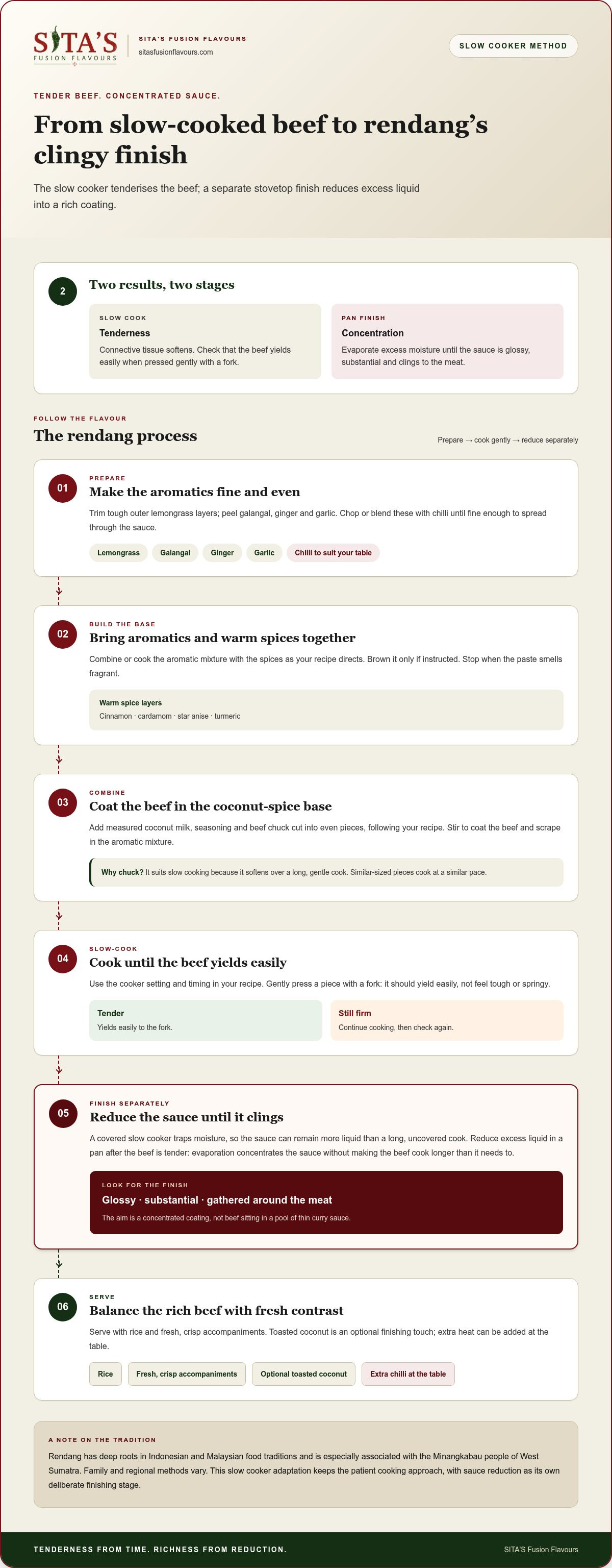
Method in brief: prepare the aromatics, build the spice base, combine with beef and coconut, slow-cook until tender, then reduce the sauce until it coats the meat. The final stage matters: tenderness comes from the slow cook, while the concentrated finish comes from reducing excess liquid separately.
- Prepare the aromatics. Trim away tough outer lemongrass layers and peel the galangal, ginger and garlic. Chop or blend them with the chilli until the mixture is fine enough to spread through the sauce.
- Build the base. Combine or cook the aromatics and spices as your recipe directs. If it calls for browning, do so as instructed. Stop when the paste smells fragrant.
- Combine. Add the measured coconut milk, beef and seasoning to the cooker as directed. Stir so the pieces are coated, and scrape in the aromatic mixture.
- Slow-cook. Use the setting and timing in your recipe. Check the beef by pressing a piece gently with a fork: it should yield easily, not feel tough or springy. If it’s still firm, continue cooking and check again.
- Finish the sauce. Transfer the cooked beef and liquid to a pan. Simmer gently, stirring carefully, until the sauce thickens and clings to the beef. Stop before the coating catches or the meat begins to break apart.
That last reduction is a separate, controllable step, so the beef can become tender without relying on extra slow-cooker time to thicken the sauce. For an optional table-side lift, serve with Kaffir Lemongrass Chilli Oil alongside the finished rendang.
Slow cooker beef rendang compared with stovetop rendang
Both methods can produce tender beef and richly flavoured rendang, but they ask different things of the cook. A slow cooker keeps the long cooking stage mostly hands-off. On the stovetop, you can watch the liquid evaporate and adjust the heat directly. Neither appliance guarantees a thick, concentrated sauce by itself. If the finished beef is tender but the sauce is still loose, give it a separate reduction to reach the texture you want.
The appliance changes the workflow more than the desired rendang texture: tender beef coated in concentrated sauce remains the aim.
| What matters | Slow cooker | Stovetop |
|---|---|---|
| Attention | Mostly hands-off during cooking | Needs regular watching and stirring |
| Cooking control | Gentle, steady heat; less direct adjustment | Heat and evaporation are easy to adjust |
| Tenderness | Gradual cooking softens suitable beef cuts | Gentle simmering can also tenderise the beef |
| Sauce reduction | May need a separate finishing step | Can reduce in the same pot as it cooks |
What the slow cooker does well
A slow cooker suits a day when you’d rather prepare the ingredients, switch it on and let the beef cook gently while you get on with other things. That steady heat gives a suitable slow-cooking cut time to soften. It also holds in moisture under its covered cooking environment, which helps keep the meat from drying out but can leave more liquid in the pot. The exact result varies with the cooker, batch size and ingredient quantities.
That retained moisture is why the appliance’s convenience doesn’t automatically deliver a dry, clingy finish. Once the beef is tender, check the sauce. If it looks more like curry gravy than a coating, transfer it to a pan and reduce it separately, stirring carefully as it thickens. This gives you control over the finish without continuing to cook the beef unnecessarily.
When stovetop control may suit the cook better
Choose the stovetop if you enjoy staying close to the pot and adjusting the heat as the sauce changes. You can monitor the simmer, stir the aromatics and beef, and see the liquid reduce as it cooks. That direct control takes attention, though, and the sauce needs watching so it doesn’t catch as it thickens. Stovetop cooking isn’t automatically more authentic; the ingredients, technique and family tradition all shape a rendition of rendang.
Let your schedule guide the choice. The slow cooker is handy for a longer, less attended cook, while stovetop cooking suits someone who prefers to manage the simmer throughout. Either way, judge the beef by tenderness and the sauce by how it clings, rather than assuming the appliance alone determines the result.
For this beef rendang slow cooker recipe, think of the cooker as the tenderising stage and the final reduction as your chance to build concentration. If the sauce is already thick enough to coat the beef, there’s no need to reduce it further. Stop when the texture looks right for your table.
How to adjust flavour, texture and heat in slow cooker rendang
Slow cooking brings the flavours together, but the final balance is yours to fine-tune. Make one small adjustment at a time, stir well and taste again. That way, you can correct a specific issue without burying the fragrant aromatics or pushing the sauce past its ideal texture.
- Sauce too thin: Transfer the sauce to a pan and simmer gently until it looks concentrated, glossy and able to cling to the beef. Keep stirring as it thickens. Avoid adding flour or another thickener unless your recipe includes it, as this can change the sauce’s texture and flavour.
- Sauce too dry: Stir in a small splash of reserved cooking liquid, if you have any, and reassess before adding more. A little liquid loosens the coating; too much can dilute the concentrated flavour, so add gradually.
- Beef still firm: Return it to the slow cooker and continue cooking, checking again for tenderness. A piece should yield easily to a fork. Reducing the sauce won’t soften undercooked beef, so address the meat before concentrating the liquid.
- Flavour too mild: First taste for seasoning and aromatic depth, then adjust in small increments using ingredients already in the recipe. Add chilli cautiously, as it raises heat rather than adding the same fragrant depth as lemongrass, ginger or galangal.
If the beef is tender but the sauce is too thin
Separate the sauce from the tender beef before reducing it, so you can watch the consistency closely without overcooking the meat. Use a gentle simmer and stir, especially as the liquid begins to thicken. The target is a rich-looking coating that gathers around each piece, not a watery puddle at the bottom of the serving dish. Return the beef to the reduced sauce and fold gently to coat.
If the rendang tastes too mild, hot or unbalanced
Think in flavour layers. Chilli brings heat, while the fresh aromatics give the dish its fragrant backbone. Salt lifts the savoury notes, and coconut contributes richness that can soften the perception of spice. Taste before adding anything: if the rendang seems flat, a small seasoning adjustment may help. If it’s too hot, a little of the recipe’s coconut milk can mellow it, though it will also loosen the sauce and may need further reduction. Acidity can brighten rich food, but rather than changing the measured recipe, serve a bright accompaniment separately.
For more insight into how chilli varieties shape flavour as well as heat, explore our small-batch chilli oil guide. Keep chilli oil out of the measured rendang ingredients; a few drops of Kaffir Lemongrass Chilli Oil can be offered at the table for those who want extra citrusy chilli warmth. In this beef rendang slow cooker recipe, measured adjustments protect the balance while letting each household tune its own serving.
Serving slow cooker beef rendang with a bright, crunchy finish
Rendang brings deep, fragrant richness to the plate, so pair it with something simple and fresh. Plain rice is an easy partner: it catches the concentrated sauce without competing with the beef. Add a crisp contrast, such as sliced cucumber, crunchy vegetables or a fresh herb salad. These are flexible serving ideas, not mandatory pairings. Choose what your household enjoys and what’s on hand.
Build a balanced plate around rich rendang
Keep the beef and its glossy coating at the centre of the meal. Spoon rendang beside rice rather than drowning the plate, so each diner can choose how much sauce to mix through. A fresh, crisp side brings coolness and crunch against the tender meat; a squeeze of lime at the table can add a bright note if you like. Serve sides separately to make it easy to suit different tastes.
For a finishing touch, offer toasted coconut as an optional garnish, following your recipe’s serving notes. Its nutty aroma and delicate crunch make a pleasing contrast to the soft beef and rich sauce. Sprinkle lightly just before serving, so it stays crisp rather than softening in the sauce. If coconut isn’t to everyone’s taste, leave it off; the rendang should still shine.
Finish at the table with optional chilli and crunch
Keep extra chilli on the table instead of stirring it into the whole batch. That lets each person control the heat in their own serving, especially when the meal includes children or people who prefer gentler spice. Put out a small spoon and invite diners to start with a little, then add more to taste. A crunchy condiment also brings texture to the tender beef and rice.
Crispy Chilli Oil is an optional table condiment, not a required ingredient in the beef rendang slow cooker recipe. Offer it on the side for diners who want extra chilli and crunch, while leaving the carefully balanced pot as cooked. The chilli oil’s crisp texture adds another element to each mouthful. A small spoonful is a good place to start, with more available for those who prefer a bolder finish.
Build the plate around contrast: warm, rich rendang; plain rice; and a cool, crisp accompaniment. Keep the garnish and chilli separate, and everyone can make their serving their own. If you’d like to bring more handcrafted chilli flavour to the table, explore SITA'S handcrafted chilli oils as optional accompaniments for meals beyond rendang, too.
Make the next meal your own
Let your first batch be a starting point. At the table, invite everyone to shape their own serving, perhaps with a little extra crunch or chilli, and notice which touches your household loves. Those small choices turn a slow-cooked meal into a shared ritual, one you can return to and make your own.
That spirit of personal flavour sits close to our hearts. SITA'S Fusion Flavours draws on family recipes passed down through generations to make Malaysian-inspired condiments by hand in small batches. If you’d like an optional chilli-oil accent for future meals, explore our handcrafted chilli oils.
Make this beef rendang slow cooker recipe when you’re ready, take your time with the finishing touches, and enjoy the aromas gathering around the table. For an extra Malaysian-inspired chilli accent at your next meal, explore SITA'S handcrafted chilli oils and choose one to serve alongside it.
Frequently Asked Questions
Which cut of beef works best for slow cooker rendang?
Beef chuck is a dependable choice for a beef rendang slow cooker recipe because it’s suited to long, gentle cooking. Trim away any thick excess fat, then cut the meat into similar-sized pieces so smaller chunks don’t become tender much earlier than larger ones. Other slow-cooking cuts may suit, but results can vary. Check the texture with a fork near the end of cooking, and allow more time if the centre still feels firm.
Should I brown the beef before putting it in the slow cooker?
Brown the beef if your chosen recipe calls for it. Browning can add a deeper, savoury note, but it isn’t essential to every version. For even colouring, work in batches rather than crowding the pan, which can cause the meat to release moisture and steam. If the method skips browning, follow its instructions and give attention to the aromatics and spice base instead.
Can I prepare the rendang ingredients the night before?
Yes. Measure dry spices and prepare the aromatics ahead, then store them in covered containers in the fridge. Keep raw beef separate from ready-to-eat foods, and refrigerate it promptly rather than leaving it on the bench. For a smoother start the next day, gather the ingredients and cooker insert in advance, but combine everything when you’re ready to begin cooking. Follow current Australian food-safety guidance for handling and storing raw meat.
Can I use coconut cream instead of coconut milk in beef rendang?
You can adapt the recipe, but coconut cream is richer and thicker, so a direct one-for-one swap may make the sauce heavier or change how it reduces. For the most predictable result, use the coconut milk specified in the recipe. If you’re experimenting, try the change with a small batch first and assess the sauce before serving. Avoid adding extra liquid automatically; check the consistency once the beef is tender.
How can I make slow cooker beef rendang less spicy?
Reduce the fresh chilli in the recipe, especially if you’re cooking for people with different heat preferences. Keep the lemongrass, ginger and other aromatics in place so the dish retains its fragrance even with less chilli. If the batch is already cooked, avoid trying to remove chilli from the sauce; serve a milder portion with extra rice instead. Put any additional chilli on the table so diners can adjust their own servings.
Can slow cooker beef rendang be frozen for later?
Yes, cooked rendang can generally be frozen for another meal once it has been cooled and stored safely. Divide it into meal-sized portions in airtight, freezer-suitable containers, and label each with the date so you can keep track. Follow current Australian food-safety guidance for cooling, freezing and reheating leftovers. After thawing and reheating, check the sauce: if it’s become very thick, stir in a small splash of water and heat through.