
Artisan Pepper Oil vs Commercial Spicy Crunchy Toppings: What Changes?
·
SITA'S Fusion Flavours
The crunchiest jar isn’t automatically the most flavourful, and “artisan” doesn’t tell the whole story. If you’re weighing up artisan pepper oil vs commercial spicy crunchy toppings, the label alone won’t reveal how a topping tastes, feels or fits into a meal.
It’s easy to focus on heat when chilli is in the name, but texture, aroma and flavour balance matter just as much. Ingredient lists and product descriptions can help you compare jars, once you know what to look for. The useful comparison isn’t artisan against commercial as a simple good-or-bad choice. It’s about finding the qualities you enjoy and choosing a topping that suits the dish.
We’ll explore how flavour, crunch, ingredients and preparation can differ, without assuming every jar in either category is alike. You’ll also see how to match a topping to everyday cooking or a finishing flourish, whether you’re dressing noodles, adding bite to eggs or bringing warmth to the table. SITA'S Fusion Flavours' Crispy Chilli Oil is one handcrafted, small-batch example, made with Australian-sourced ingredients and family recipes passed down through generations. By the end, you’ll have a practical way to choose based on what’s in the jar and how you like to eat.
Key Takeaways
- “Artisan pepper oil” is a broad description, not a promise of a particular recipe, texture or flavour.
- When comparing artisan pepper oil vs commercial spicy crunchy toppings, look beyond the label. Consider flavour, crisp elements, ingredient information and how you’ll serve it.
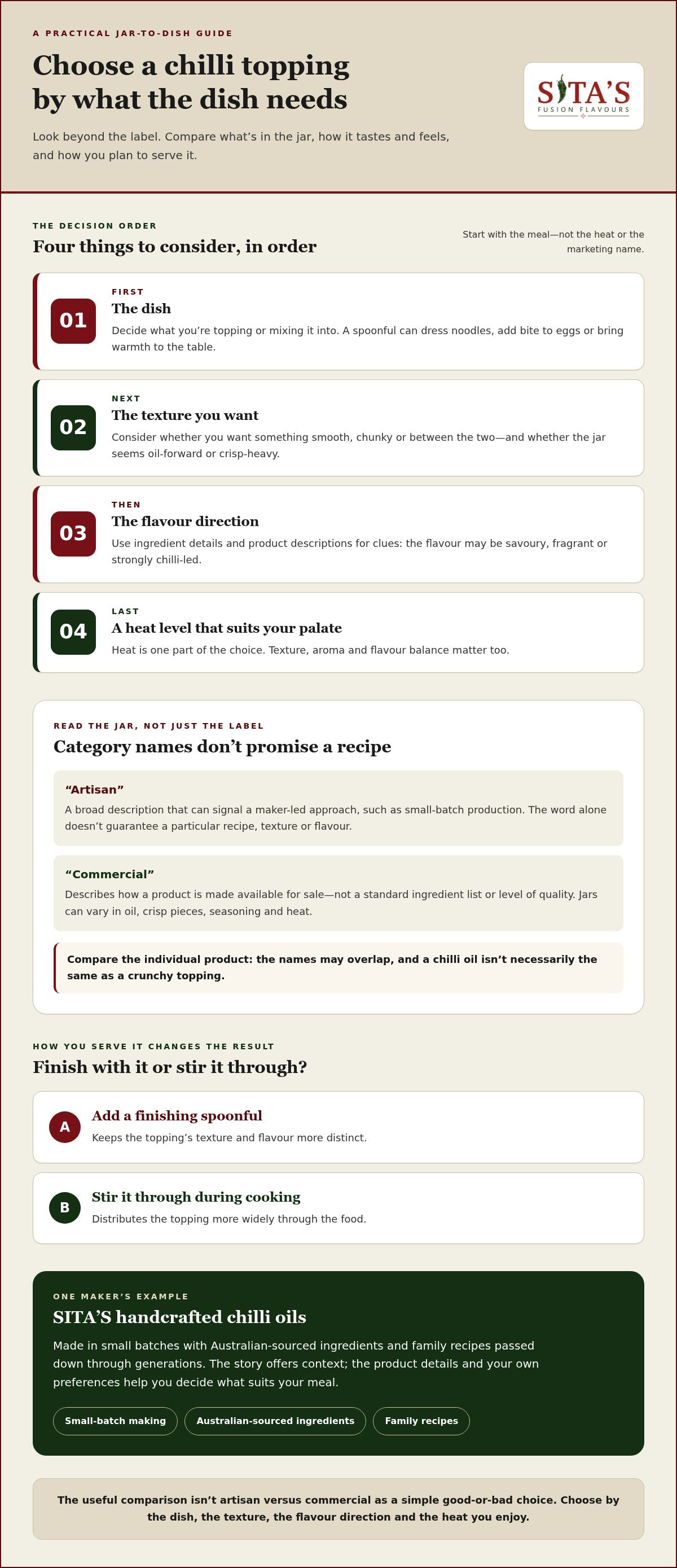
- Choose in this order: the dish, the texture you want, the flavour direction, then a heat level that suits your palate.
- A finishing spoonful keeps a topping’s texture and flavour more distinct, while stirring it through food during cooking distributes it more widely.
- SITA’S Crispy Chilli Oil is a small-batch example made with Australian-sourced ingredients and family recipes passed down through generations.
What is artisan pepper oil, and how does it differ from crunchy spicy toppings?
Artisan pepper oil is a broad description for a pepper-based condiment made with a maker-led approach, not a promise of one recipe, flavour or texture. It might be smooth, chunky or somewhere in between. “Commercial”, by contrast, describes how a product is made available for sale, not a standard ingredient list or level of quality. So the useful question in artisan pepper oil vs commercial spicy crunchy toppings isn’t which label wins. It’s what’s in the jar, how it tastes and feels, and whether it suits the meal.
The names can overlap. Chilli oil may be mostly seasoned oil, while a crunchy topping contains crisp pieces suspended in oil, but products don’t always fit neatly into one description. Chili crisp offers a helpful point of reference for the crunchy condiment category, while reminding us that crisp chilli toppings and chilli oil aren’t necessarily the same thing.
What does artisan mean on a jar of pepper oil?
“Artisan” often signals a maker-led approach, such as producing in small batches, but the word alone doesn’t guarantee a particular standard or a better-tasting result. Recipe choices, ingredients and preparation can all shape a condiment’s aroma, flavour and texture. SITA'S Fusion Flavours makes handcrafted chilli oils in small batches, using Australian-sourced ingredients and family recipes passed down through generations. That story gives context; the product information and your own preferences help you decide whether a jar suits you.
What counts as a commercial spicy crunchy topping?
It’s a broad category for packaged condiments sold commercially, including products marketed as chilli crisp, crunchy chilli oil or spicy toppings. There’s no single formula implied by the label. One jar might have more oil, another more crisp pieces; seasoning and heat can vary too. A topping may be intended for spooning over a finished dish or mixing through food. Compare the individual product rather than making assumptions about every commercial jar.
For a clearer picture, look for details you can assess:
- Ingredients: Read the list to see which components are included and how clearly they’re described.
- Texture: Consider whether the product appears oil-forward, crisp-heavy or somewhere between.
- Aroma and seasoning: Look for clues about whether the flavour is described as savoury, fragrant or strongly chilli-led.
- Maker information: Look for a production story that explains who makes it and the approach behind it, without treating that story as proof of a particular taste.
These clues turn a crowded shelf of category names into a more useful comparison. Next, consider how ingredients and preparation can influence the flavour and crunch in each spoonful.
How making methods shape an artisan pepper oil’s flavour and crunch
A condiment’s sensory character begins with its recipe, then takes shape through how its ingredients are prepared and handled. The type and balance of ingredients can influence whether the aroma seems fragrant or savoury, whether chilli leads the flavour or sits within a broader mix, and whether crisp pieces offer a light snap or a more substantial bite. These are possibilities, not guarantees. Products vary, and small-batch production alone doesn’t promise a particular result.
Ingredient choices and preparation shape a topping’s aroma, flavour and crunch, while the finished jar shows how those qualities come together.
From chilli and aromatics to layered flavour
Chilli contributes more than heat. Depending on the recipe, its character may come across as bright, earthy or rounded, while other ingredients can add savoury depth or aromatic lift. Rather than assuming a particular flavour profile from the category name, use the product information to see what the maker highlights.
Family recipes and Malaysian-inspired influences are part of SITA'S Fusion Flavours' food heritage, not a universal template for chilli oil. The company’s handcrafted oils are made in small batches with Australian-sourced ingredients, and the recipe is part of the story behind each condiment. For a separate example of how a recipe’s ingredients and method can shape a chilli crisp, see Bon Appétit's Chile Crisp recipe.
What creates a satisfying crunch?
Crunch depends on the crisp components in a topping and how they feel alongside the oil. Some jars may offer delicate crispness; others may have a firmer bite. The balance matters: a spoonful over soft rice or noodles can add contrast, while a topping with more oil or crunch may change the texture of a delicate dish. The product name can hint at texture, but the ingredient information and what you notice in the jar offer better clues.
Small-batch making can give a maker room to express a considered recipe and family food traditions, but it doesn’t mean every batch or brand will taste alike. Commercial products can also vary in their ingredients, preparation and texture. When comparing artisan pepper oil vs commercial spicy crunchy toppings, judge the jar on what it offers rather than assuming one production label guarantees more flavour or crunch.
For more on handcrafted production, read our small-batch chilli oil craft guide. You can also explore SITA'S Fusion Flavours handcrafted chilli oils for a maker-led example, including Crispy Chilli Oil.
Artisan pepper oil vs commercial spicy crunchy toppings: what should you compare?
Brand language can set expectations, but it can’t tell you exactly how a condiment will taste or feel. For a useful comparison, read the product description and ingredient list, then think about how you plan to use it. Both small-batch and commercially positioned products vary, so treat labels as clues rather than guarantees.
How do flavour, heat and texture compare?
Think of heat as one part of the experience, not a score for quality. A hotter topping isn’t automatically more flavourful, and a milder one may still have a distinctive aroma or savoury character. Descriptions such as smoky, bright or aromatic are useful when they’re supported by the product information or your own tasting. Crunch is another preference: crisp pieces can add contrast to soft foods, while a smoother, oil-forward condiment may suit a different dish.
| What to compare | Questions to ask of either type |
|---|---|
| Flavour | What flavours does the product description name? Do they sound like a match for the dish? |
| Heat | Is the chilli intensity comfortable for you? Don’t use heat alone to judge flavour. |
| Texture | Does the jar look oil-forward, crisp-heavy or somewhere between? Would that texture work with the meal? |
| Ingredients | Which ingredients are listed, and what does their order suggest about the recipe’s emphasis? |
| Production story | Does the maker explain the recipe or approach? Treat this as context, not a substitute for product details. |
| Serving style | Is it described as a topping, a cooking ingredient or both? Choose based on how you plan to use it. |
What can the ingredient list and maker story tell you?
Read the ingredient list alongside the product description. The order can offer a broad clue to the recipe’s emphasis, while the named ingredients help you consider whether the flavour may be chilli-led, aromatic or savoury. Descriptive terms are useful, but they don’t replace checking what the jar contains. Don’t assume that a short or familiar-sounding list tells you everything about taste, quality or how the product is made.
A maker’s story can add meaning, especially if it explains the recipe’s inspiration or the people behind it. But the story and the ingredient list answer different questions: one gives context, the other describes the product. For broader perspective on artisan pantry products, explore this small business condiments guide.
Compare the actual jar, not assumptions attached to its category. That’s the clearest way to weigh artisan pepper oil vs commercial spicy crunchy toppings: match the listed ingredients, described flavour and visible texture to the food you want to serve.
How to choose a crunchy chilli topping for your cooking
Let the meal lead. A topping should bring the texture, flavour and heat you want, not simply add more spice. Use this sequence to narrow your choice:
- Choose the dish. Decide whether it needs a finishing contrast or a flavour boost.
- Pick the texture. Crisp pieces can stand out against soft rice, noodles or eggs; a more oil-forward spoonful may blend in more easily.
- Decide on flavour direction. Look for a product description that suggests the savoury depth or aromatic lift the meal needs.
- Set your heat comfort. Choose a chilli intensity that complements the dish rather than masking its other flavours.
If the flavour or heat is unfamiliar, start with a small amount and taste it with the dish before adding more. Heat descriptions can be subjective, so use the product information as a guide rather than assuming a particular level.
Which crunchy chilli topping suits different meals?
Crunch can bring a pleasing contrast to softer dishes. Try it with noodles, rice, eggs or dumplings, then adjust the amount to suit the meal and your taste. These are starting points, not guaranteed pairings: a strongly seasoned dish may need only a little, while a simple one may welcome a more noticeable finishing touch. For Malaysian-inspired flavour ideas, explore this Malaysian laksa recipe guide.
How can you balance crunch, flavour and heat?
Consider when you’re adding the topping. A finishing spoonful keeps its texture and flavour more distinct on the plate. Stirring oil through a dish during cooking distributes it more widely, and the final texture may differ from a topping added just before serving. Follow the product’s own instructions for use, and check its label for storage guidance.
In practice, decide what the dish needs first: savoury depth, aromatic lift or a crisp finish. Then settle on a comfortable level of heat. This makes the choice between artisan pepper oil vs commercial spicy crunchy toppings less about the label and more about the meal in front of you.
Explore SITA’S handcrafted chilli oils to find a crunchy topping to consider for your table.
SITA'S handcrafted chilli oils: small-batch flavour with a family story
Behind a jar can be more than a recipe. SITA'S Fusion Flavours makes handcrafted chilli oils and Malaysian-inspired condiments in small batches, using Australian-sourced ingredients and family recipes passed down through generations. That background offers a glimpse of the maker and the traditions informing the food, without suggesting that every artisan condiment is automatically better than every commercial one.
A handcrafted approach rooted in flavour and family
Recipes can carry memories: the flavours shared around a family table, the ingredients a cook reaches for and the ways food brings people together. Passed-down recipes connect SITA'S chilli oils to that sense of continuity, while small-batch making reflects a maker-led approach. These details add context to the jar, but your own preferences still matter. Read the product information and consider how its flavour might work with the meals you enjoy.
That’s a useful way to think about artisan pepper oil vs commercial spicy crunchy toppings. A production story can help you understand the maker’s perspective; it doesn’t tell you exactly what a product tastes like or guarantee a particular texture. Let the story sit alongside the product details, not in place of them.
Finding your place in the SITA'S chilli oil range
Crispy Chilli Oil is the directly relevant option for anyone exploring a crunchy chilli oil from SITA'S. Its name signals a crispy style, while the product information helps you understand its ingredients and characteristics. SITA'S also makes other chilli oil varieties, including Kaffir Lemongrass Chilli Oil, Ghostly Chilli Oil, Carolina Reaper Chilli Oil, Habanero Chilli Oil and Aji Limon Chilli Oil. Their names alone aren’t a substitute for reading each product’s description, especially if you’re choosing by flavour or heat.
Start with the meal you want to enhance. If you’re after a crunchy finish, Crispy Chilli Oil is a natural place to begin. For another dish, compare the descriptions across the range and choose based on the flavours that appeal to you. SITA'S products are available online to customers across Australia, so you can explore the maker’s approach at your own pace.
For a closer look, explore the handcrafted chilli oil range and see which jar feels right for your table.
Choose the chilli topping that suits your table
The label alone can’t tell you whether a jar is right for your meal. Compare its ingredient list, flavour description and texture, then decide whether you want a crisp finishing touch or a more oil-forward addition. Heat matters, but it’s only one part of the experience.
That’s the practical lesson in artisan pepper oil vs commercial spicy crunchy toppings: neither category guarantees a particular flavour or quality. Let the actual product and the dish guide your choice, and start with a small amount if the topping is new to you.
SITA’S brings its own maker-led perspective, with small-batch handcrafted condiments, Australian-sourced ingredients and family recipes passed down through generations. If you’re curious to see how that story comes through in chilli oil, explore SITA’S handcrafted chilli oils.
Pick the flavour and crunch that make your next meal feel more like yours. A little spoonful can be a lovely place to start.
Frequently Asked Questions
What is the difference between artisan pepper oil and commercial chilli crisp?
Artisan pepper oil describes a maker-led product, while commercial chilli crisp describes a crunchy chilli condiment sold commercially. Neither label guarantees one recipe or texture. Pepper oil may be smooth or contain crisp pieces, and chilli crisp typically highlights crunchy elements alongside oil. To understand a particular jar, read its ingredient list and product description, then consider its texture and intended use.
Is artisan chilli oil always better than commercial crunchy toppings?
No. Artisan or small-batch production doesn’t automatically mean a condiment will taste better to you, and commercial products can vary just as much in flavour and texture. The comparison of artisan pepper oil vs commercial spicy crunchy toppings is most useful when you judge the actual jar: its listed ingredients, flavour description, texture and fit with the meal you’re making.
How do I choose a crunchy chilli topping for a dish?
Start with the dish, then decide whether it needs crisp texture, a particular flavour direction or more chilli warmth. A crunchy topping can contrast with soft rice, noodles, eggs or dumplings, while an oil-forward condiment may suit a different finish. If the product is unfamiliar, try a small amount first, taste it with the food, then add more if you like the balance.
Can artisan pepper oil be used for cooking as well as finishing?
That depends on the individual product and the way you want its flavour and texture to come through. A spoonful added at the end can keep the topping distinct, while oil stirred into a dish during cooking is distributed more widely. Check the product’s own instructions for use rather than assuming every chilli oil or crunchy condiment is intended for both purposes.
What should I look for on a crunchy chilli oil ingredient list?
Read the full list to see which ingredients are included, then compare it with the product description to understand the maker’s intended flavour profile. The order can offer a broad clue to how the recipe is composed, but it won’t tell you exactly how the condiment tastes. Use the listed ingredients, description and any stated serving suggestions together to decide whether it suits your dish.
Does crunch mean a chilli oil is hotter?
No. Crunch describes texture, not chilli intensity. Crisp pieces can add a snappy bite to a meal without indicating how hot the product will taste. Heat and crunch are separate qualities, and both can vary between jars. Check the product description for any heat guidance, and if you’re unsure, begin with a small amount so the chilli doesn’t overwhelm the dish.
How should I store artisan chilli oil after opening?
Follow the storage instructions on the specific jar, including any guidance for after opening. Don’t assume that all artisan chilli oils should be stored in the same place or handled in the same way, as products can differ. Check the label for storage conditions and any stated use-by or after-opening advice, and refer back to it rather than relying on a general rule for every chilli condiment.